Buying Your Kid's First Guitar: A No-Nonsense Guide for Non-Musician Parents
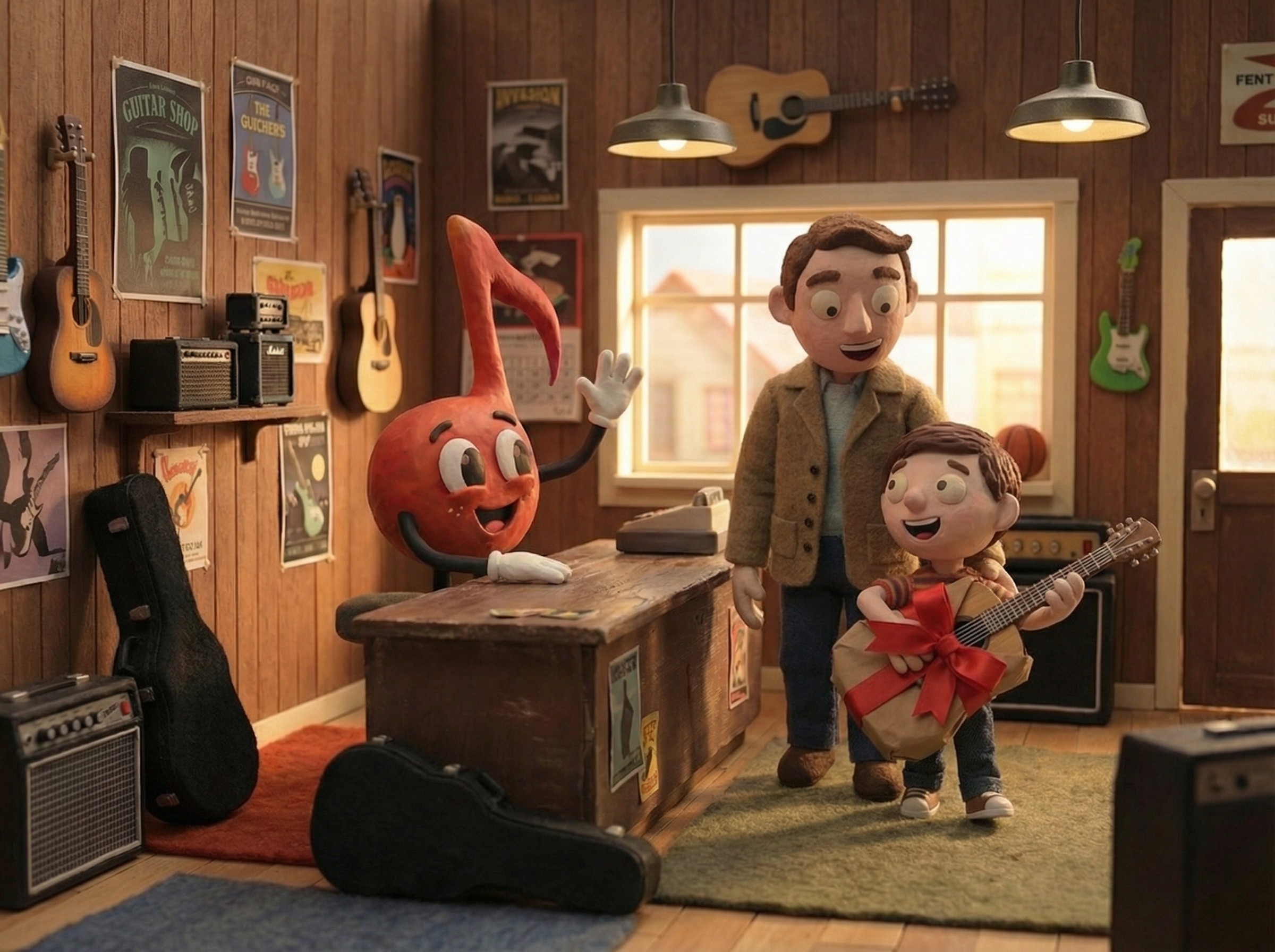
Your kid wants to learn guitar, and now you're standing in a music store (or scrolling endlessly online) with absolutely no idea what you're looking at.
The good news is that you don't need to be a musician to make a great first guitar purchase. You just need to know what actually matters, and what the sales floor wants you to think matters. The wrong guitar doesn't just waste money; it quietly kills motivation before the first chord is ever played. A guitar that is too big, too hard to press, or too out of tune will feel like a punishment, and your child will walk away convinced they're simply "not musical."
This guide cuts through the noise. Whether your child is six or sixteen, whether they dream of playing Nirvana or Arctic Monkeys hits, the right starting guitar comes down to a handful of clear, practical decisions. Here's exactly how to make them.
Size First, Everything Else Second
The single most overlooked factor in a first guitar purchase is size. Adults default to full-size guitars because that's what they see on stage, but a full-size guitar in the hands of a child under twelve creates an immediate physical barrier. Reaching around the body, stretching across the fretboard, and pressing strings that feel like wire all add unnecessary difficulty to an already challenging learning curve.
Guitar sizing follows a simple scale. Children aged five to eight typically need a 1/4 or 1/2 size guitar. Children aged eight to eleven usually fit a 3/4 size well. From around eleven or twelve onward, a full-size (also called a 4/4) guitar becomes appropriate, though body build matters more than age alone. When in doubt, go smaller rather than larger. A child who can comfortably reach every fret will practice far more willingly than one who is wrestling with the instrument.
Acoustic or Electric: What Most Parents Get Wrong
Parents often assume acoustic is the "safer" or more educational starting point. The thinking goes: learn the basics first, then graduate to electric. In reality, this logic can backfire. Practice shows that intrinsic motivation is the strongest predictor of long-term learning, and a child who is passionate about rock or pop music will practice far more on the instrument that excites them.
Acoustic guitars do have practical advantages: no amp required, lower overall cost, and slightly stronger finger development from the higher string tension. But if your child wants to play songs they love on an electric, putting an acoustic in their hands may feel like a compromise from day one. Ask your child what music they love, and let that guide the decision more than any rule of thumb.
One note on string type: if you go acoustic, choose a nylon-string classical guitar over a steel-string for beginners. Nylon strings are significantly easier on young fingertips and lower the physical resistance that makes early practice feel discouraging. Steel strings sound great but create a sharper learning curve that many young beginners do not push through.
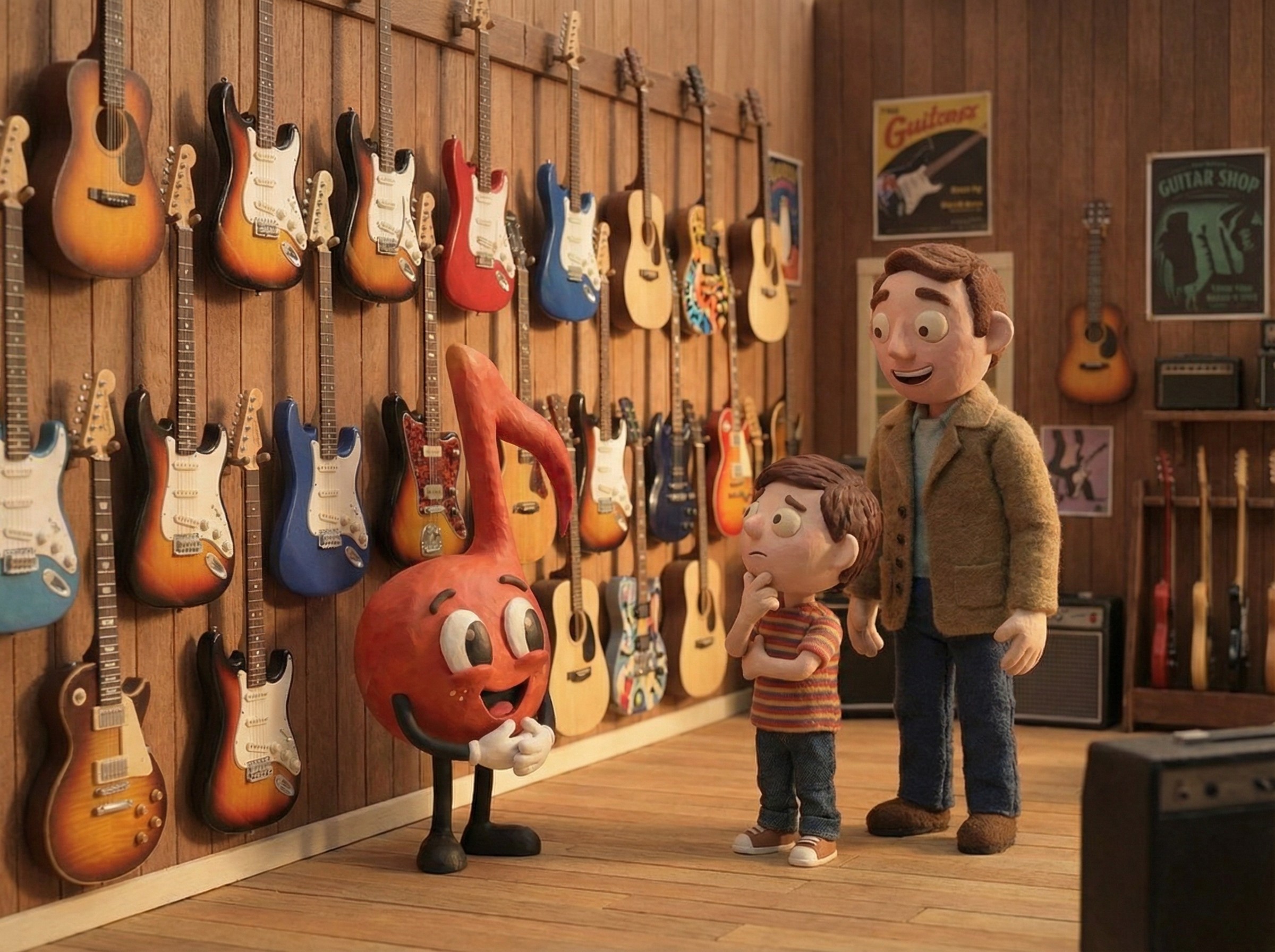
The Playability Test: What to Actually Check in the Store
Playability refers to how physically easy a guitar is to play, and it matters far more than brand name or appearance. A guitar with poor playability will feel stiff and painful even when the child is doing everything correctly, which means they will associate the instrument with frustration rather than progress. Before buying, check three things.
First, check the action. Action is the distance between the strings and the fretboard. High action means strings that are hard to press down, which causes finger pain and buzzing notes even with correct technique. Ask a store employee to check the action, or look for a guitar where the strings sit close to the neck without touching it. Second, play each string individually up the fretboard. If notes buzz or sound dead in specific positions, the guitar may have fret issues that no amount of practice will fix. Third, check that the guitar holds its tuning after you play a few chords. A guitar that slips out of tune constantly will undermine ear training from the very first session.
Budget: Where to Spend and Where to Save
You do not need to spend a fortune on a first guitar. In fact, spending too much too soon creates its own problem: pressure. A child who feels the weight of an expensive instrument may approach practice with anxiety rather than curiosity. But spending too little is equally dangerous. The cheapest guitars on the market are often unplayable out of the box, with high action, poor intonation, and tuning pegs that slip immediately.
A reliable entry-level guitar for a child typically falls in the range of $80 to $200 USD. Within this range, there are genuinely good instruments from reputable manufacturers that will serve a beginner well for two to three years. Budget an additional $20 to $30 for a clip-on tuner, a few picks, and a capo. These small accessories make a bigger difference to the daily guitar practice experience for kids than most parents expect.
What to Avoid at All Costs
Avoid guitar bundles that include everything in one box at a suspiciously low price. These packages often include instruments with serious playability issues, and the accessories bundled in are rarely usable. Avoid purchasing guitars without testing them in person where possible, especially for children, since what looks good online can feel completely wrong in small hands. Also avoid skipping the setup. A professional guitar setup from a luthier or music shop technician costs around $40 to $60 and can transform a mediocre guitar into one that actually plays cleanly. For a child who is just starting out, a well-set-up budget guitar will outperform an expensive but poorly adjusted one every single time.
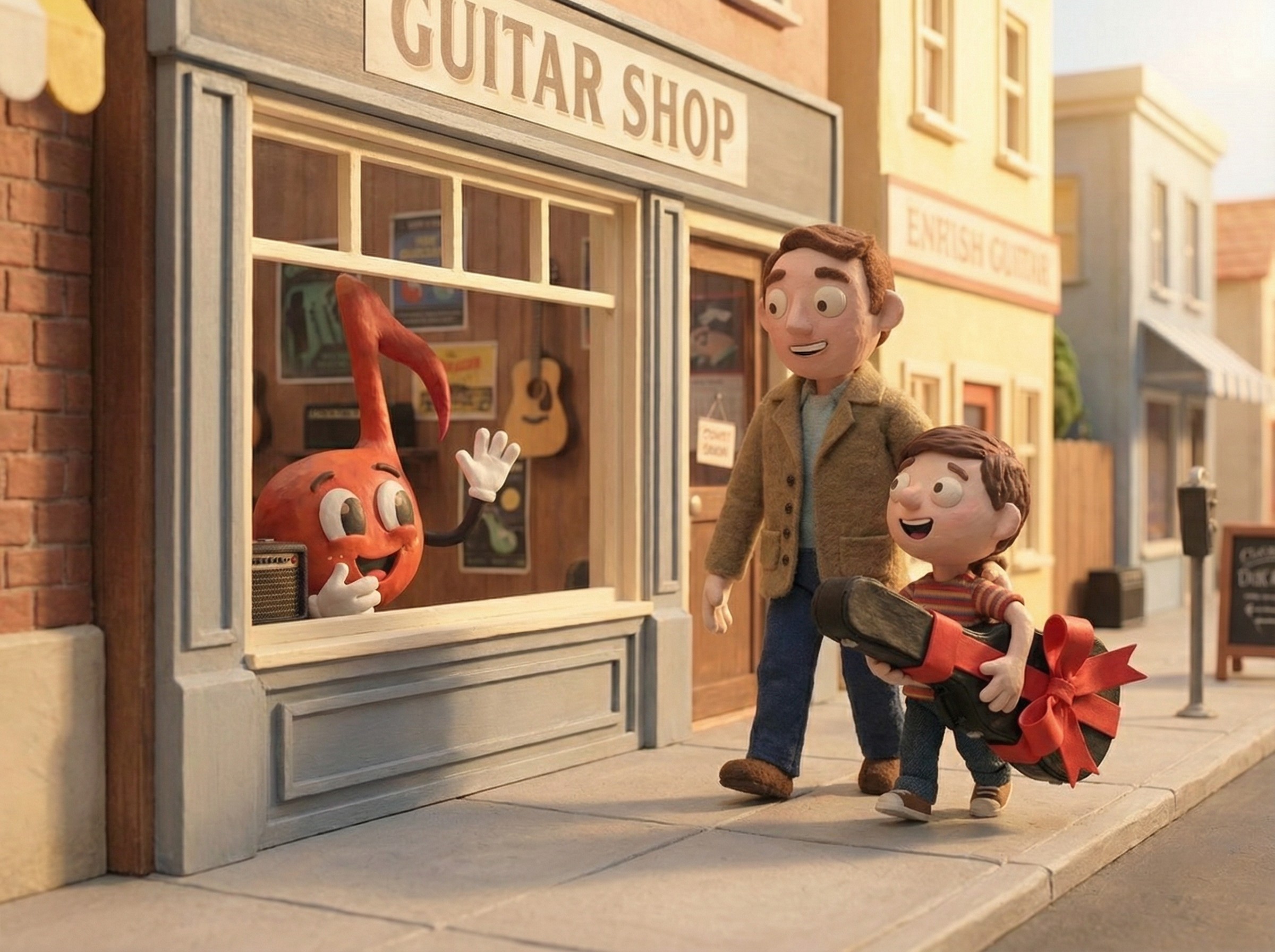
How Notey's World Turns That First Guitar into a Real Journey
Buying the right guitar is only half the equation. The harder challenge for most parents is keeping their child motivated once the initial excitement wears off and daily guitar practice for kids starts feeling like a chore. This is exactly where gamification in music education changes everything.
Notey's World is a gamified music learning app built specifically for children ages 6 to 17, designed to make picking up that new guitar the best part of their day. Instead of scales and drills, children play through adventure levels and boss fights using their real guitar as the controller. Notey's AI-powered audio recognition listens to what they actually play, providing instant feedback so they learn in real time without needing a teacher in the room. The habit formation research is clear: children who receive immediate rewards for behavior are significantly more likely to repeat it, and Notey builds practice rewards for children directly into its progression system, with unlockable characters, levels, and songs that keep them coming back.
The song library is built around music children already love: Seven Nation Army, Disney soundtracks, Harry Potter themes, Sabrina Carpenter and plenty of other hits. That connection between the instrument in their hands and the music in their hearts is what sustains motivation in kids' music lessons long after the novelty of a new guitar fades. As we explored in our article on why repetition is the most important skill in learning guitar, consistent daily practice is what separates children who progress from those who plateau, and guitar practice streaks built into a game structure make consistency feel natural rather than forced. The engagement loop that typically competes with practice time is now working for it.
The Bottom Line
Buying your child's first guitar does not require musical expertise. It requires knowing that size and playability matter more than brand, that motivation should guide the acoustic versus electric decision, and that a mid-range instrument with a proper setup will serve a beginner far better than a cheap bundle or an intimidating professional model. Get those fundamentals right, and the guitar will be something your child wants to pick up.
What happens after that depends on whether practice stays exciting. With the right instrument in hand and a music learning app for kids that turns every session into an adventure, the question stops being "will my child practice today?" and starts being "how do I get them to put it down?"
Ready to make that first guitar purchase count? Explore Notey's World and discover how 10 minutes of daily play can turn a brand-new instrument into a lifelong love of music.