Electric vs. Acoustic Guitar for Kids: What Actually Matters When You're Starting Out
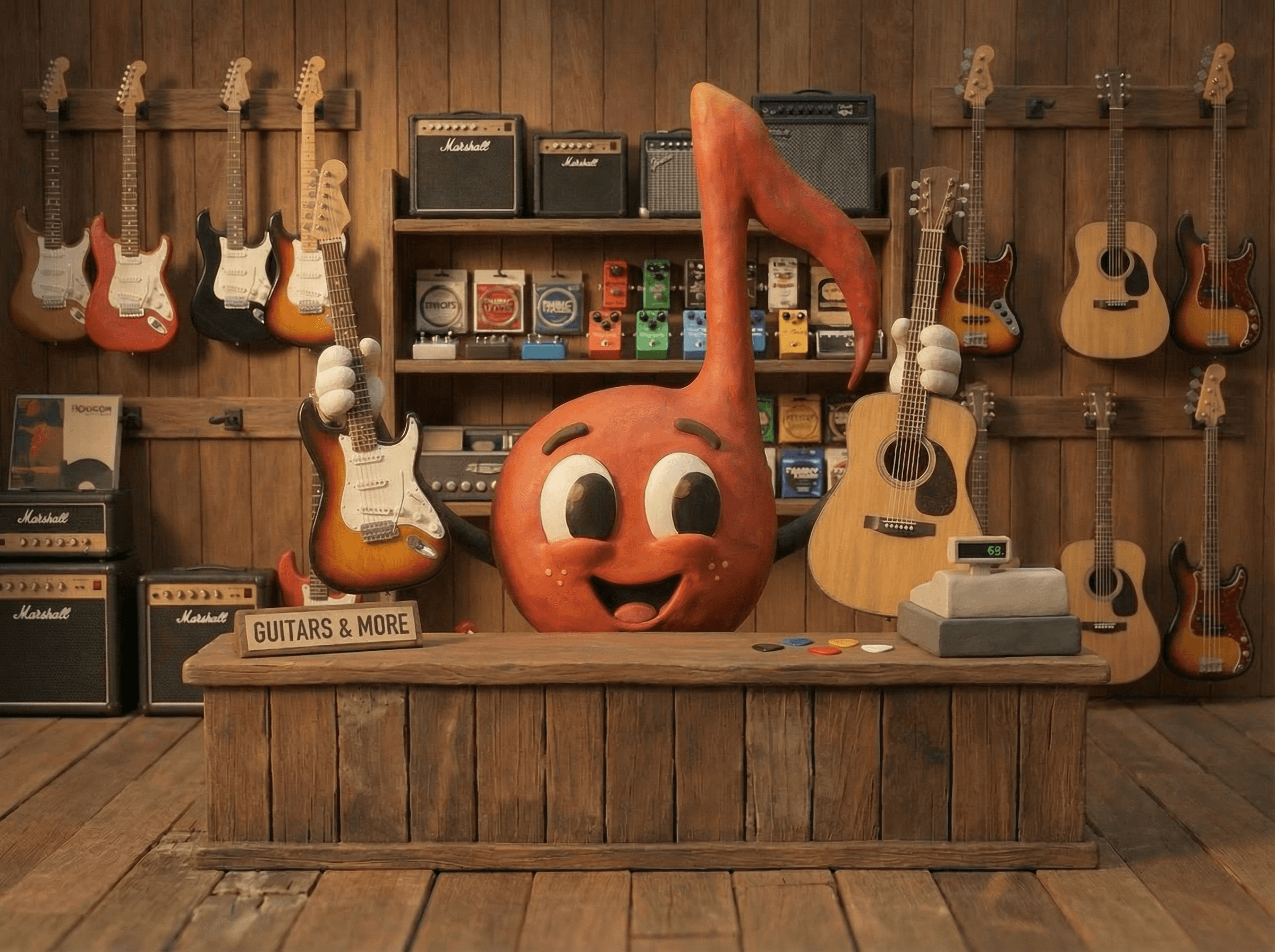
It is not the wrong brand, and it is not the wrong size. It is the wrong type for the child who had to play it. Parents walk into a shop, pick something that looks right, and three months later wonder why their kid stopped. The choice between electric and acoustic matters far more than most people realize - not because one type sounds better, but because one type will be easier for your specific child to start with, stick with, and want to play every day.
Whether your child is 7 or 15, already in love with a specific sound or completely undecided, the decision comes down to a handful of real factors - none of which are about what looks coolest.
The Assumption That Gets It Backwards
Most parents assume acoustic is the "beginner" option and electric is for kids who are already good. That assumption is almost completely wrong, because researches consistently show that the instrument a child finds most physically comfortable and emotionally exciting is the one they will actually practice - and daily guitar practice for kids is the only variable that genuinely predicts long-term progress.
Acoustic guitars have thicker strings, higher string action (the gap between strings and fretboard), and require significantly more finger pressure to sound clean. For a child with smaller hands or one still building finger strength, this creates real physical friction in the early weeks. Electric guitars have thinner strings, lower action, and respond to a much lighter touch - that single difference can mean the gap between a child who builds a lasting daily guitar practice habit and one who quietly avoids the instrument altogether. Starting a beginner on a full-tension acoustic is like teaching someone to swim in open water before they have tried a pool: technically possible, but unnecessarily hard, and far more likely to end in quitting.
When Acoustic Actually Makes Sense
Acoustic has genuine advantages for the right child. No amp, no cables, no setup - it is portable and freeing, and it builds finger strength faster, which pays off once the initial soreness passes. Acoustic works best when the child is 12 and up, has the patience to push through early discomfort, and loves music that is naturally acoustic-oriented: singer-songwriter styles, folk, or stripped-back pop. Motivation in kids' music lessons is deeply tied to playing sounds they already recognize - if your child's favorite music is acoustic, start there, but know the first few weeks will include sore fingertips and buzzing chord shapes.
Why Electric Is Easier to Fall in Love With
Electric guitar is easier to play from day one. Thinner strings, lower action, and less required finger pressure mean a child produces a clean note far sooner. For younger kids especially, this physical ease is not a shortcut - it is the difference between a child who forms a lasting practice habit and one who does not, because practice shows that when a behavior feels immediately rewarding rather than painful, it becomes automatic much faster.
Electric also carries a massive engagement advantage for kids who love rock, pop, or film scores. A child playing along to a Harry Potter theme or a Seven Nation Army riff through even a small practice amp will feel like a real musician within the first week - and that feeling of competence is what sustains guitar practice streaks, not willpower. The common objection is cost, but a decent beginner electric and a small amp together often cost less than a mid-range acoustic.
What Motivation Research Actually Tells Us
A 2024 study in Frontiers in Psychology found that autonomous motivation - the kind that comes from genuine enjoyment rather than external pressure - is the single strongest predictor of whether a child continues playing past the first year. That motivation is built from small daily wins, from playing sounds the child recognizes, and from an experience that feels rewarding rather than like homework. Gamification in music education works on exactly this principle, and as we explored in our article on why repetition is the most important skill in learning guitar, the child who practices consistently for three months will always outpace one who practices sporadically for a year.
How Notey's World Makes Either Guitar the Right Guitar
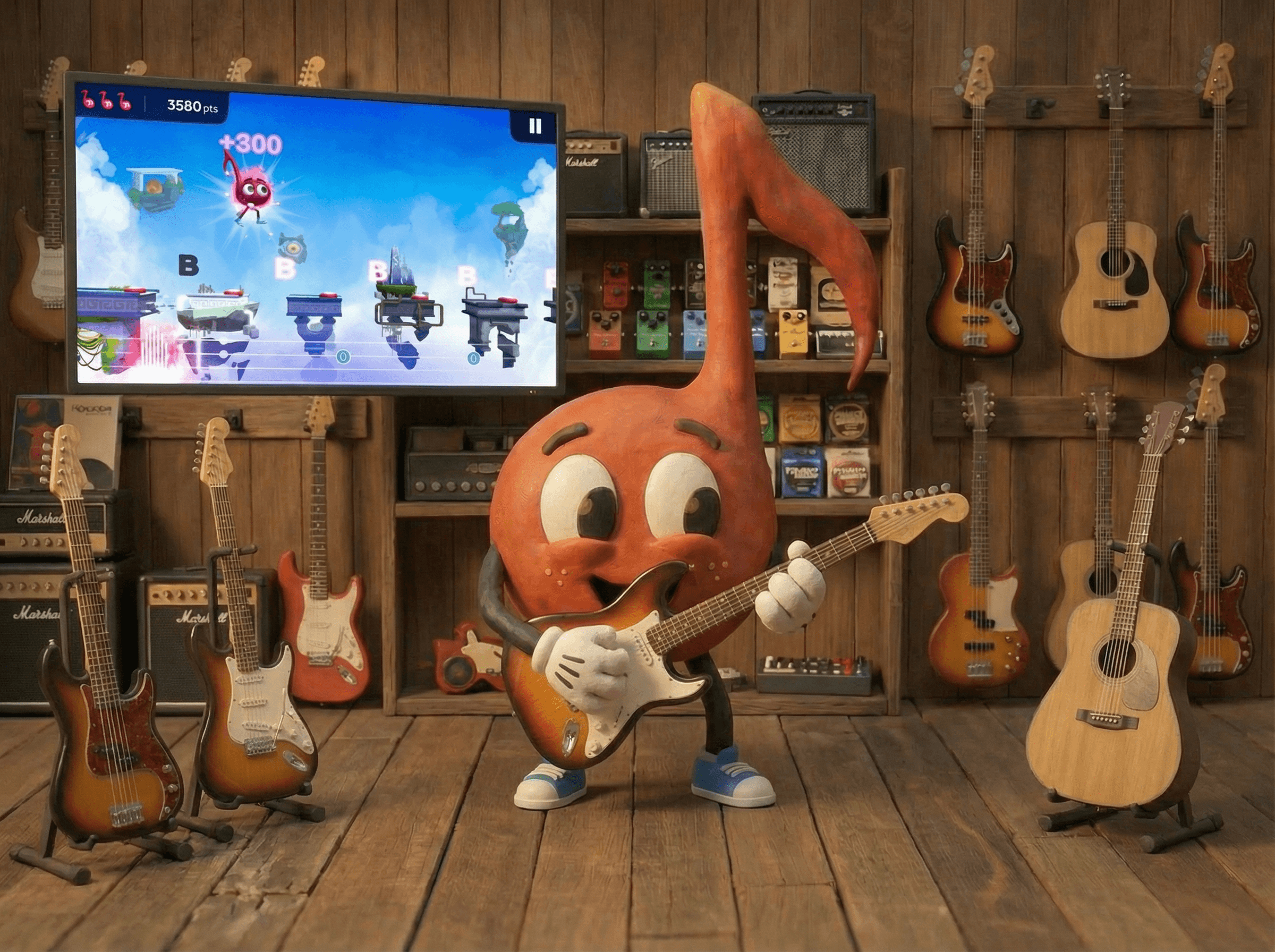
Here is where instrument choice and learning method meet. Notey's World is a gamified guitar learning app for kids ages 6-17 that uses AI-powered audio recognition to listen to your child play their real guitar - acoustic or electric - and respond in real time, guiding them through actual songs: Seven Nation Army, Disney soundtracks, Sabrina Carpenter hits, Harry Potter themes.
Instead of leaving a child alone with a tutorial and no feedback, Notey's World turns every session into a boss-fight adventure where the guitar is the controller. Every correct note moves the story forward, and every level unlocked is one of the most effective practice rewards for children that behavioral psychology has identified - the intrinsic signal that says "come back tomorrow." For a child on acoustic pushing through early discomfort, the win-loop keeps them going. For a child on electric already hooked on the sound, the app gives that excitement a structured direction so enthusiasm turns into real skill. Music learning apps for kids work best when they meet the child exactly where they are and make the next ten minutes feel worth it - and that is precisely what Notey's World is built to do.
The Bottom Line
Electric or acoustic is not a question of which is better, but which gives your child the fastest path to loving how they sound and wanting to pick the guitar up again tomorrow. For most younger beginners, electric removes physical friction and shortens that path considerably. For older, motivated kids with a specific acoustic-oriented taste, acoustic is a strong starting point. Choose the guitar that makes daily practice feel possible, give your child the tools that make it feel fun, and the guitar will stay in their hands - which is the only outcome that actually matters.
Ready to make guitar practice something your child actually looks forward to? Explore Notey's World and see how gamified music learning turns any beginner into someone who genuinely plays.