Guitar Hero vs Real Guitar - What 20 Years of Research Actually Shows
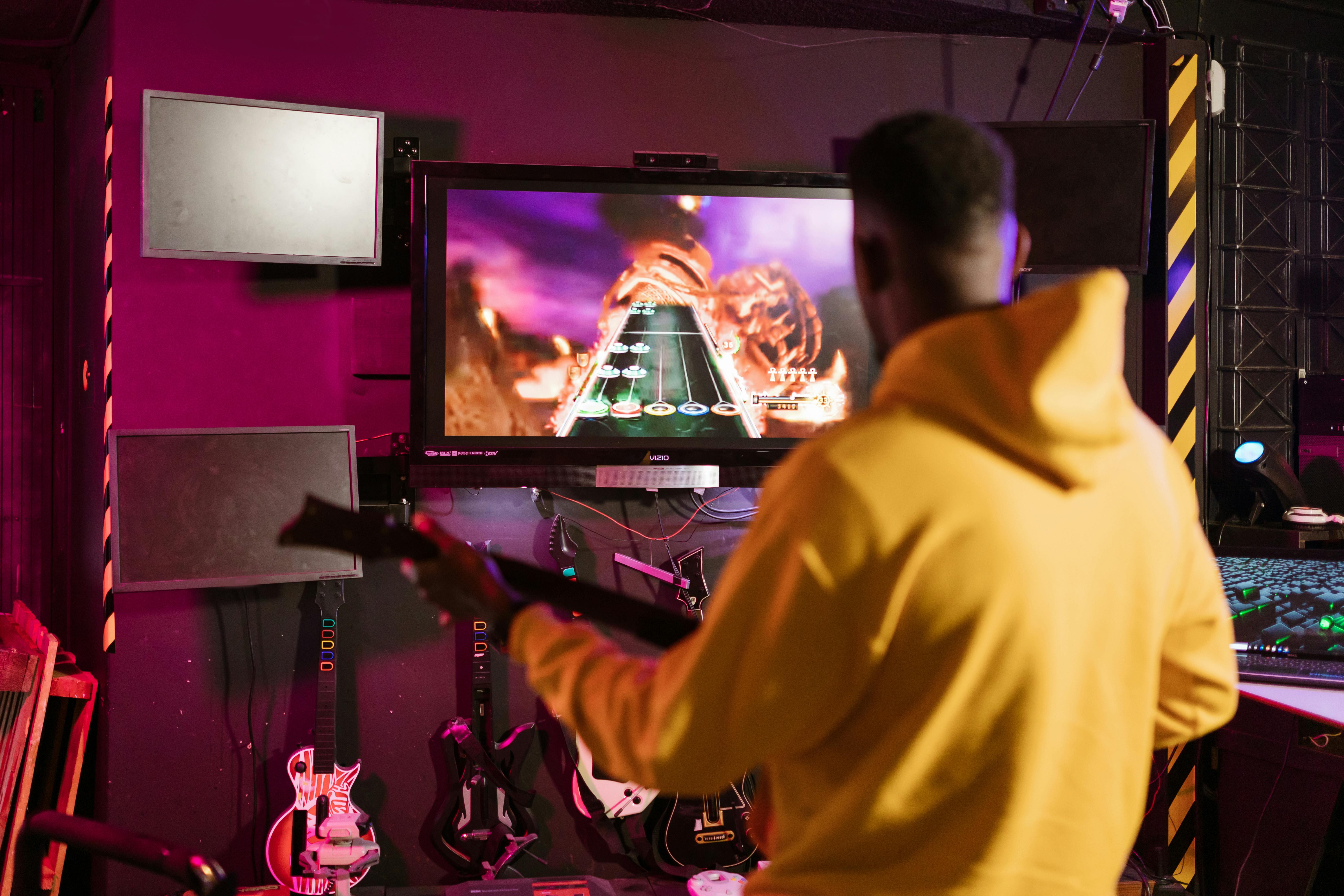
Award-winning guitar educator Bill Swick said it best: Guitar Hero is what the game should have been, but it used a plastic controller and taught nothing.
He wasn't talking about the original game. He was talking about what came after. What happens when you take Guitar Hero's most powerful insight - that games make practice addictive - and combine it with the one thing Guitar Hero fatally lacked: a real guitar. But we're getting ahead of ourselves. First, you need to understand what Guitar Hero actually accomplished, and why its failure matters more than its success.
The $2 Billion Experiment That Almost Worked
When Guitar Hero launched on PlayStation 2 in November 2005, nobody predicted it would become one of the most influential products of the decade. The franchise sold more than 25 million units worldwide and earned $2 billion at retail. Guitar Hero III became the first video game to surpass $1 billion in sales. Bars held Guitar Hero nights that tripled their usual business. Concert tours featured Guitar Hero booths. The game didn't just sell copies. It became a cultural phenomenon.
More importantly, it proved something educators had claimed was impossible. Children who hated practice and quit traditional lessons couldn't get enough of Guitar Hero. They played for hours. They memorized complex sequences. They developed timing, rhythm recognition, and hand coordination. Parents watched their kids obsess over musical challenges and wondered why guitar lessons had never clicked. The game did what traditional music education couldn't: it made practice feel like play.
The impact on real music was measurable. A study by Youth Music found that 2.5 million out of 12 million children in the United Kingdom began learning real instruments after playing music video games like Guitar Hero. Music retailers reported spikes in beginner guitar sales during the franchise's peak years between 2007 and 2009. Artists like Aerosmith generated more revenue from Guitar Hero: Aerosmith than from any of their actual studio albums. The game proved that millions of people wanted to engage with guitar, they just needed the right delivery system.
But here's the uncomfortable truth that emerged as the data accumulated. Those 2.5 million children who picked up real instruments after playing Guitar Hero? Most of them quit. The plastic button skills didn't transfer. Starting from scratch on a real guitar after mastering Expert mode on Through the Fire and Flames felt like a cruel joke. The motivation the game built collapsed the moment it encountered real strings, real finger pain, and real music theory.
Why The Plastic Guitar Was The Fatal Flaw
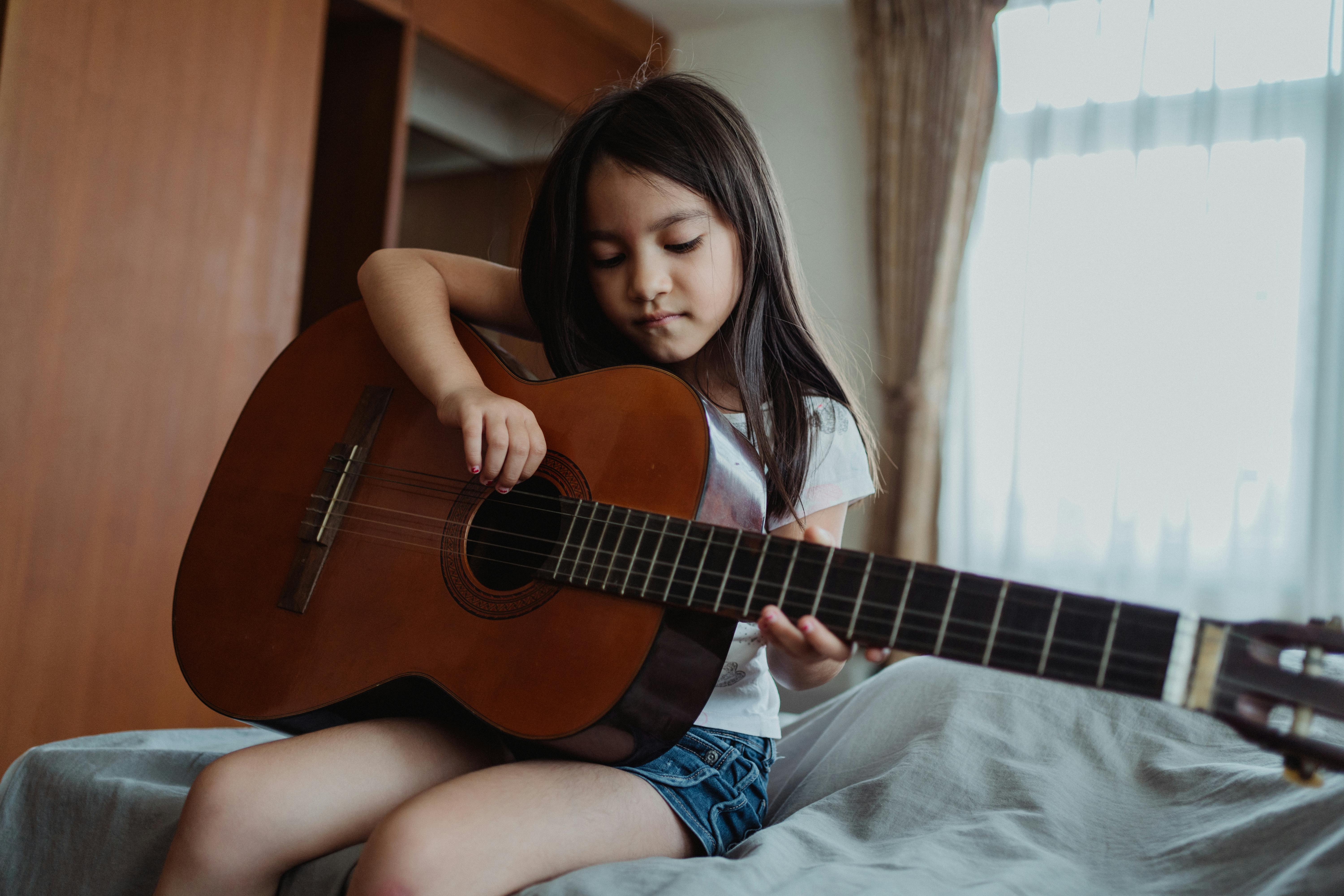
Guitar Hero's controller had five colored buttons and a strum bar. A real guitar has six strings, at least twenty frets, and requires precise finger placement, pressure, and timing across multiple dimensions simultaneously. The difference isn't cosmetic. It's cognitive. Research on motor learning and sensorimotor integration shows that playing a real instrument creates plastic changes in the brain's auditory, motor, and cognitive processing areas. These changes are specific to the instrument being learned. Your brain physically rewires itself to coordinate hearing, finger movement, and musical understanding.
Playing Guitar Hero developed pattern recognition within the game's system. It taught players to see colored notes scroll down the screen and press the corresponding buttons at the right time. That's a valuable skill for Guitar Hero. It's meaningless for guitar. There's no transfer of learning because the motor patterns, the sensory feedback, and the cognitive demands are fundamentally different. A professional guitarist who has never played Guitar Hero and a Guitar Hero expert who has never touched a real guitar start in essentially the same place when learning the actual instrument.
The research on this is unambiguous. Studies on music performance and motor learning show that instrumental training creates development in the sensory-motor cortex, with larger neural representation of fingers depending on early age of commencement. This process is specific to real instrument practice. Button pressing on a controller activates completely different neural pathways. The brain adapts to the task it's actually performing, not to an abstract concept of "playing music."
Musicians were the first to recognize this. Jimmy Page publicly stated that he didn't believe people could learn real instruments from video game counterparts. Prince turned down opportunities to have his music in the series, saying it was more important that kids learn to actually play the guitar. These weren't just opinions. They were observations about how skill acquisition actually works. The tactile feedback from pressing strings into frets, the proprioceptive awareness of hand position on a neck, the auditory processing of tone and sustain created by your own pressure and technique - none of this existed in Guitar Hero. The game was teaching a skill, just not the one people thought they were learning.
What Guitar Hero Got Right That Everyone Missed
Here's the part that gets lost in the criticism. Guitar Hero wasn't stupid. Its designers understood something profound about motivation that traditional music education still refuses to accept. The game traded the physical calluses of a real instrument for pure dopamine. It engineered an immediate flow state that made anyone feel like a rock star. That accessibility transformed it from a video game into a social phenomenon.
Traditional guitar lessons offer delayed gratification. Practice today, maybe sound decent in six months, possibly play something impressive in two years if you don't quit first. Guitar Hero offered instant gratification. Load the game, pick a song, feel competent within minutes, experience mastery within weeks. The feedback loop was immediate, the progress was visible, and the rewards were constant. Every note hit triggered positive reinforcement. Every song completed unlocked new content. Every difficulty level conquered built confidence.
The game structure itself was pedagogically sound. Start with easy songs that build foundational patterns. Gradually increase complexity as competence grows. Provide clear performance metrics so players know exactly how well they're doing. Let players choose their own progression path instead of forcing a rigid curriculum. These are principles that work for any kind of learning. Guitar Hero applied them ruthlessly and effectively. The problem wasn't the teaching methodology. The problem was what it was teaching.
Children who played Guitar Hero weren't lazy or unmotivated. They were responding rationally to the incentive structure the game provided. When traditional guitar lessons make practice feel like punishment and progress invisible, while Guitar Hero makes practice feel like entertainment and progress constant, children will choose Guitar Hero. The game exposed a massive gap in music education: if you can make learning feel this engaging with a plastic controller, imagine what you could do with a real instrument.

The Cognitive Science Behind Why Real Instruments Matter
Understanding why Guitar Hero failed to teach musicianship requires understanding what actually happens in the brain when children learn real instruments. Neuroscientific research demonstrates that musical training in children is associated with heightening of sound sensitivity as well as enhancement in verbal abilities and general reasoning skills. These effects come from specific types of brain plasticity that only occur with actual instrumental practice.
When a child learns guitar, multiple brain systems coordinate simultaneously. The visual system reads music or watches finger placement. The auditory system processes the sounds being created and compares them to the intended result. The motor system executes precise finger movements with appropriate pressure and timing. The cognitive system integrates all of this information in real time, making split-second adjustments to produce the desired sound. This integration creates what researchers call sensorimotor coupling - the brain learns to predict what sound will result from a specific movement and adjusts future movements based on that feedback.
Plastic changes in the brain's cortical and subcortical structures depend on this real-time feedback loop between action and sound. Studies show that instrumental training between ages 6 and 12 may accelerate the development of neural pathways that enable fast, synchronized firing of neurons. The timing matters because sensitive periods during development mean that musical training initiated early creates more profound and lasting changes than training started in adulthood. But those changes only occur when the training involves actual instrument manipulation that produces actual sound.
Guitar Hero bypassed this entire system. The relationship between button press and sound was arbitrary. Yellow button didn't correspond to any particular note or finger position. The timing was disconnected from the motor mechanics that actually produce rhythm on a guitar. The visual system learned to read colored symbols scrolling down a screen instead of musical notation or fret positions. Every element of the task trained the brain for Guitar Hero, not for guitar. That's why the transfer failed. The brain adapted perfectly to what it was practicing. It just wasn't practicing guitar.
What Guitar Hero Should Have Been
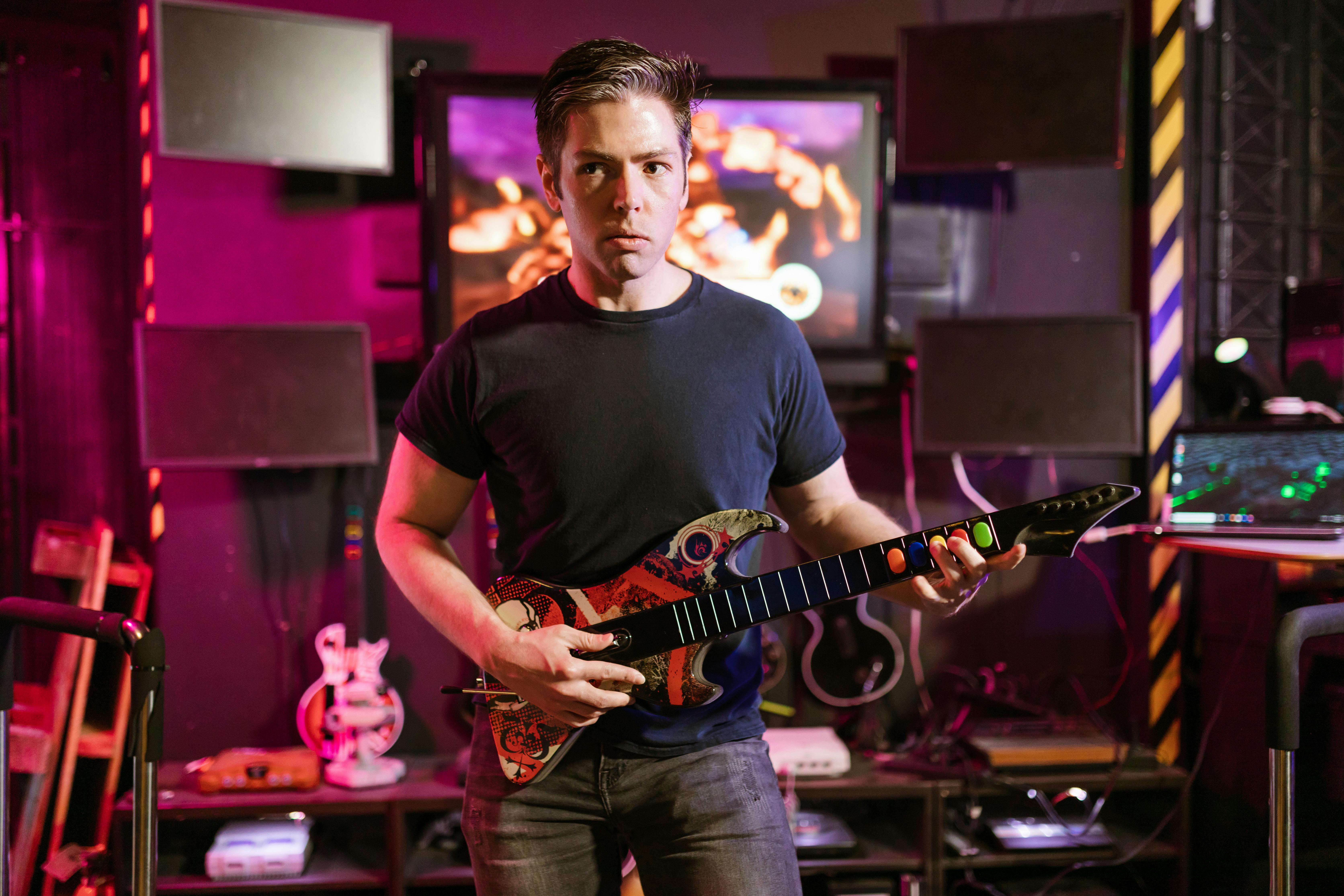
Bill Swick's observation about what Guitar Hero should have been wasn't just criticism. It was a blueprint. Take everything Guitar Hero did right - the game structure, the immediate feedback, the visible progress, the constant rewards, the flow state engineering - and apply it to a real guitar. Build the motivation system that actually works, then connect it to the instrument that actually matters. That's what he was describing when he praised Notey's World as a must-have for beginning guitar students.
Notey is what happens when you learn from Guitar Hero's failures instead of repeating them. It's a guitar learning game for kids ages 6 to 13 that uses an actual acoustic or electric guitar - not a plastic controller. The game structure looks familiar to anyone who played Guitar Hero. Daily practice routines become mini-games. Sight-reading exercises become platformer levels. Musical challenges turn into boss fights with dynamic difficulty. Progress earns a virtual currency called Beatcoin that unlocks skins, characters, and new content. But every note, every chord, every rhythm exercise happens on real strings.
The game uses a machine-learning audio engine that listens to the guitar in real time and responds to what the child actually plays. This creates the sensorimotor coupling that Guitar Hero lacked. When a child presses a string into a fret and strums, they hear the note they produced, see immediate visual feedback on whether they hit it correctly, and receive points or advancement based on genuine musical performance. The brain builds the same neural pathways it would from traditional lessons, but the motivation structure comes from games instead of parental pressure.
This solves the callus problem that traditional lessons ignore. Notey's game levels are designed for short bursts of focused play - 10 to 15 minutes per session instead of 30-minute marathons that destroy beginner fingertips. Children play because they want to beat the next level, not because a parent forced them to practice. The sessions are short enough that calluses form gradually without creating the pain that makes children quit. And because progress is visible through Beatcoin accumulation and level completion, children see improvement even during the plateau phases where traditional students give up.
The song library addresses Guitar Hero's other insight: people want to play music they actually recognize. Notey includes Disney soundtracks, Star Wars themes, contemporary hits from artists kids know. These aren't pedagogically inferior to classical exercises. They're motivationally superior. A child learning Sabrina Carpenter or The Mandalorian theme is building the same finger strength, chord knowledge, and rhythm skills as a child learning Twinkle Twinkle Little Star. But one child wants to keep playing and the other doesn't. Motivation determines whether the learning continues long enough for skill to develop.
Why This Matters More Than You Think
Guitar Hero's rise and fall taught us something that extends far beyond music education. Millions of people wanted to engage with guitar. The game proved that. But wanting to engage isn't the same as being willing to endure the traditional learning process. When Guitar Hero disappeared, those millions of people didn't suddenly start taking lessons. They just stopped engaging with guitar entirely. The market existed. The desire existed. The delivery system failed.
Traditional music education still operates as if Guitar Hero never happened. Lessons are structured the same way they were in 1950. Practice is positioned as work that eventually pays off. Progress is measured in the teacher's judgment, not in any metric the student can see. Songs are chosen for pedagogical value, not for motivational impact. And dropout rates remain catastrophic. Half of all students quit by age 17. Nothing has changed except that we now know it doesn't have to be this way.
Notey isn't the only product attempting to fix this. But it's one of the few that learned the right lesson from Guitar Hero. The lesson isn't that games can't teach real skills. The lesson is that plastic controllers can't teach real instruments. Take away the plastic, keep the game structure, and you solve both problems simultaneously. Children get the motivation system they need and the neural development that matters.
The evidence backs this up. Notey is actively adopted by schools including NYC Public Schools, Chicago Public Schools, and Austin Public Schools. It won the 2023 Technology In Education Award from INNOVISION and was selected for the 2023 Techstars Fall Cohort. It holds a 4.7-star rating on the App Store because parents report their children finally want to practice. These aren't testimonials. They're market validation that the Guitar Hero thesis was correct, the execution was wrong, and somebody finally fixed it.
What Twenty Years Of Research Actually Proves
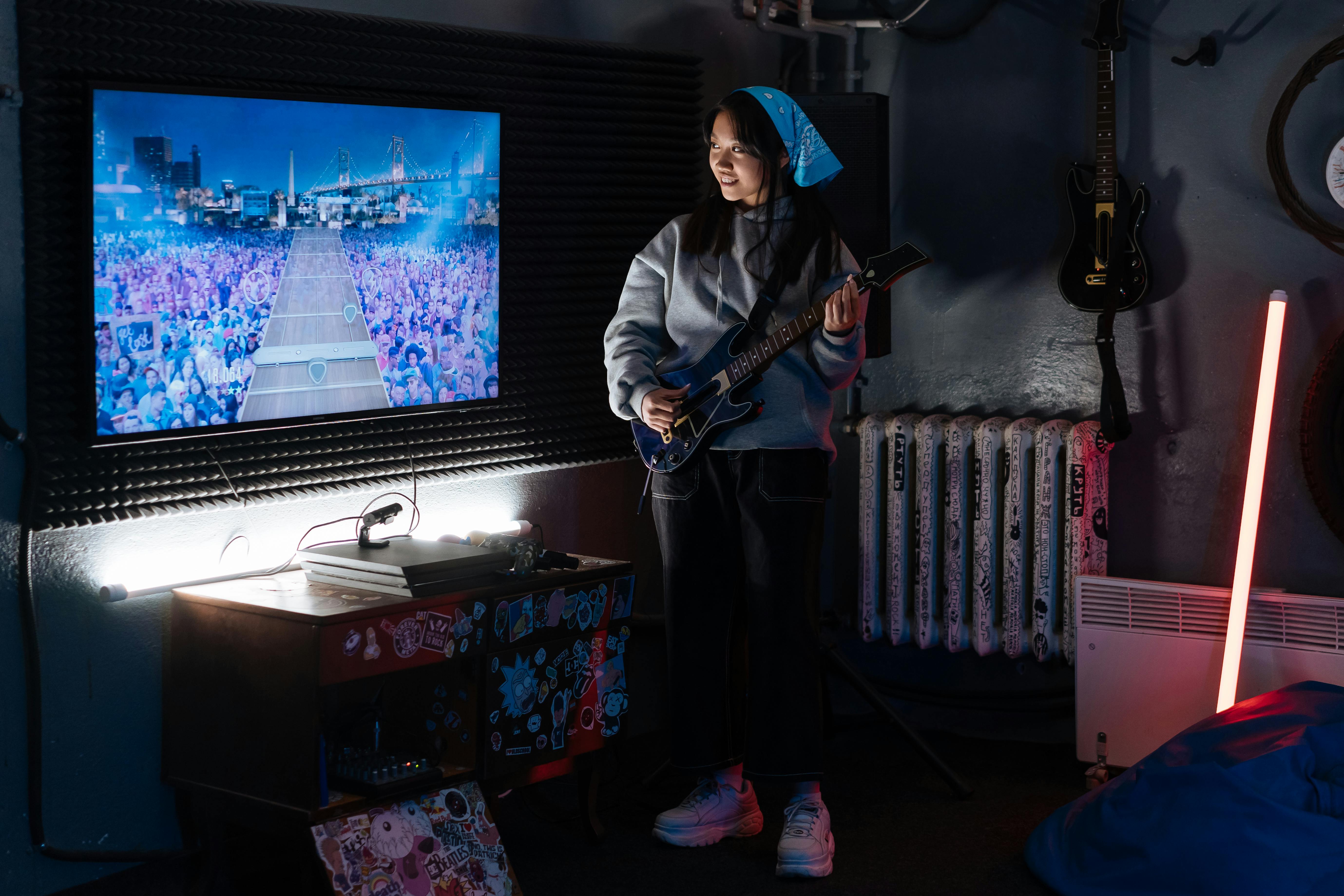
Here's what we know after watching Guitar Hero inspire millions and teach no one. Games work. Immediate feedback works. Visible progress works. Constant rewards work. Children respond to these structures in exactly the way learning theory predicts they will. Traditional music education's insistence that delayed gratification and invisible progress build character is contradicted by twenty years of data showing those factors primarily build dropout rates.
But plastic controllers don't work. Pattern recognition divorced from actual motor skills doesn't work. Arbitrary mappings between input and sound don't work. Learning systems that bypass the sensorimotor integration required for real musicianship don't work. The brain is extremely good at learning exactly what you practice. When you practice pressing colored buttons, you learn to press colored buttons. When you practice positioning fingers on strings to produce specific notes, you learn guitar.
The research on cognitive development, motor learning, and music education all points to the same conclusion. Real instruments create real neural changes that produce real musical ability. Games create real motivation that produces real engagement. You need both. Guitar Hero had one without the other. Traditional lessons have the other without the one. Combining them isn't complicated. It just requires letting go of the assumption that learning must feel like work to count as learning.
Your child doesn't need another plastic guitar. They need a real one connected to a system that makes them want to pick it up. Guitar Hero showed us that millions of children will obsess over musical challenges when the reward structure is right. Notey shows us what happens when you take that obsession and point it at an actual instrument. The plastic guitar experiment is over. We know what it proved and what it failed to prove. The question now is whether we're willing to learn from it.
Frequently Asked Questions
Does playing Guitar Hero help you learn real guitar?
Guitar Hero can help develop rhythm recognition and basic timing skills, but it does not teach real guitar playing. Research shows that pressing five colored buttons on a plastic controller does not transfer to the complex motor skills, finger positioning, string control, and music theory required for actual guitar. The cognitive science is clear: learning a real instrument creates specific neural pathways in auditory, motor, and sensorimotor integration areas that plastic button-pressing cannot replicate.
How many people started learning real guitar after playing Guitar Hero?
A study by Youth Music found that 2.5 million out of 12 million children in the United Kingdom began learning real instruments after playing music video games like Guitar Hero. However, anecdotal evidence suggests that many quit when they discovered that plastic button skills did not transfer to real guitar, and starting from scratch on a real instrument felt discouraging after mastering the game.
Why did Guitar Hero fail to teach real musicianship?
Guitar Hero used a plastic controller with five colored buttons instead of a real guitar with six strings and proper fretboard. This fundamental design choice meant players never developed calluses, finger strength, chord knowledge, or proper picking technique. The game taught pattern recognition and timing within its own system, but those skills existed in isolation from actual music theory or instrument mechanics. As one professional musician put it, the skill transfer is essentially zero.
What makes a guitar learning game work with real instruments?
For a guitar learning game to teach real musicianship, it must use an actual guitar with strings while maintaining game mechanics that make practice feel like play. Research on motor learning and sensorimotor integration shows that playing a real instrument creates plastic changes in the brain's auditory, motor, and cognitive processing areas. Games that combine real instrument practice with immediate feedback, visible progress rewards, and age-appropriate challenges can bridge the motivation gap that traditional lessons create while building genuine musical skill.