Guitar Learning Games: Why Your Child Learns Faster Playing Than Practicing
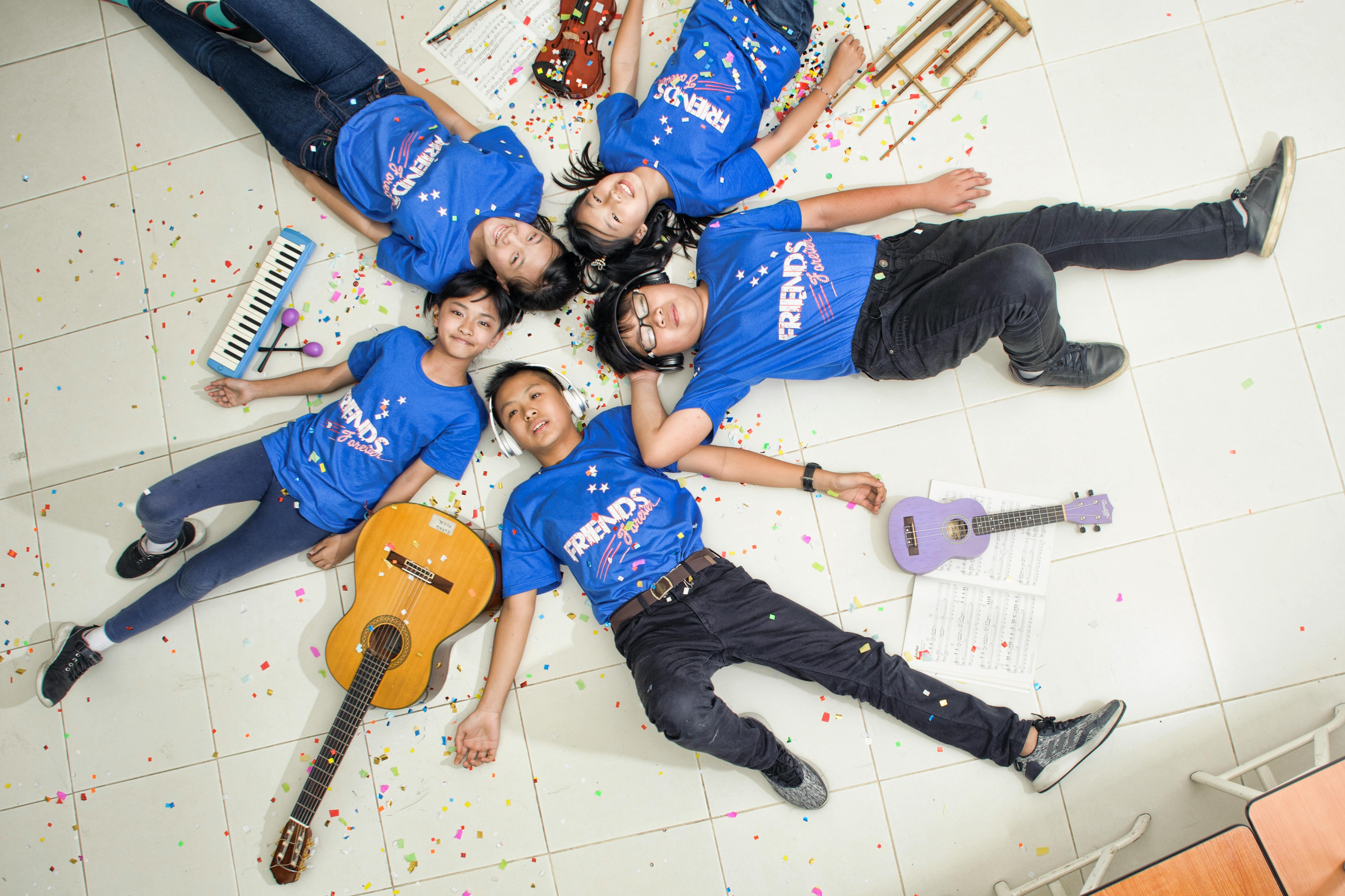
Practice feels like homework; games feel like choice.
That one distinction explains why your child will spend three hours hunting for treasure in a video game but resists fifteen minutes of guitar scales. It is not about laziness or lack of interest. The brain processes these two activities through completely different neural pathways, and the difference determines whether a skill sticks or gets abandoned.
Guitar learning games do not replace practice. They reframe it. When a sight-reading exercise becomes a platformer level, when finger exercises unlock new character skins, when rhythm drills feel like boss fights, the brain stops treating guitar as work. It starts treating it as play. And play, neuroscience shows us, is one of the most effective ways children learn complex skills.
The question is not whether your child should practice or play. It is whether you can give them a version of practice that their brain recognizes as play.
Why the Brain Treats Games Differently Than Practice
When your child sits down for traditional guitar practice, their brain categorizes it as a task. Tasks require willpower. Tasks deplete motivation. Tasks feel like obligations, and research on self-determination theory shows that when children perceive an activity as externally controlled rather than intrinsically motivated, learning efficiency drops significantly.
Games bypass this entirely. A well-designed game activates the brain's dopamine system not through completion, but through anticipation. Every time your child sees a progress bar inch forward, unlocks a new level, or earns virtual currency, their brain releases dopamine in response to the prediction of a reward, not just the reward itself. This keeps them engaged long after willpower would have run out.
Traditional practice drills operate on a delayed reward system. Your child practices scales today and might play a song well in three months. The brain struggles to connect effort to outcome across that timeline. Games compress that feedback loop. Play a note correctly, and the game character jumps. Miss a rhythm, and the boss fight resets. The connection between action and result is immediate, and that immediacy is what builds skill faster than repetition alone.

What Makes a Guitar Learning Game Actually Work
Not all games teach. A plastic controller with five buttons does not teach guitar. A badge system tacked onto static video lessons does not transform practice into play. Real guitar learning games require three elements: a real instrument, real-time audio feedback, and game mechanics built around actual music theory.
The instrument matters because finger placement, fretting pressure, and strumming technique cannot be learned on a toy. The real-time feedback matters because delayed correction reinforces mistakes. And the game mechanics matter because if the underlying structure is still a drill with points added, the brain recognizes it as a drill.
Effective guitar learning games treat music education as the foundation and build the game on top of it. Sight-reading exercises become platformer levels where reading notes correctly moves the character forward. Chord progressions become puzzle challenges where the right sequence unlocks the next stage. Rhythm training becomes boss fights where timing determines victory. The educational content is not an interruption to the game. It is the game.
The Three Game Mechanics That Accelerate Guitar Learning
Three specific game design principles explain why children learn faster when practice is structured as play. The first is immediate feedback. Studies on skill acquisition show that feedback delivered within seconds of an action is significantly more effective than feedback delayed by even a few minutes. Games give feedback instantly. Play the wrong note, and the game responds. Play the right note, and progression happens. The brain learns cause and effect in real time.
The second principle is progressive difficulty. Educational psychologist Lev Vygotsky called this the zone of proximal development: the sweet spot where a task is challenging enough to require effort but not so hard that it triggers frustration. Games adjust difficulty automatically. If your child masters a level quickly, the next one introduces a harder rhythm or faster tempo. If they struggle, the game scales back. Traditional practice rarely adapts this fluidly.
The third principle is intrinsic reward. Games do not just hand out points. They give players autonomy over what to unlock next, mastery through visible skill progression, and purpose through narrative framing. Your child is not just learning chords. They are preparing for a boss fight. They are not practicing scales. They are earning currency to unlock a new guitar skin. The same activity framed differently produces dramatically different levels of engagement.

How Notey's World Turns Practice Into Play
Notey's World is the first guitar learning platform built as a video game from the ground up. It does not add gamification to lessons. It treats daily practice routines as quests, sight-reading exercises as platformer levels, and rhythm training as boss fights. Kids aged 6-13 play through musical challenges using a real acoustic or electric guitar, and the game responds to what they play in real time using a machine-learning audio engine.
Every correct note earns Beatcoin, the in-game currency kids use to unlock character skins, new song levels, and cosmetic rewards. Progress is not abstract. It is visible, immediate, and tied to specific in-game goals. The song library includes tracks kids actually recognize: Disney soundtracks, Star Wars themes, Sabrina Carpenter hits, not just nursery rhymes. When your child asks to practice because they want to beat the next boss or unlock a new skin, you are not fighting motivation anymore. The game already solved it.
Notey has earned the 2023 Technology In Education Award from INNOVISION, was selected for the Techstars Fall Cohort, and is actively used in NYC Public Schools, Chicago Public Schools, and Austin Public Schools. Award-winning guitar educator Bill Swick called it a must-have for beginning students, noting that it uses a real guitar as a motivator in a way Guitar Hero never could. It is available on iOS and Android, and it works with any acoustic or electric guitar your child already owns.
When Games Work Better Than Traditional Lessons
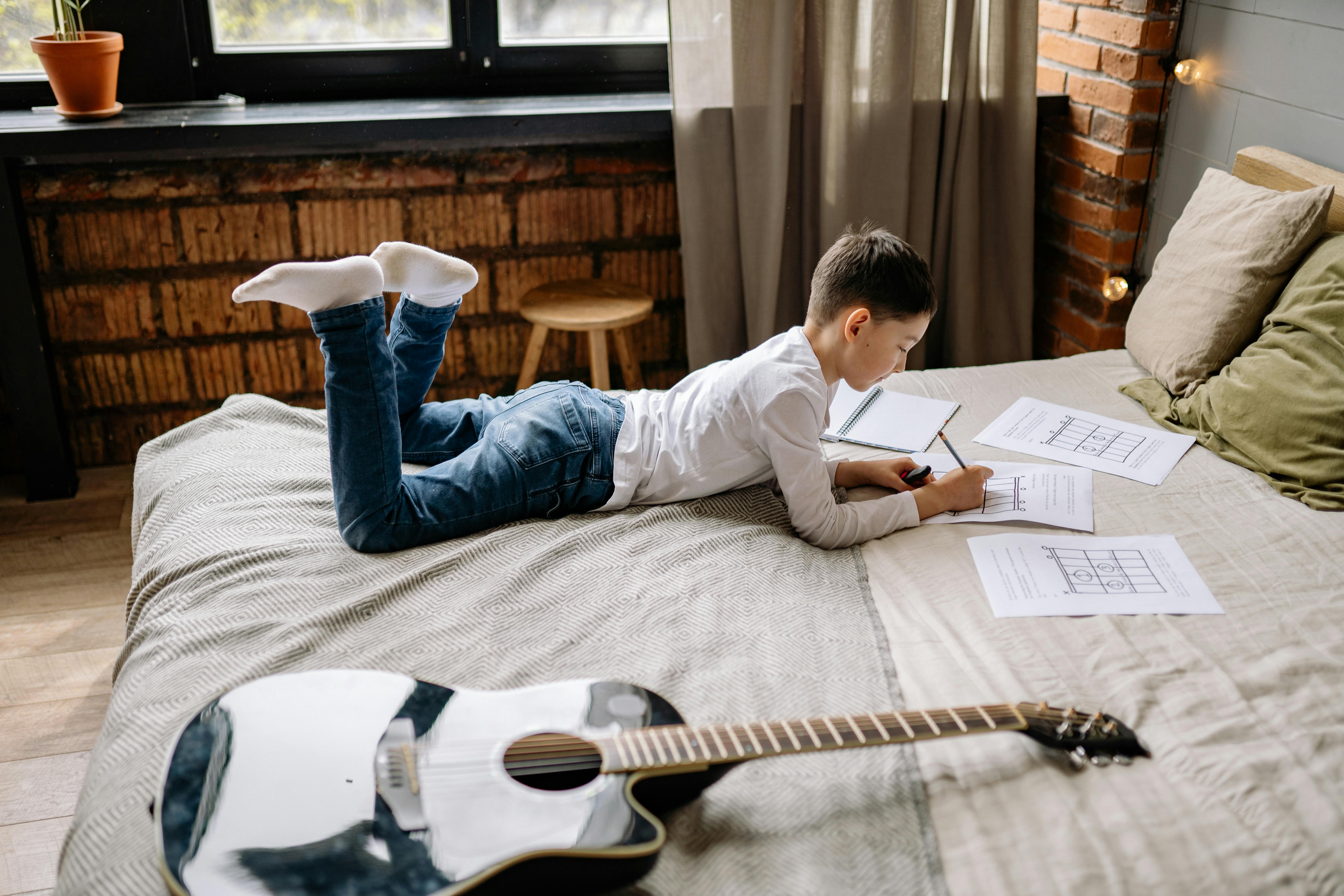
Guitar learning games are not a replacement for one-on-one instruction with a skilled teacher. They are a solution to a different problem: the motivation gap. If your child has access to weekly lessons but will not practice between sessions, the lessons do not matter. Skill development happens through repetition, and repetition requires motivation that outlasts parental reminders.
Games excel in three scenarios. First, for young learners aged 6-13 who respond better to visual feedback and reward systems than to verbal instruction. Second, for kids who have already tried traditional lessons and quit because practice felt like a chore. Third, for families where self-directed learning works better than scheduled lesson pressure. If your child is the type who will disappear into Minecraft for hours but resists sitting still for a tutor, a guitar learning game meets them where their motivation already lives.
The best outcome is not games instead of lessons. It is games alongside lessons, or games as the foundation that builds enough skill and interest to make lessons worthwhile later. Many parents find that once their child has spent six months playing through a guitar game and built calluses, finger strength, and basic music literacy, they are finally ready to benefit from formal instruction. The game does not replace the teacher. It creates a student who shows up ready to learn.
Frequently Asked Questions
What is a guitar learning game?
A guitar learning game is an interactive platform that teaches real guitar skills through video game mechanics like levels, boss fights, rewards, and progression systems. Unlike traditional lessons, these games use a real acoustic or electric guitar and respond to what your child plays in real time, turning sight-reading exercises into platformer challenges and practice routines into quests with unlockable rewards.
Are guitar learning games better than traditional lessons?
Guitar learning games excel at building intrinsic motivation and consistent practice habits, especially for kids aged 6-13. Research shows game-based learning activates reward pathways in the brain that make practice feel voluntary rather than mandatory. Traditional lessons provide valuable one-on-one instruction, but games solve the core problem most parents face: getting kids to practice without a fight.
Can kids really learn guitar from a game?
Yes, when the game uses a real guitar and teaches actual music theory, not plastic controllers. Games that incorporate sight-reading, chord progressions, rhythm exercises, and real songs teach the same foundational skills as traditional methods. The difference is delivery: games provide immediate feedback, adaptive difficulty, and intrinsic rewards that keep kids practicing longer and more consistently than drills alone.
What age should kids start playing guitar learning games?
Most guitar learning games are designed for ages 6-13, when kids have developed enough fine motor control to fret notes and enough cognitive development to understand game mechanics. Younger children (ages 5-6) can start with simplified games that focus on rhythm and strumming patterns, while older kids (ages 10-13) benefit from more complex progression systems and challenging boss fights.