Guitar Lessons Without a Teacher: Can Kids Really Learn on Their Own?

Not every family has easy access to a great guitar teacher. Lesson costs add up quickly, schedules are hard to align, and the nearest qualified instructor is sometimes a long drive away. So parents ask a reasonable question: can my child make real progress on guitar without one? The answer, in 2026, is yes - and understanding why requires a closer look at what a teacher actually provides, and which parts of that can be replicated at home.
This is not an argument against teachers. A skilled, experienced guitar educator is genuinely irreplaceable - they notice things no app ever will, adjust their approach in real time to a specific child's strengths, and bring a human dimension to learning that technology cannot fully substitute. If your child has access to a great teacher, that relationship is a treasure worth protecting. But for the many families where private lessons are not yet on the table, the gap between "no teacher" and "real progress" is smaller than it used to be.
Here is what parents need to know about setting a child up to learn guitar effectively at home.
What a Teacher Actually Does (And What Can Be Replicated)
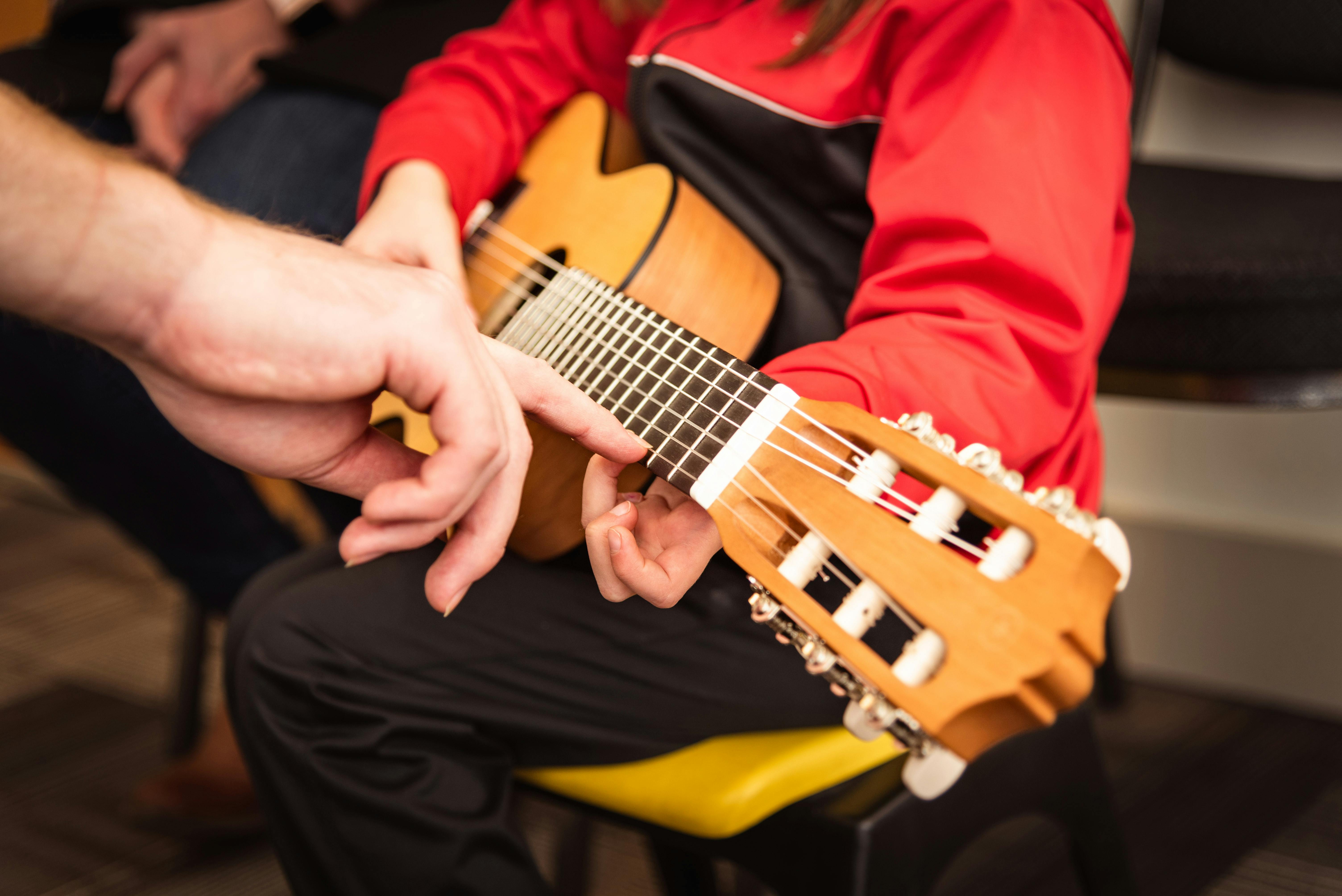
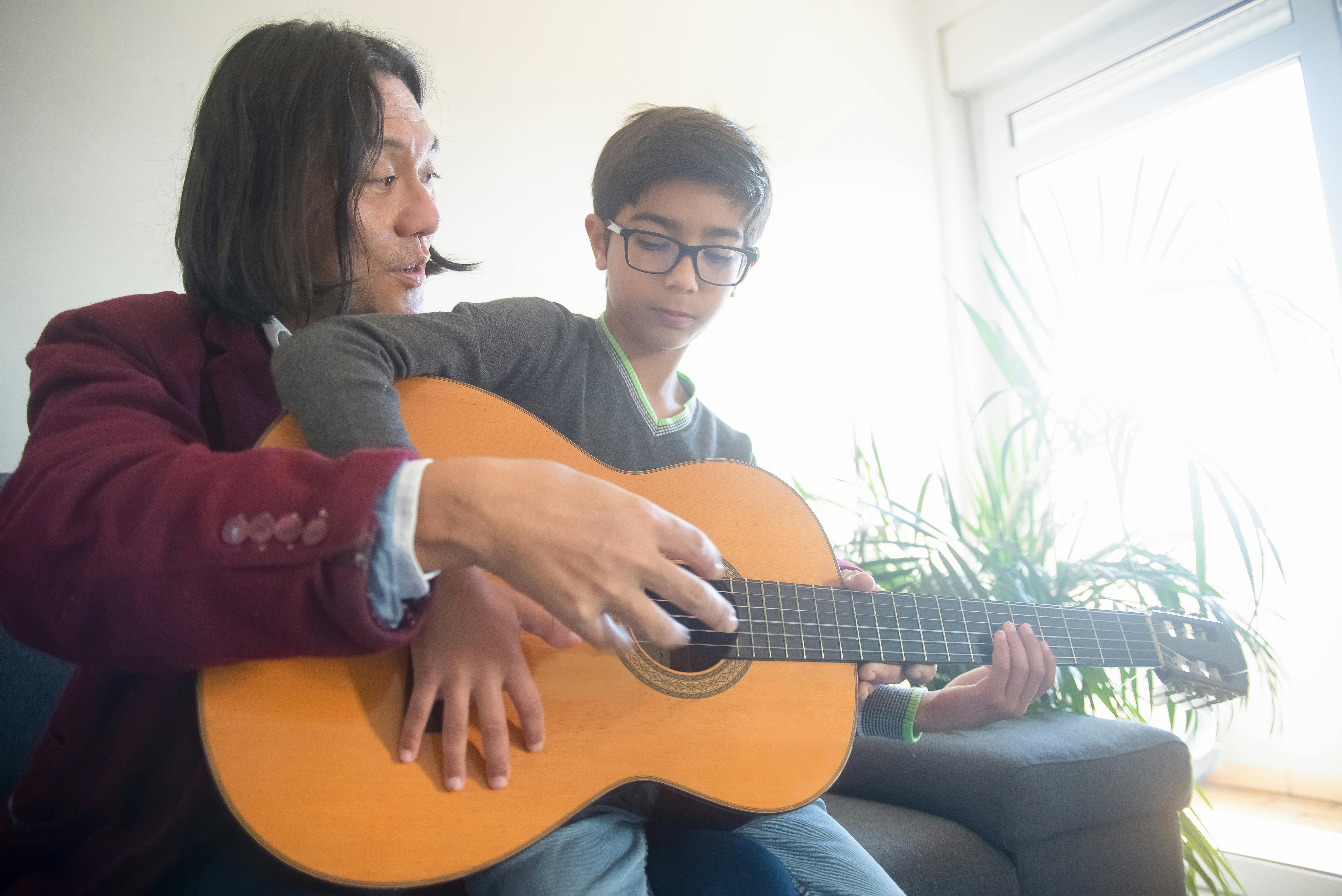
A good guitar teacher does several things simultaneously. They demonstrate correct technique, listen carefully to what a student plays, identify errors before they become habits, provide immediate corrective feedback, and - perhaps most importantly for young learners - keep the child engaged enough to want to come back next week. That last part is often underestimated. A child who likes their teacher practices more, and a child who practices more improves faster. The motivation and the instruction are inseparable.
Of these functions, the feedback loop is the one that technology has come closest to replicating. Immediate feedback - knowing within seconds whether an action was correct - is one of the most powerful drivers of skill acquisition in children, a principle well established in learning research by the American Psychological Association. When a child plays a note and is told instantly whether it was right, the brain forms the connection between action and result far more efficiently than when feedback arrives a week later at the next lesson. Apps with real-time audio recognition can deliver that loop continuously, at home, every day.
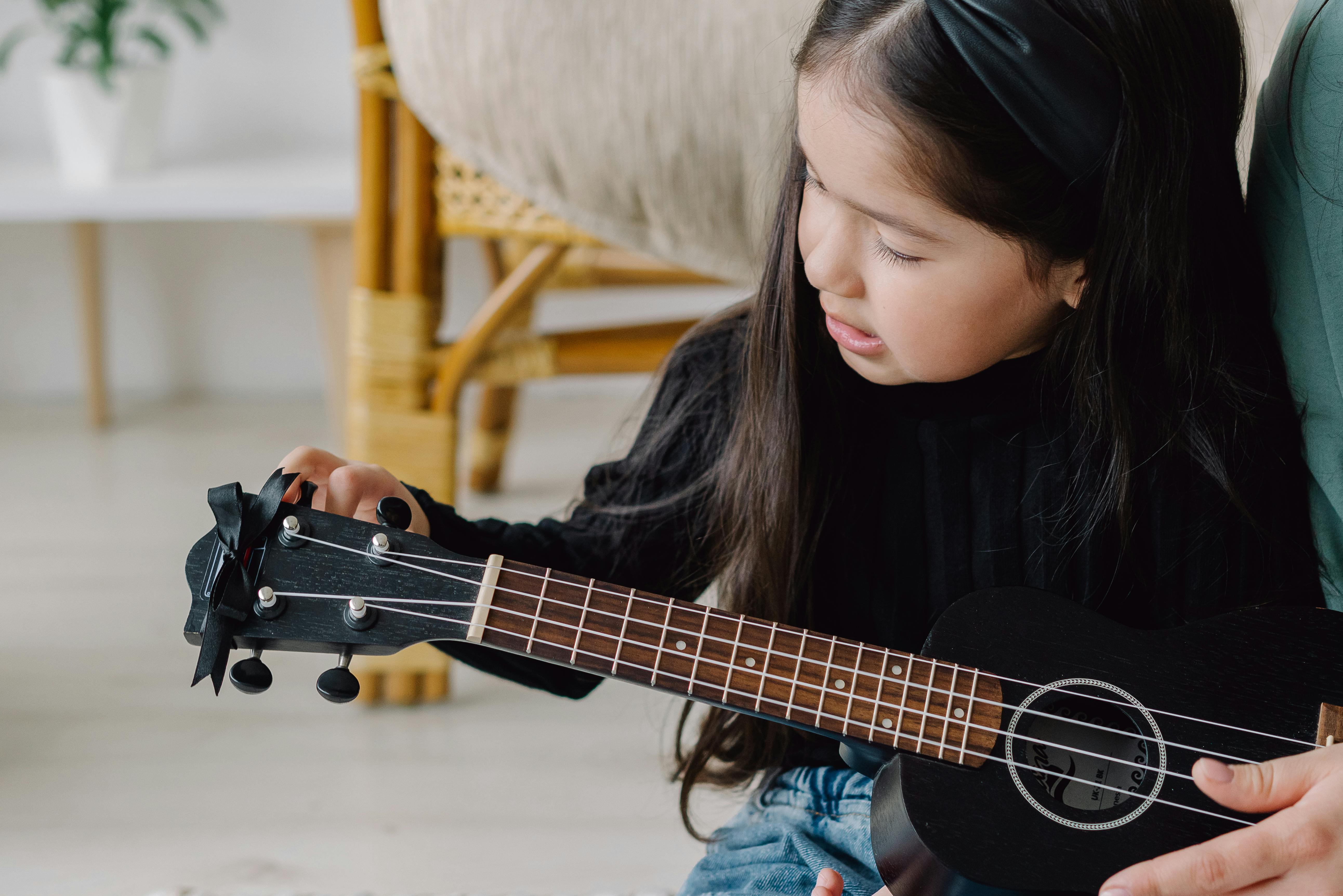
What they cannot fully replicate is a teacher's eye for posture, hand position, and the subtle physical habits that, left uncorrected, can lead to discomfort or injury later. This is worth knowing as a parent - if your child is learning at home, a periodic check-in with a teacher even once a month can catch technique issues that no app will flag. Self-directed learning and occasional professional guidance are not opposites. For many families they are the most practical combination.
The Structure Problem - and Why It Matters for Kids
The single biggest reason children fail to make progress learning guitar at home is not lack of talent - it is lack of structure. A child left with a guitar and a YouTube playlist will spend twenty minutes searching for something interesting and five minutes actually playing. Structure means a clear sequence: this is what you learn first, this is what comes next, and here is how you know when you are ready to move on. Without it, a child has no way to measure progress, and without visible progress, motivation collapses.
This is why the choice of learning tool matters as much as the decision to learn at home in the first place. A structured curriculum - one where each session builds on the last, where skills are tested before new ones are introduced, and where a child can see exactly how far they have come - provides the scaffolding that a teacher would otherwise supply. Child development research points to mastery-based progression as one of the most effective frameworks for skill learning in children aged 6-13: move to the next challenge only when the current one is genuinely solid, and make that progression visible so the child can feel their own advancement. The American Academy of Pediatrics has consistently highlighted that play-based learning - where challenge and reward are built into the activity itself - produces stronger executive function and longer engagement than instruction-only approaches.
Short Sessions Beat Long Ones Every Time
Parents sometimes assume that more practice time equals more progress. For adult learners that is broadly true. For children between 6 and 10, the relationship is more complicated. Neuroscience research on motor skill acquisition in children suggests that shorter, more frequent practice sessions produce better long-term retention than longer, less frequent ones - because the brain consolidates new motor patterns during rest, not during practice itself. Understood.org explains this well for parents: repetition over time builds muscle memory far more effectively than a single long sitting. Ten minutes every day is genuinely more effective than an hour once a week, which is one reason a child who enjoys a daily app session often outpaces a child who dutifully attends a weekly lesson and rarely touches the guitar in between.
For parents managing a child's home practice, this is freeing information. You are not trying to carve out a forty-minute slot. You are looking for ten minutes a day that the child actually wants to fill - and the right tool makes that far easier than it sounds.
How Notey's World Makes Independent Learning Work
Notey's World is built specifically for this situation. It is a video game that teaches real guitar, designed for children aged 6 to 13, that provides the three things home learners need most: real-time audio feedback, a structured curriculum built by music educators, and game mechanics compelling enough that a child chooses to come back without being asked. The machine-learning audio engine listens to a child's real acoustic or electric guitar through the device microphone, responds to what they actually play, and guides them through content approved by music educators across NYC, Chicago, and Austin public schools.
Sight-reading exercises become platformer levels. Kids earn Beatcoins by completing challenges, unlock character skins as they progress, and face boss-fights that test everything they have learned. Songs in the library include tracks children actually want to play - Star Wars, Harry Potter, Disney hits - which means practice sessions rarely need parental enforcement. The structure is built in, the feedback is instant, and the motivation is intrinsic. That combination replicates more of what a great teacher provides than any passive video lesson platform can. Notey holds a 4.7-star rating on the App Store and has been recognized by the 2023 INNOVISION Technology in Education Award and the Techstars Fall 2023 cohort.
None of this means Notey replaces a great teacher - it means that for families where a great teacher is not yet part of the picture, a child does not have to wait to start building something real. You can explore Notey's World at notey.co, available on iOS and Android.
What Parents Can Do to Support Home Learning
The most effective thing a parent can do is remove friction without adding pressure. Make the guitar easy to access - not locked in a case in a closet, but in a visible, reachable place where a child can pick it up on impulse. Let the app handle the instruction and the motivation. Your role is to show interest without turning practice into homework: ask what song they are working on, sit and watch for a few minutes, celebrate small milestones. The parent who enforces a daily practice schedule and the parent who casually creates the conditions for a child to choose practice themselves will see very different results over six months.
And if the day comes when your child has outgrown what home learning can offer - when they are asking questions no app can answer and hunger for a deeper challenge - that is a wonderful problem to have. It means the foundation has been built. That is when a great teacher becomes not a starting point but a multiplier, and the child who arrives at their first proper lesson with six months of self-directed practice behind them is a very different student from one who has never touched the instrument before. You can also read about how long it realistically takes a child to learn guitar to set the right expectations for the journey ahead.
Frequently Asked Questions
Can kids learn guitar without a teacher?
Yes - children can make real, meaningful progress on guitar without a private teacher, provided they have a structured learning tool that gives them real-time feedback, a clear progression, and something that keeps them motivated to return. A great teacher remains the gold standard, but apps like Notey's World are designed to replicate the most important elements of guided instruction - feedback, structure, and encouragement - in a format that works around a family's schedule and budget.
What is the best way for a child to learn guitar at home without lessons?
The most effective approach for home learning combines a real guitar, a structured app with real-time audio feedback, and short daily practice sessions rather than long infrequent ones. Notey's World is specifically designed for this use case - it listens to a child's real guitar, guides them through music-educator-approved content, and uses game mechanics to make daily practice feel like something the child chooses rather than something imposed on them.
At what age can a child start learning guitar without a teacher?
Most children are ready to begin self-directed guitar learning between ages 6 and 7, when fine motor skills and short-form concentration are sufficiently developed. Apps designed for this age range - like Notey's World, which targets 6 to 13 year olds - break learning into sessions short enough to match a young child's natural attention span, making independent practice genuinely achievable from an early age.