Guitar vs Piano - Which Instrument Should Your Kid Start With
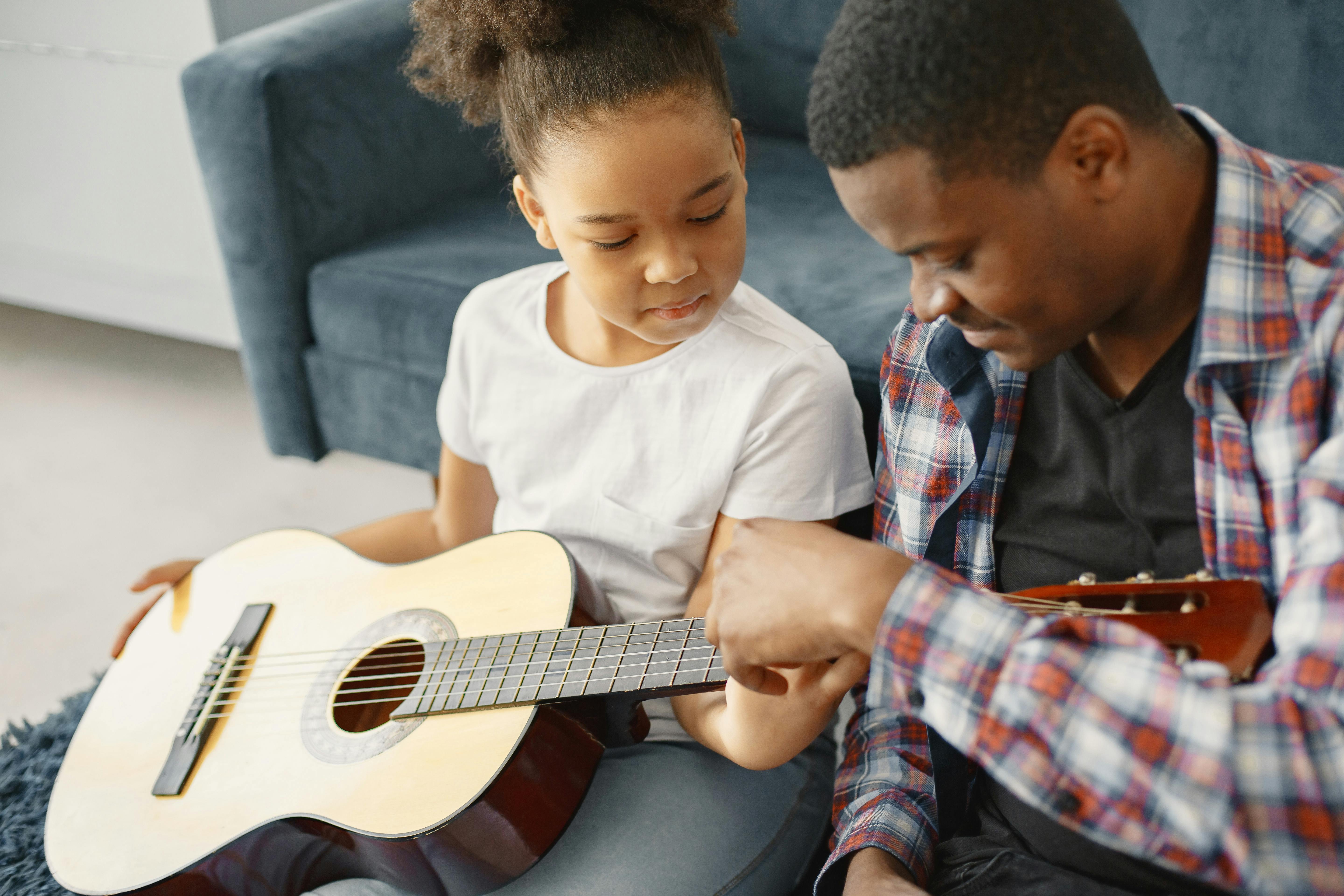
The standard advice is that piano is better for beginners. The notes are laid out in a straight line. Music theory is easier to see. It is all true. But it also turns out to be almost entirely irrelevant to whether your child will still be playing six months from now.
What actually determines that is something different: whether the instrument holds attention long enough for the habit to form, whether a child reaches something that sounds like music before the motivation runs out, and what the instrument does to their developing brain along the way. On all three counts, the picture is more complicated than the usual "piano first" argument suggests - and some of what the research shows will probably surprise you.
Piano Literally Rewires the Brain Differently - and That Cuts Both Ways
Here is something most parents have never been told: brain studies comparing pianists to other musicians have found that piano players develop a measurably more symmetrical brain than the general population. Most people have a dominant hand, and their brain reflects this - the motor cortex is deeper on one side than the other. Pianists are different. Because both hands are required to do equally complex things simultaneously on a keyboard, the brain compensates by strengthening the weaker hemisphere to match the dominant one. The result is a child whose brain is physically more balanced between its two sides than it would have been otherwise.
That is a genuinely remarkable finding. But it comes with a cost that the same research makes clear: piano is cognitively demanding in a way that can overwhelm young beginners. The brain is being asked to plan what note comes next and which finger plays it simultaneously, across both hands, reading notation at the same time. For a child who finds this stimulating, it is perfect. For a child who finds it frustrating, it is the fastest possible route to kids losing interest in the instrument before they ever play anything they recognize.

Guitar Does Something Piano Cannot - It Forces Children to Tune Their Own Ear
Piano is a fixed-pitch instrument. Every note is in tune the moment it is pressed because the tuning is built in and independent of the player. This is one of the reasons theory is easier to learn on piano - but it also means that piano players, at a beginner level, never have to develop their ear to produce a correct pitch. The note is either pressed or it is not.
Guitar is unfixed. The strings go out of tune, children have to tune them regularly, and they have to listen carefully to know whether what they are playing sounds right. Research on pitch perception across different types of musicians found that pianists actually performed worse than string and fretted instrument players on pitch discrimination tests - specifically because pianists do not tune their own instrument and therefore develop less acute pitch sensitivity over time. Guitar players, by contrast, develop strong pitch memory for their open strings as a direct consequence of tuning them repeatedly. This is not a trivial difference. A child who learns guitar is building a more accurate musical ear from day one, even if the music theory foundation takes longer to establish.
Just Eleven Weeks of Playing Piano Changes How the Brain Processes Everything
One of the more striking findings in recent music education research has nothing to do with musical skill at all. A controlled study from the University of Bath found that beginners who took piano lessons for just eleven weeks - one hour per week - showed measurable improvements in audio-visual processing compared to a control group that only listened to the same music without playing it. The piano students got better at detecting whether sights and sounds were happening simultaneously - a cognitive skill that carries into everything from reading to sports to holding a conversation in a noisy room. The same students also reported significantly reduced anxiety, stress, and depression scores after eleven weeks. The control group, who had listened to identical music without playing, showed none of these changes. The act of playing, not just hearing, is what drove the effect.
This is relevant to the guitar vs piano decision because it suggests that even a short, modest commitment to either instrument produces real neurological benefits that extend well beyond music - and that the sooner a child starts, the more of these benefits accumulate. The question is not really which instrument is better for the brain in some abstract sense. Both are excellent. The question is which one your child will actually stick with long enough for those benefits to develop.
A longitudinal study tracking the same people from age 11 to age 70 - the Lothian Birth Cohort study, published in Psychological Science - found that people who had played a musical instrument in childhood showed significantly greater cognitive ability at age 70 than those who had not, even after controlling for education and socioeconomic factors. The typical participant in this group had played just one instrument, had only two to five years of formal lessons, and reached only a beginner level. They were not musicians. They were people who took lessons as children and stopped. The cognitive protection still showed up six decades later. Starting matters. Finishing does not have to.

The Instrument That Gets to a Real Song Faster Wins the Motivation Battle
The most common reason children stop playing either instrument is not difficulty - it is that nothing they are playing sounds like anything they actually want to hear. Kids bored with guitar practice or piano practice - and losing interest entirely - is the default outcome when the gap between current ability and a recognizable song stays too wide for too long. The question of how to make guitar practice fun is really the question of how to close that gap as fast as possible.
Guitar closes that gap faster for most children. The opening riff of Seven Nation Army - one of the most recognizable guitar moments in popular music - uses a single string and can be played in a first or second session. A child who produces those seven notes and hears what they sound like experiences something that is genuinely hard to manufacture through piano exercises: the unmistakable feeling of having just played a real song. That moment is one of the most powerful tools available for keeping kids bored with early practice from becoming kids who quit. It arrives within days on guitar. On piano, the equivalent experience typically takes several weeks of groundwork first - not because piano is harder, but because the path to recognizable music is more structured and sequential.
This is not an argument against piano. For children who are drawn to its visual logic or who want to understand music theory from the inside out, piano's structured approach is exactly right. The point is that making guitar practice fun in the first month is structurally easier - and a fun way for kids to learn guitar is not a lowered bar, it is the condition under which the habit actually forms.

Practical Factors That Shape the Decision More Than Parents Expect
Guitar players tune their own instruments - which, as covered above, actively builds pitch perception. But tuning a guitar also means a child has a reason to interact with the instrument even on days when they are not practicing. They pick it up, check the strings, adjust them, put it down. That low-stakes daily contact adds up over weeks and months in ways that matter for the habit. A piano does not require this, which removes a small but real source of casual daily engagement.
Portability shapes motivation in kids music lessons in ways that are easy to underestimate. A guitar goes where children go - to a friend's house, a campfire, a family gathering. The social opportunities to play, show off a riff, and hear the response of an audience are built into the instrument's physicality. How to motivate kids to practice guitar beyond the first few weeks often answers itself when the guitar is present in enough social situations that playing it feels natural rather than solitary. Piano practice is almost always a private act in a fixed location. For children who are energized by social feedback - which is most children - this is a meaningful difference.
Finally: a guitar on a wall is seen every day. Research on practice habits in young musicians consistently finds that instrument accessibility is one of the strongest predictors of whether a child picks it up on any given day. The barrier to starting a guitar session when the instrument is leaning in the corner of the room is close to zero. That low barrier compounds over months in a way that drives the habit gap between children who practice consistently and those who practice occasionally - and the habit gap, more than talent, is what determines how far a child gets.

How Notey's World Solves the Hardest Part of Either Choice
Whichever instrument a parent chooses, the challenge is the same: how to stop kids from quitting guitar or piano in the first few months, when progress feels slow and the fun parts feel distant. The research above points toward a clear answer - children stay with instruments when they reach recognizable music quickly, when practice has a visible reward structure, and when the daily habit has something pulling it forward besides willpower.
Notey's World is built entirely around this problem for guitar. It is a game with levels, boss fights, and characters that unlock as a child progresses - built around the real guitar, with real-time feedback on every note played. A child does not have to wonder whether what they just played was right. The game responds. Guitar practice streaks are built into the progression system, which means the daily habit is reinforced by the game itself rather than by parental reminders. Guitar practice motivation for kids does not depend on a parent enforcing anything - the gamified music learning structure gives them a reason to return on their own. Engaging guitar lessons for kids work when every session has a finish line, and game-based guitar lessons for children replace the friction of early learning with a reward loop that makes fun guitar practice for kids the default rather than the exception. Ready to give your child that structure? Explore Notey's World here.