How Learning Guitar Wires Kids' Brains Like a Second Language
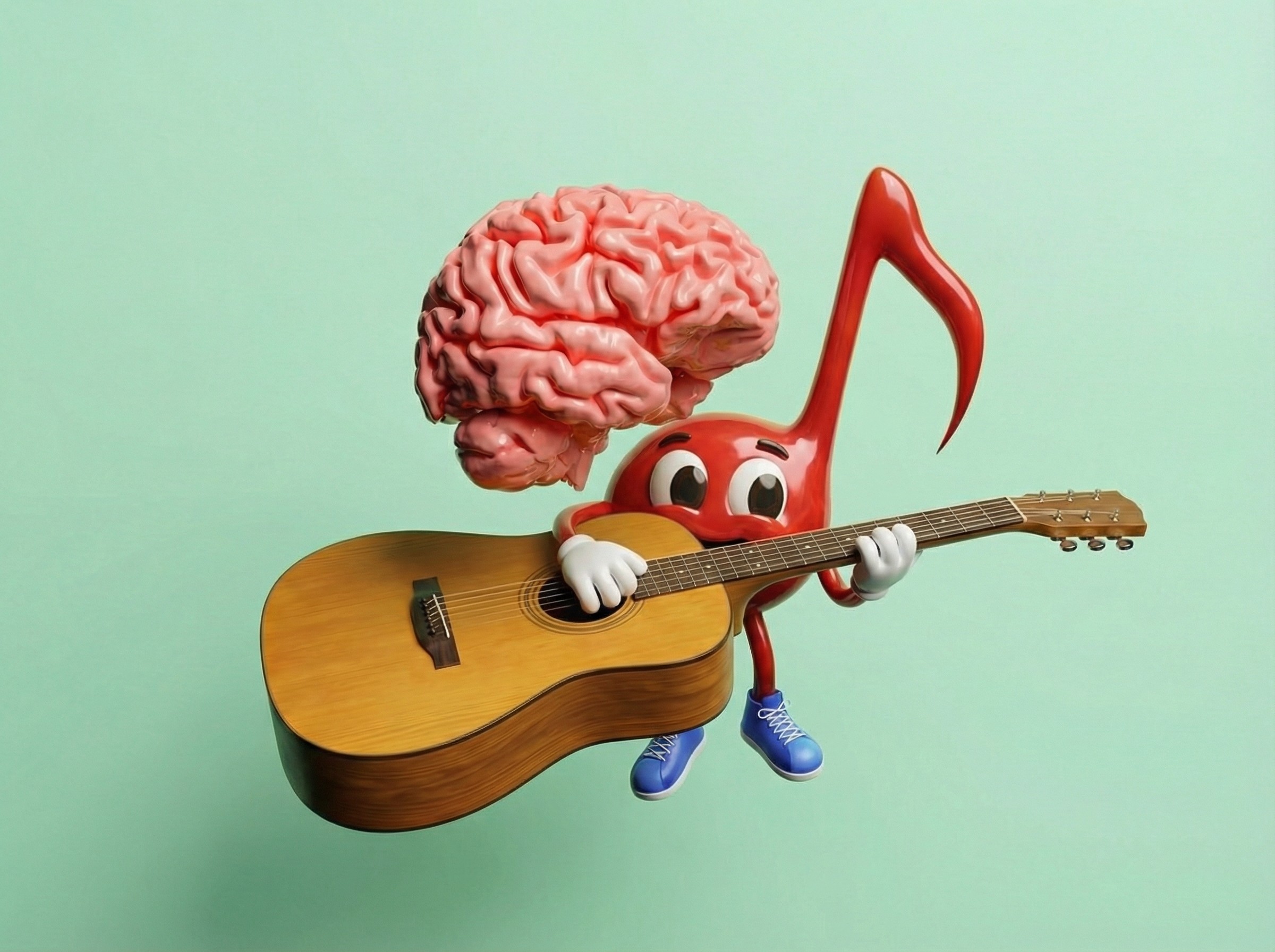
Music is a language - and the brain treats it like one.
That's not a metaphor. That's neuroscience. When a child learns to play guitar, their brain doesn't file it under "hobby." It files it under communication system - right alongside spoken language. And when two languages run in the same brain, something remarkable happens: the entire cognitive architecture gets an upgrade.
For decades, researchers have documented what's known as the bilingual advantage - a measurable edge in executive function, mental flexibility, and working memory that children who speak two languages hold over their monolingual peers. What's newer, and arguably just as exciting for parents who can't quite manage a second language household, is this: children who learn a musical instrument show strikingly similar cognitive gains. Same neural regions. Same mental benefits. Different path to get there.
If your child is learning guitar, they may already be building a bilingual brain - without speaking a single extra word.
What Is the Bilingual Advantage?
Children who grow up speaking two languages don't just have more words at their disposal. Their brains are constantly managing two parallel systems - deciding, in milliseconds, which language to activate and which to suppress. This ongoing mental juggling act builds extraordinarily strong executive function: the umbrella term for the high-level cognitive skills that govern how we think, focus, and behave - inhibitory control, cognitive flexibility, and working memory.
These aren't just school skills. They're the foundation of nearly every complex mental task a child will face across their entire life. Bilingual children consistently outperform peers on all three - because their brains get daily practice managing two demanding systems at once.
Here's where the guitar comes in.
The Guitar-Bilingualism Connection
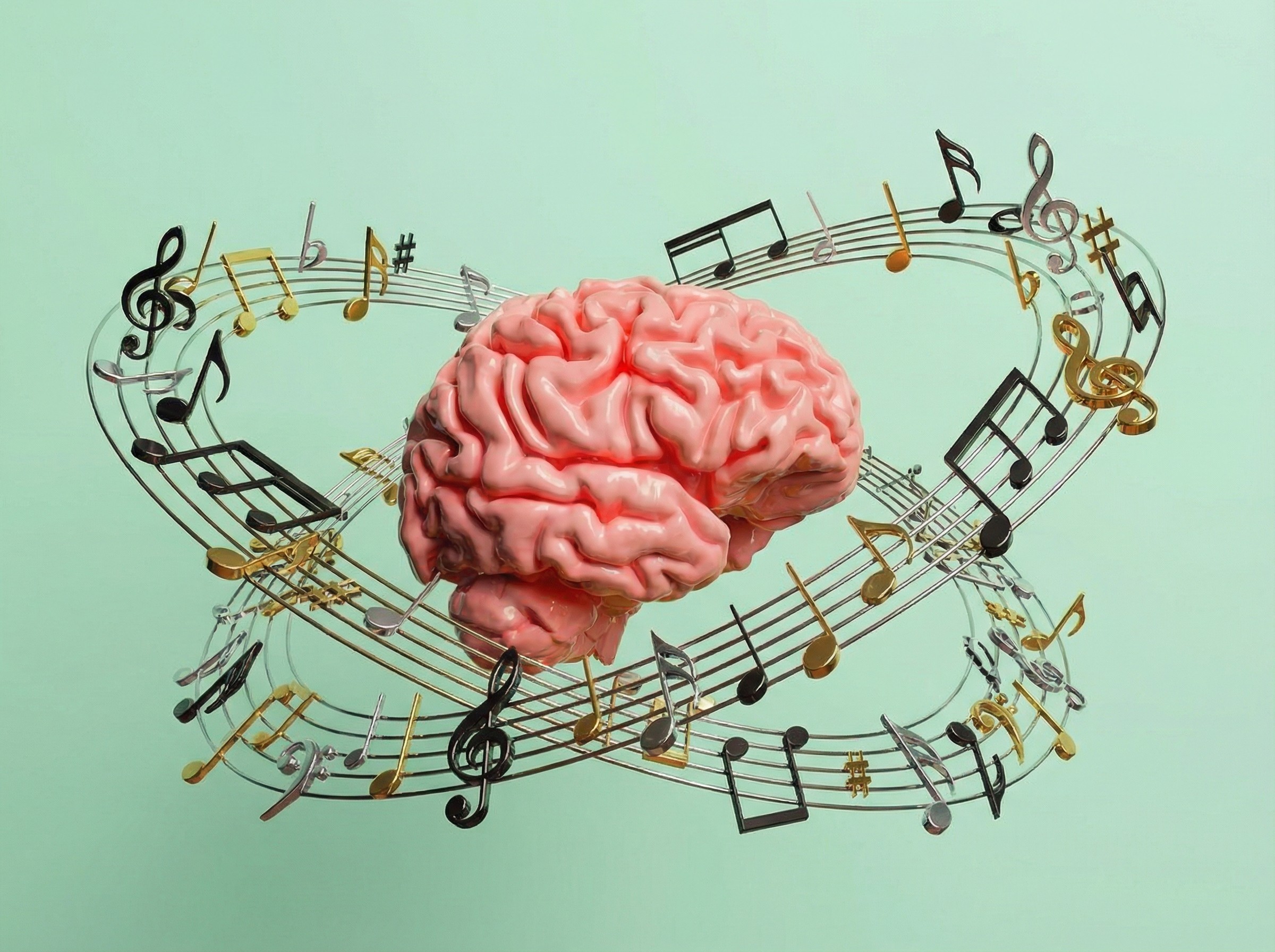
When neuroscientists put musicians and bilinguals in brain scanners, something striking emerged. The same regions of the prefrontal cortex lit up in both groups during demanding cognitive tasks - and both showed denser neural connectivity than their non-musical, monolingual peers.
A landmark study from Northwestern University, led by neuroscientist Nina Kraus, found that musical training strengthens the same auditory and cognitive pathways activated by bilingualism - heightened auditory attention, sharper language processing, and stronger classroom focus. The overlap isn't coincidental. Both experiences demand that the brain rapidly process, prioritize, and respond to complex streams of information. Over time, that reshapes the brain's architecture in remarkably similar ways.
The Three Skills Guitar Builds - and Why They Matter at School
Executive function is what allows a child to sit through a 40-minute lesson without drifting, switch from math to reading without stalling, and hold three instructions in mind long enough to follow through. It's not intelligence - it's mental self-management. And every guitar session trains it directly: holding melody, rhythm, and finger positions simultaneously, inhibiting wrong movements, adjusting mid-phrase when something goes wrong.
Working memory - the brain's mental whiteboard - is the hidden driver behind reading comprehension and math performance. Research in Frontiers in Psychology shows musical training expands working memory capacity in children after just a few months of regular practice, because playing music requires holding rhythm, pitch, and movement in mind all at once.
Cognitive flexibility is the ability to abandon one approach and try another - to recover after a wrong answer, adapt to a new teacher, or attack a problem from a fresh angle. Guitar builds this naturally: every new song is a new challenge, and every practice session asks the brain to identify what isn't working and adjust. A study from the Royal Conservatory of Music found children with regular music instruction scored significantly higher on cognitive flexibility than non-musical peers - and the advantage grew with each year of training.
The Age Window That Changes Everything
For both bilingualism and music, timing matters. Research consistently points to ages 6–13 as the critical window for neuroplasticity-driven gains. During this period, the brain builds and prunes neural connections at a rate it will never match again. Experiences here don't just influence skill - they physically shape brain structure.
Children who begin musical training before age 7 show the greatest long-term gains. But meaningful benefits are documented across the entire 6–13 range - the key variable is consistency, not starting age. Ten focused minutes of daily guitar practice during these years is a significant neurological event, compounding quietly in the background of a child's development.
How Notey's World Builds the Bilingual Brain - One Song at a Time
Understanding the science is one thing. Finding a way to actually deliver those benefits consistently, without a daily battle over practice time, is another.
That's the problem Notey's World was built to solve.
Notey's World is a gamified guitar learning app for kids ages 6–17 that uses real instrument play, AI-powered audio recognition, and an adventure game structure to make daily practice something children genuinely look forward to. Every session requires a child to simultaneously process pitch, rhythm, finger positioning, and visual cues - the same multi-system cognitive load that makes musical training so neurologically powerful. The AI listens to the real guitar in real time, providing instant feedback that keeps the brain in active, engaged challenge rather than passive repetition.
The game structure - boss fights, unlockable characters, and level progression built around real songs like Seven Nation Army, Disney soundtracks, and Sabrina Carpenter hits - ensures children return daily. And that daily return is exactly what builds executive function, expands working memory, and trains cognitive flexibility over time.
Notey doesn't ask children to practice. It makes them want to. And in the gap between those two sentences lives every cognitive benefit this article describes.
The Bottom Line
Bilingualism gives children a cognitive edge because it forces the brain to manage two complex systems simultaneously - building executive function, working memory, and cognitive flexibility as natural byproducts of daily use. Musical training activates the same neural architecture through the same mechanism: sustained, engaged management of a sophisticated and demanding system.
For children ages 6–13, learning guitar isn't just a hobby. It's a second language for the brain -one that quietly rewires cognitive capacity in ways that ripple outward into every classroom, every test, and every challenge they'll face.
Music is a language. And the children who speak it fluently? They think differently.
In the best possible way.
Want to give your child the cognitive edge of a second language - through songs they already love? Explore Notey's World and discover what 10 minutes of daily guitar practice can do for the brain behind the smile.