What to Do When Your Child Says Guitar Is Too Hard
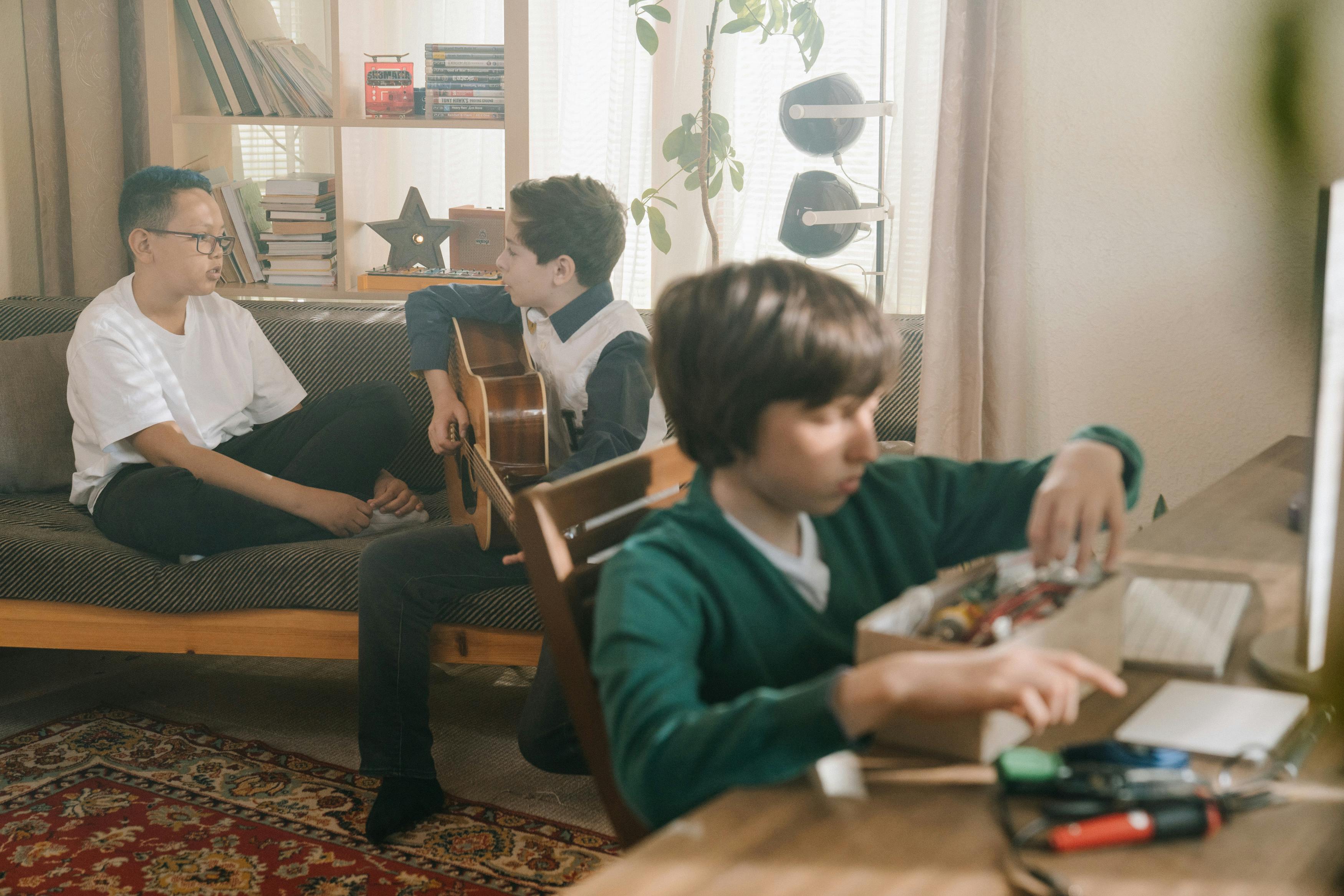
Your child was excited about guitar two months ago. Now they are sitting on the sofa telling you it is too hard and they do not want to practice anymore. Sound familiar?
Before you have the big conversation about whether to quit, it is worth knowing that this moment - somewhere between month one and month four - is where almost every beginner guitarist hits a wall. Not just kids. Adults too. The excitement of starting has worn off, the fingers are still figuring things out, and nothing they play yet sounds the way they imagined it would. It is genuinely frustrating. And "this is too hard" is the only language most kids have for describing it.
The good news is that this moment is almost never really about quitting. It is about right now. And right now is very fixable - even if it does not feel that way from the sofa.
What They Are Usually Actually Saying
When a child says guitar is too hard, they are almost never talking about guitar in general. They are reacting to something specific - a chord that keeps going wrong, a song that feels out of reach, a practice session that ended badly and left them feeling like they are getting nowhere. They do not have the words for that, so it comes out as a verdict on the whole thing.
The most useful thing you can do in that moment is ask a smaller question. Not "do you want to keep going?" - which puts a huge decision in front of a frustrated child who will almost always say no. Something more like "what bit felt rubbish today?" That question almost always gets a real answer. And a real answer means a real problem, which means something you can actually do something about.
Studies on how children experience difficulty when learning new physical skills show that kids at this stage tend to read normal struggle as a sign that they are not good enough - rather than a sign that they are learning. Adults at least know, somewhere in the back of their heads, that being bad at something new is temporary. Most children have not learned that yet. They feel stuck, and stuck feels permanent. A parent who can name the stuck thing - "that C chord is genuinely awkward for everyone at first" - does more in thirty seconds than an hour of encouragement.

Before You Talk About Quitting, Try This
There is a big difference between a child who has genuinely had enough and a child who just needs the pressure taken off for a bit. Pushing hard in either situation tends to backfire - but so does immediately giving in. Here is a middle path that works for a lot of families.
Offer a two-week break with a specific end date. Not "take a break if you need one" - that becomes permanent by accident. Something more concrete: "Let's leave it for two weeks, and we'll pick it back up on the 20th." A child who is truly done will feel relieved and show no interest when the two weeks are up. A child who just needed to breathe will often pick the guitar up on their own before you even get there. That tells you a lot more than any conversation will.
Research tracking children through the first year of music lessons found that the months two to four window is when the largest number of kids drop out - not because they lacked the ability, but because nothing in their practice routine changed to meet them at the difficult point. The children who came through it were not more talented. Their practice just got adjusted at the right moment.

Things That Tend to Make It Worse
"But we paid for the guitar." Makes the instrument feel like a debt instead of something fun. "Just practice more." When nothing is clicking, more of the same practice is not the answer. "Your brother never complained about this." Comparing kids to each other is the fastest way to make them associate guitar with feeling inadequate. What tends to work better: acknowledge that the specific thing is hard, and suggest trying it a different way - not trying it harder.
Three Small Changes That Make a Real Difference
The first one surprises a lot of parents: let your child pick the next song. Kids losing interest in guitar is very often not about guitar being too hard - it is about a specific song that is not worth the struggle to them. Studies on what keeps children engaged in music practice found that kids who had a say in what they played were significantly more likely to keep going than kids who were just given material to work through - more so than lesson quality, more so than parental encouragement. Letting them choose is not giving up on progress. It is one of the most effective ways to keep it going.
The second change: shorter sessions, every day rather than longer sessions a few times a week. When a child already feels like guitar is too hard, a forty-minute practice session is a forty-minute reminder of everything they cannot do yet. Ten minutes a day is not less serious - it actually produces faster progress, because shorter sessions end before frustration sets in and the brain consolidates what it learned overnight. If daily guitar practice for kids feels like a battle, the length of each session is usually the first thing worth changing.
The third change: start every session with something they can already do. Not something they are working on - something they already know and can play reasonably well. Two or three minutes of something easy changes the whole mood of what follows. A child who starts from a place of "I can do this" handles the harder material differently than one who dives straight into last week's frustration. Making guitar practice fun again often starts this small. Fun guitar practice for kids does not require a complete overhaul - sometimes it is just the order things happen in. Make guitar practice fun at the start, and the harder parts become easier to face.
The Moment Most Kids Quit Is Right Before Something Clicks
Here is the thing about the "guitar is too hard" wall: it tends to show up just before a real breakthrough. Progress on guitar does not happen smoothly - it happens in jumps, with flat patches in between where nothing seems to be improving. That flat patch feels like being stuck. What is actually happening is that the skill is consolidating, getting ready to move. The children who quit during the flat patch never find out how close they were.
That is not a reason to force a miserable child to keep practicing. But it is a reason to try changing what practice looks like before deciding it is over. Kids bored with guitar practice do not need more motivation to push through - they need the practice itself to feel worth showing up for. That is how you stop kids from quitting guitar at the worst possible moment: not by pushing harder, but by making guitar practice fun again.
That is the problem Notey's World was built to solve. It is a game built around the real guitar - your child plays actual notes on an actual guitar, and the game responds in real time. Every session has a level to get through, a challenge to beat, something new to unlock. Guitar practice motivation for kids stops depending on willpower when the practice itself gives them a reason to come back. Making guitar practice fun is not about making things easier - it is about making the hard parts feel like part of a game worth playing rather than a chore worth avoiding. That is what gamified music learning does, and why it works so well for kids who are at the wall. Guitar practice streaks build naturally when a child actually wants to open the app each day, and how to motivate kids to practice guitar becomes a much simpler question when the motivation is built into the structure. Engaging guitar lessons for kids work best when every session ends with something accomplished - and that is exactly how Notey is designed. Game-based guitar lessons for children replace the daily negotiation with a reward loop that pulls in the same direction as real progress. Motivation in kids music lessons tends to live in the lesson room - Notey brings it into every other day of the week too. And a fun way for kids to learn guitar through the hard middle months is the thing that turns "I want to quit" into "can I play a bit longer." Ready to see what that looks like? Explore Notey's World here.