Why Kids Quit Guitar (And How to Stop It Before It Happens)
The Numbers Tell a Bleak Story
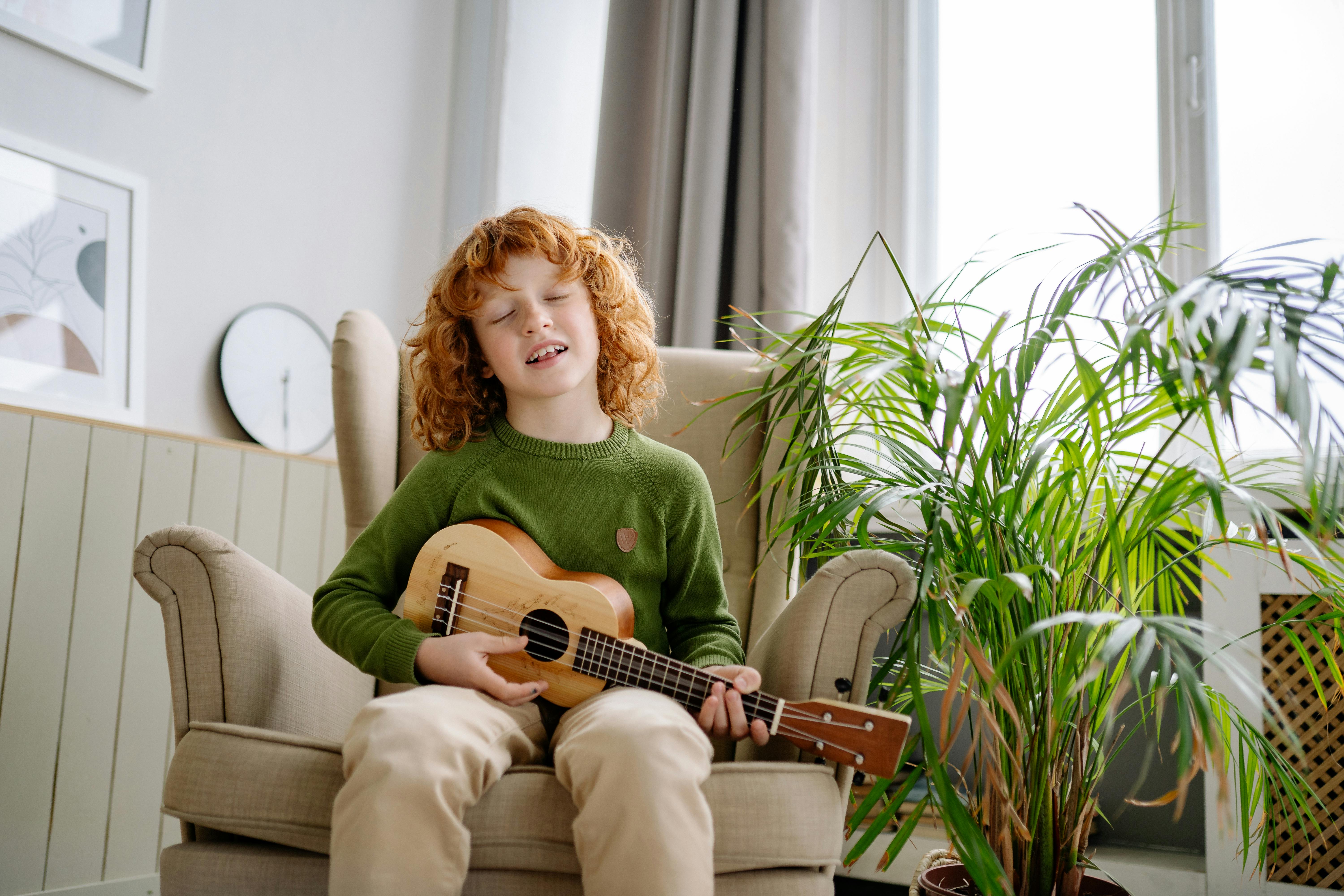
A longitudinal study published in PLOS ONE followed children aged 10 to 17 across the UK and Germany and found that about 50% of all students drop out of music lessons by the time they turn 17 years old, with most quitting between ages 15 and 17. But the damage starts much earlier. Research shows that children between 11 and 15 tend to drop out most frequently, and approximately 25% of players abandon their instruments by age 12.
Guitar players specifically face a unique challenge. The same PLOS ONE study found that guitar students often claim they've reached their learning goals more frequently than pupils learning other instruments. Translation: they quit because they feel they've gotten as far as they can get. That feeling of hitting a ceiling happens when progress becomes invisible and practice feels pointless.
These aren't just statistics. These are kids who once lit up at the idea of learning their favorite songs, who imagined themselves on stage, who believed they could do something remarkable. Then something broke.
Why Progress Disappears (And Why That Matters More Than You Think)
In the beginning, everything feels new. Students learn open chords. They play simple melodies. Progress feels fast because every week brings something tangible. But then comes what researchers call the plateau phase. The quick wins disappear. Finger coordination becomes the focus. Music theory enters the conversation. Songs take weeks instead of days to learn.
This is where real skill develops. But it's also where most children quit right before things start to click. The problem isn't that progress stops. The problem is that progress becomes invisible to a child who needs to see evidence that they're getting better.
Adults understand delayed gratification. We know that consistent effort eventually pays off. Children ages 6 to 13 don't process time and progress the same way. When a child practices for 20 minutes and can't hear a difference in their playing, their brain registers that practice as pointless. Do that for three weeks in a row and motivation collapses.
Traditional guitar lessons offer no mechanism to make micro-progress visible. A teacher might say "good job" or "you're getting better," but those words don't compete with the child's internal narrative that says they sound exactly the same as they did yesterday. This is why reward systems matter, and why the structure of those rewards determines whether a child perseveres or quits.
The Pain Problem Nobody Wants to Talk About
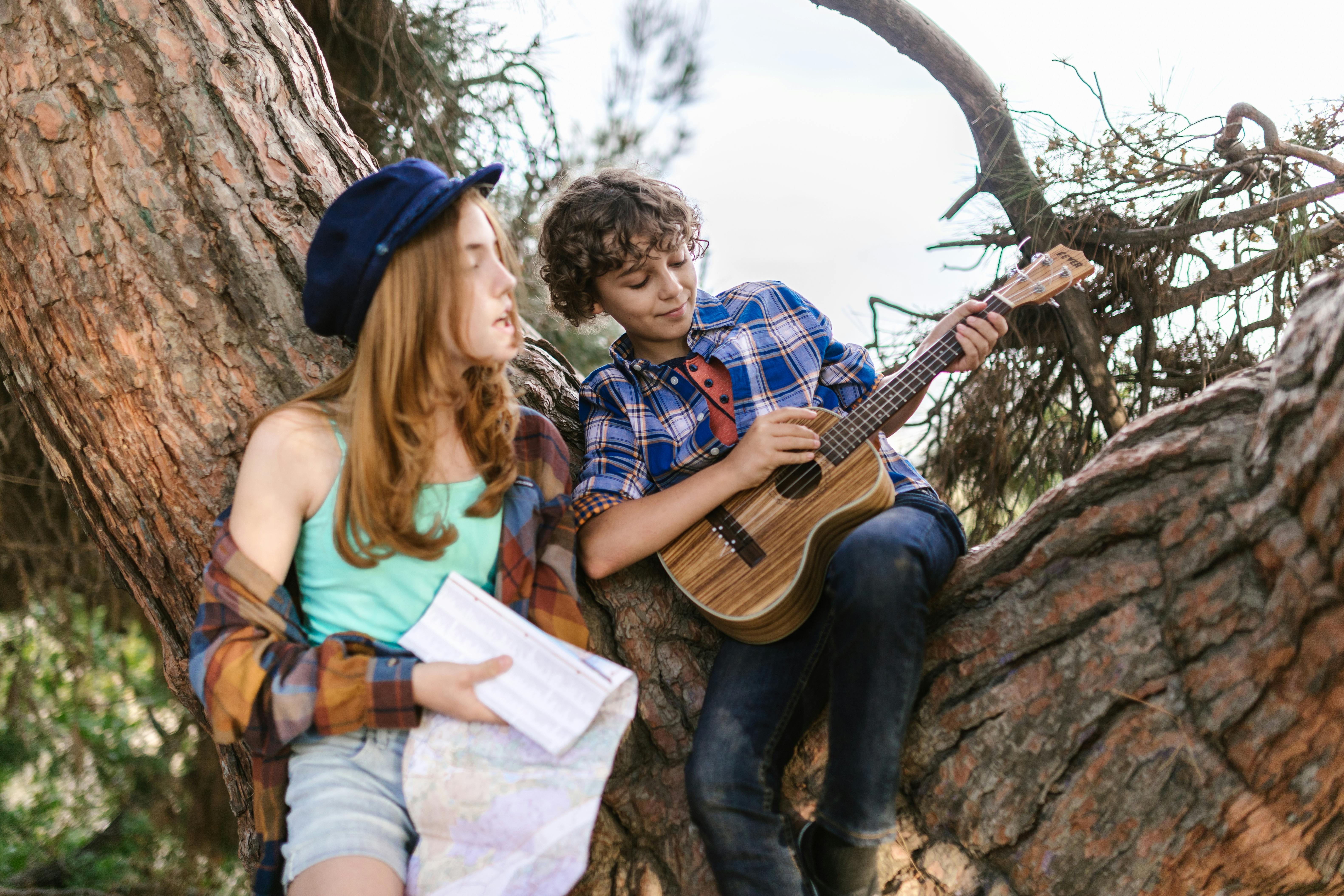
Here's what every guitar teacher knows but few parents are warned about: learning guitar hurts. It takes 2 to 4 weeks for calluses to fully form on a child's fingertips, and during that time, pressing steel strings into frets creates real physical pain. The skin on a child's fingertips experiences repeated trauma, wearing away the top layer and exposing more sensitive tissue underneath.
The standard advice is to push through it. Practice for 30 minutes a day. Build those calluses. Toughen up. But research on callus formation shows that shorter practice sessions of 10 to 15 minutes are actually more effective for beginners. Longer sessions break open the skin before it has time to harden, restarting the painful cycle. Yet traditional lessons still operate on the assumption that more practice time equals better results.
For a child already battling invisible progress, adding physical pain creates a perfect storm. They're not seeing improvement, their fingers hurt, and every practice session becomes a negotiation. Parents who don't understand the physiology of callus formation think their child is being dramatic or lazy. The child interprets the pain as evidence that they're not cut out for guitar. Everyone loses.
When Lessons Feel Like Homework
Children quit guitar when practice becomes a chore. That sounds obvious, but the research behind it reveals why traditional lesson structures almost guarantee that outcome. Studies on intrinsic and extrinsic motivation show that when children feel controlled by external pressure, they disengage. If a parent has to remind, cajole, or threaten a child to practice, the child's brain registers guitar as something they're being forced to do, not something they want to do.
The research also reveals something counterintuitive about rewards. A 2024 study on motivation transformations found that extrinsic rewards can serve as an effective entry point for engagement, helping students start a positive feedback loop of internally rewarding learning. The key is structure. Rewards tied to outcomes a child can't control (like playing a song perfectly) undermine motivation. Rewards tied to behaviors a child can control (like completing a practice challenge) enhance it.
Traditional guitar lessons offer neither. A child finishes a week of practice, goes to their lesson, and the teacher either approves or corrects. There's no immediate reward loop. No sense of momentum. No game-like structure that makes the grind feel purposeful. It's just repetition in service of a distant goal that doesn't feel real to a 9-year-old.
The Wrong Songs at the Wrong Time
Ask a child why they quit guitar and you'll often hear some version of "it was boring." Dig deeper and you'll find that they spent months learning songs they didn't care about. Twinkle Twinkle Little Star. Mary Had a Little Lamb. Folk songs written when their great-grandparents were young. Teachers defend this approach by arguing that simple songs teach fundamentals. They're not wrong. But they're solving the wrong problem.
A child who wants to learn guitar wants to play the songs they hear on TikTok, the soundtrack from their favorite movie, the music their friends talk about. When lessons ignore that reality and force children through a curriculum designed for adults or for a different era, motivation dies. It doesn't matter that Hot Cross Buns teaches finger positioning. The child hears it as proof that guitar isn't for them because real guitar sounds nothing like this.
The song problem compounds the progress problem. Not only is improvement invisible, but the evidence of improvement is music the child doesn't value. You've mastered a song nobody under 40 has heard of. Congratulations. Time to quit.
What Actually Works (And Why It's Not What You Think)
The solution to all of these problems isn't more discipline or better practice schedules or finding the perfect teacher. It's rethinking the entire structure of how children learn guitar. Games solve the motivation problem that traditional lessons can't. Not guitar-flavored apps that gamify meaningless tasks. Not apps that track practice streaks. An actual game built from the ground up to teach real musicianship on a real guitar.
This is where Notey's World enters. It's a guitar learning game for kids ages 6 to 13 that turns daily practice into platformer levels, sight-reading exercises into boss fights, and progress into a currency called Beatcoin that unlocks skins, characters, and new challenges. The game uses a machine-learning audio engine that listens to your child's real guitar and responds in real time.
Here's why that structure works where lessons fail. First, it solves the invisible progress problem. Every completed challenge earns Beatcoin immediately. Your child can see their progress accumulate in real time, not in some abstract future where they'll finally be good enough. Second, it solves the pain problem. Game levels are designed for short bursts of focused play, naturally breaking practice into 10- to 15-minute sessions that align with how calluses actually form. Third, it solves the motivation problem. Children aren't practicing because a parent told them to. They're playing because they want to beat the next level.
The song library includes music kids actually recognize. Disney soundtracks. Star Wars themes. Sabrina Carpenter. Not because these songs are pedagogically superior, but because motivation matters more than methodology when the alternative is quitting entirely. Notey teaches genuine musicianship through game mechanics, which means children learn to read music, understand rhythm, and develop finger coordination while fighting dynamic bosses and unlocking rewards.
This isn't theory. Notey is actively adopted by schools including NYC Public Schools, Chicago Public Schools, and Austin Public Schools. It won the 2023 Technology In Education Award from INNOVISION and was selected for the 2023 Techstars Fall Cohort. Award-winning guitar educator Bill Swick called it a must-have for beginning guitar students and praised that it uses a real guitar as a motivator.
The difference between a child who sticks with guitar and one who quits often comes down to whether practice feels like work or play. When guitar becomes a game, the entire equation changes. Progress becomes visible. Pain becomes manageable because sessions are shorter. Songs are relevant. Rewards are immediate. And your child stops needing to be reminded to practice because they're not practicing anymore. They're playing.
Before You Let Them Quit
If your child is losing interest in guitar, the instrument isn't the problem. The delivery system is. Traditional lessons were built for a different era and a different child. They assume delayed gratification, high pain tolerance, and intrinsic motivation for classical music. That's not how children ages 6 to 13 process learning in 2026.
The research is clear. Children quit when progress is invisible, when practice hurts, when lessons feel like homework, and when the music doesn't matter to them. Every one of those problems has a structural solution. Games make progress visible through immediate rewards. Short play sessions align with callus formation. Self-directed gameplay removes parental pressure. Relevant music libraries respect what children actually care about.
Your child doesn't lack musical talent. They lack a learning environment that works with how their brain is wired. Before you pack that guitar away for good, before you write off music education as something your family tried and failed, consider that the lesson model you chose was designed to make most children quit. The statistics prove it. Half of all students drop out. That's not a child problem. That's a system problem.
Guitar can be the skill your child carries for life. It can be the thing that builds confidence, teaches persistence, and creates joy. But only if you stop forcing them through a broken system and give them a tool that actually works. Try Notey's World with your child. Let them play instead of practice. Let them see their progress instead of trusting that it's happening. And watch what happens when learning guitar finally feels like play instead of punishment.
Frequently Asked Questions
At what age do most kids quit guitar?
Research shows that children between ages 11 and 15 tend to drop out of music lessons most frequently, with about 50% of all students quitting by age 17. The highest-risk period is between 15 and 17 years old, though many children also quit in the first year when finger pain and slow progress are most discouraging.
How long does it take for guitar calluses to form in children?
Guitar calluses typically take 2 to 4 weeks to fully form in children, though the timeline varies depending on practice frequency and skin type. The key is practicing in short bursts of 10 to 15 minutes rather than long sessions, which allows the skin to toughen gradually without causing blisters or discouragement.
What makes kids lose interest in guitar lessons?
Children lose interest in guitar when lessons feel like boring homework rather than play. Research identifies boredom, frustration at slow progress, dislike of practice, and finger pain as the top reasons kids quit. Traditional lesson structures often lack immediate rewards and fail to make micro-progress visible, which is essential for maintaining motivation in ages 6 to 13.
Do reward systems work for motivating kids to practice guitar?
Research shows that extrinsic rewards can serve as an effective entry point for engagement, helping children start a positive feedback loop of learning. The key is that rewards must be immediate, tied to controllable behaviors like practice time rather than outcomes, and structured as part of an internally rewarding learning process. Virtual rewards within game-like structures have proven especially effective for children ages 6 to 13.