Benefits of Learning Guitar for Kids: What the Research Says
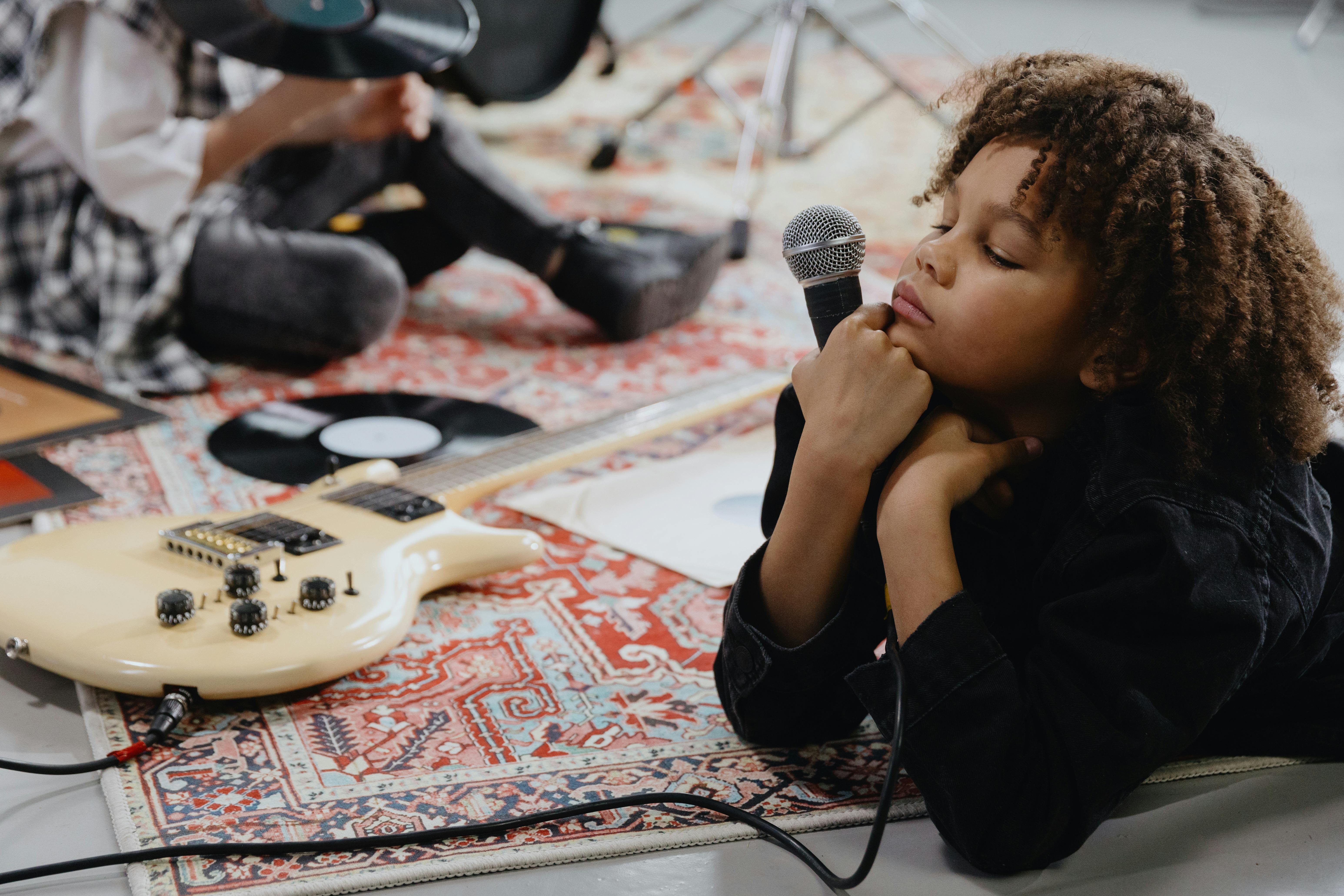
Music isn't just a hobby - it's one of the most cognitively demanding activities a young brain can take on.
That's not a marketing line. It's what researchers studying child development have found, repeatedly, when they scan the brains of young musicians. Something is happening when a child picks up an instrument and starts to learn it. Neural pathways are forming. Cognitive architecture is being built. And unlike most childhood activities, the effects don't stay in the music room - they spill into everything else.
Guitar, specifically, offers a particular kind of challenge. It requires both hands to do different things simultaneously, asks the brain to translate symbols on a page into physical motion, and demands that the player listen and adjust in real time. For a child between 6 and 13 - when the brain is at its most plastic - that is an extraordinary workout. The benefits of learning guitar for kids go well beyond being able to play "Happy Birthday" at a family gathering.
Guitar Changes the Structure of the Young Brain
Research from Northwestern University's Auditory Neuroscience Laboratory has shown that musical training physically alters how the brain processes sound. Children who learn an instrument develop stronger auditory discrimination - the ability to pick out subtle differences in pitch, rhythm, and tone. This matters beyond music. The same neural machinery that learns to distinguish a C from a C# is the machinery a child uses to distinguish sounds in language, which supports both reading and listening comprehension.
The physical demands of guitar - fretting with the left hand while picking or strumming with the right - also build what neurologists call bimanual coordination. Each hand is doing something independent and precise. Over months of practice, the corpus callosum, the bridge connecting the two hemispheres of the brain, literally thickens in young musicians. That's not metaphor - it's measurable anatomy, and it's one of the clearest physical arguments for starting a child on an instrument young.
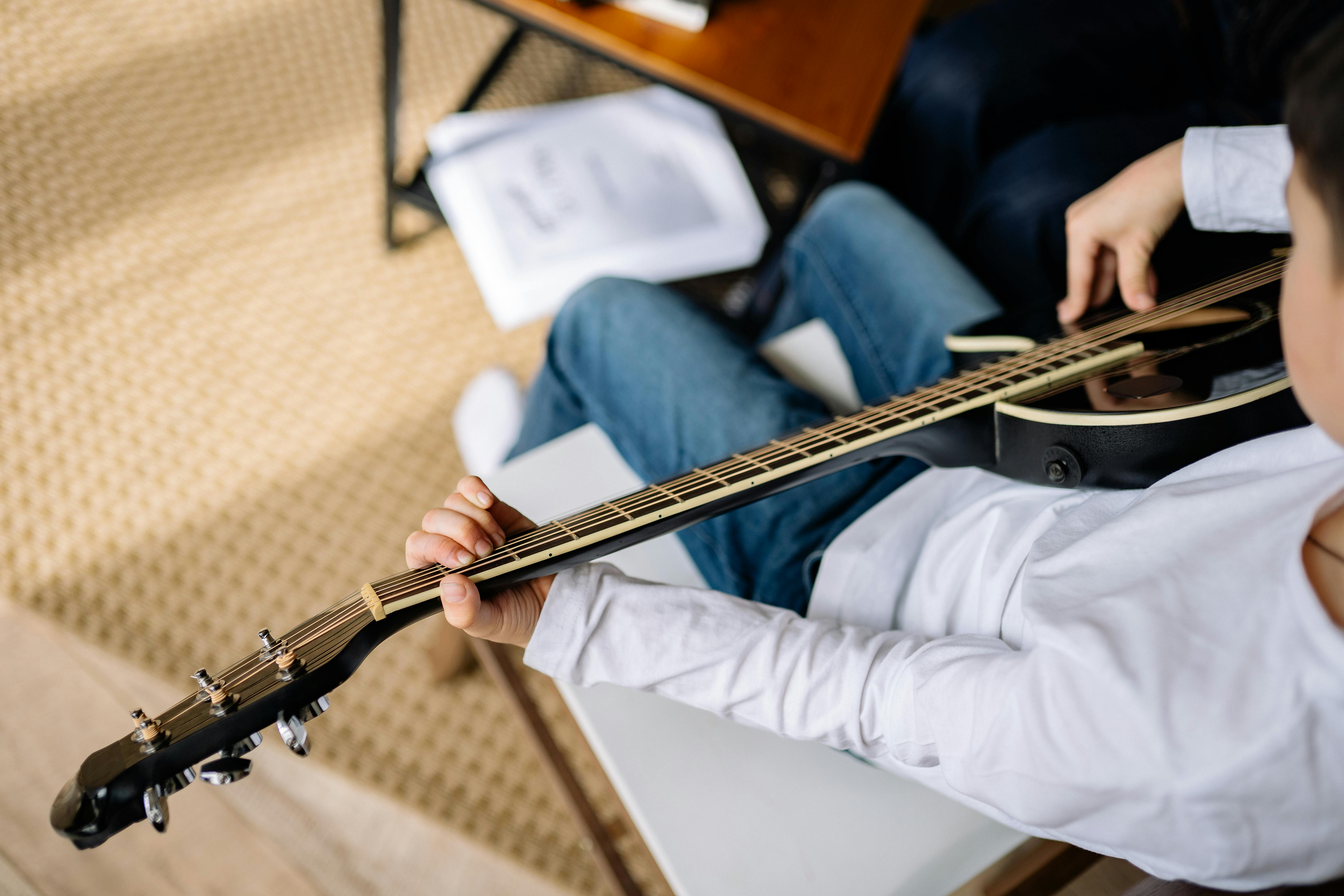
The Confidence a Child Builds Is Real
There's a specific kind of confidence that comes from learning something hard. Not the participation-trophy kind, where a child is told they did well regardless of outcome, but the earned kind - where a child struggled with something, kept going, and then one day it worked. Developmental psychologists call this mastery, and they consider it one of the most powerful drivers of long-term self-esteem.
Guitar is full of mastery moments. The first time a chord rings clean. The first time both hands coordinate on a simple melody. The first time a child plays a song they actually recognize. The National Association for Music Education notes that these small wins compound over time, building a child's belief that effort leads to results. That belief - sometimes called a growth mindset - transfers directly to how a child approaches challenges in school, friendships, and everything else. It's one reason parents often see changes in their child's general resilience after a few months of guitar, not just in their playing. If you're seeing resistance at home, our article on what to do when your child says guitar is too hard walks through how to get past that wall.
Guitar Teaches Patience in an Age That Doesn't
Children today exist in an environment engineered to deliver instant feedback. Every app, game, and video is optimized to reward immediately. Guitar doesn't do that. A chord takes days to get clean. A song takes weeks. Progress is real, but it's slow enough that a child has to learn to tolerate the gap between where they are and where they want to be.
That tolerance - the ability to stay with something through the frustrating middle stretch - is one of the most practically useful traits a child can develop. Research supported by the NAMM Foundation has consistently linked music education with improved self-regulation, the ability to manage impulse and emotion in the face of difficulty. For parents navigating a child who struggles to focus or sit with frustration, this is worth noting. The skills guitar builds aren't soft - they show up in classrooms, on sports fields, and in relationships.
Guitar and Academic Performance
The connection between music education and academic outcomes has been studied enough that it's no longer controversial. Children who study an instrument consistently outperform non-musicians in reading, mathematics, and verbal reasoning. The mechanism isn't fully understood, but the leading theory is that music training strengthens the same cognitive functions - working memory, attention, and pattern recognition - that underlie academic performance across subjects.
Guitar, with its combination of notation reading, rhythm counting, and spatial reasoning, engages several of these functions at once. A child working out how to read tablature while counting beats while positioning their fingers is doing something genuinely complex. Over time, that kind of regular, structured cognitive challenge builds capacity that shows up well outside of music. If you want a sense of what a realistic learning timeline looks like, our piece on how long it takes a child to learn guitar gives a practical breakdown by age.
How Notey's World Puts These Benefits into Daily Practice
Knowing the benefits of guitar and actually getting a child to practice consistently are two very different problems. Most parents discover this quickly. The science is compelling, but it doesn't help much when a seven-year-old would rather do anything else than sit with a frustrating chord for the fifth time this week.
This is exactly the problem Notey's World was built to solve. Notey is a guitar learning game - emphasis on game - where the daily practice that produces all the benefits above is packaged as a video game that kids aged 6 to 13 genuinely want to open. Sight-reading exercises become platformer levels. Kids earn Beatcoins by completing lessons, which they spend on character skins and unlockables. Boss-fights test what they've learned in a format that feels like a reward, not an exam.
A machine-learning audio engine listens to the child's real guitar in real time and responds to what it hears - so unlike Guitar Hero and its plastic controller, Notey teaches genuine musicianship on an actual instrument. The song library includes tracks kids already recognize: Star Wars, Disney classics, Harry Potter, Sabrina Carpenter - which gives them an immediate goal worth working toward. Notey holds a 4.7-star rating on the App Store and is used by NYC, Chicago, and Austin public schools, as well as multiple Suzuki music programs. The curriculum was designed with the input of real music educators, which means the progression that makes Notey fun is also the progression that makes it effective.
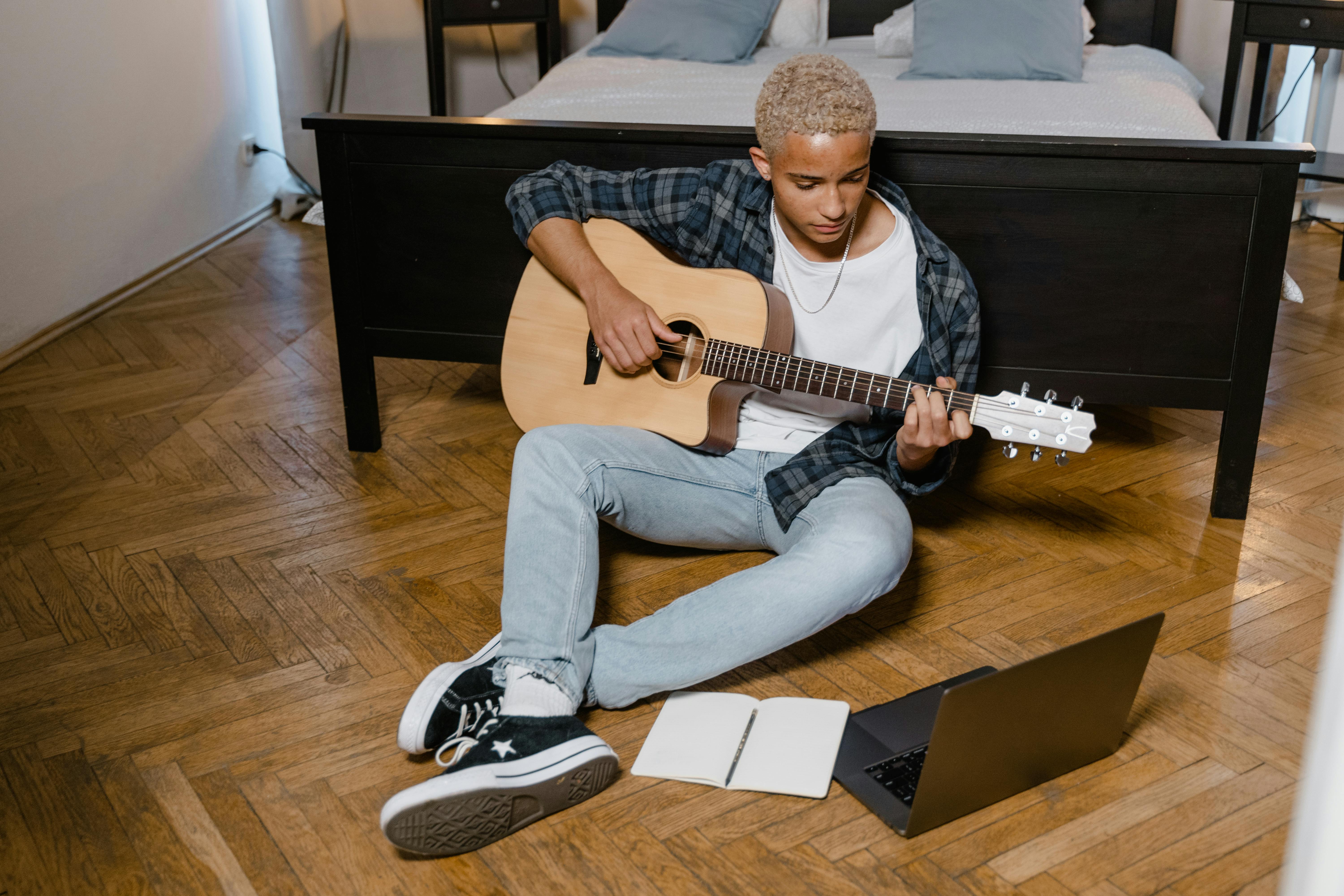
The Investment Is Worth More Than It Looks
When a parent signs a child up for guitar lessons or downloads a learning app, it's easy to think of it as a music decision. But it's also a brain development decision, a confidence-building decision, and a patience-training decision. The benefits of learning guitar for kids reach well past being able to play songs - they build habits and cognitive patterns that show up in school performance, emotional regulation, and a child's fundamental relationship with challenge.
If your child has ever expressed interest in guitar - even casually, even once - that interest is worth taking seriously. You don't need them to become a musician. You just need them to start.
Frequently Asked Questions
Does learning guitar actually make kids smarter?
Research consistently links music education with stronger performance in reading, mathematics, and verbal reasoning. Learning guitar builds working memory, attention, and pattern recognition - the same cognitive functions that underlie academic success. Children who study an instrument regularly tend to outperform non-musicians on standardized measures of literacy and numeracy.
At What Age Should a Child Start Learning Guitar?
Most children are ready to begin guitar between the ages of 6 and 8, when fine motor skills are developed enough to form basic chords. Some children start as young as 5 with a scaled-down instrument and short daily sessions. The right age depends less on a fixed number and more on whether your child can focus for 10 to 15 minutes at a time.
How Long Does a Child Need to Practice Guitar to See Cognitive Benefits?
Even 10 to 15 minutes of focused daily practice is enough to begin building the neural connections associated with music training. The key is consistency rather than duration. Children who practice a little every day progress faster and develop stronger habits than those who do long, infrequent sessions. Most kids begin to notice real improvement within 6 to 8 weeks.