Best Guitar Learning App for Kids in 2026: What Actually Works
If you have ever sat through a guitar practice session that ended in tears - your child's or yours - you already know the problem. Traditional lessons are built for a type of learner that most children between 6 and 13 simply are not yet: patient, self-motivated, and comfortable with slow, incremental progress. The best guitar app for kids is not necessarily the one with the most lessons. It is the one that makes a child want to pick up the guitar in the first place.
That shift in thinking - from instruction to motivation - changes everything about what you should be looking for.
The good news is that researchers, educators, and game designers have spent decades studying exactly how children build lasting skills. And the findings point in a clear direction: when learning feels like play, children practice more often, retain more, and - critically - keep going when things get hard. Understanding why that happens is the key to finding the right tool for your child.

Why Children Learn Differently Than Adults
Adult learners can delay gratification. They understand that putting in uncomfortable effort today produces results they will appreciate months from now. A 7-year-old cannot hold that trade-off in mind, and it is not a failure of character - it is simply how the developing brain works. Research from developmental neuroscience consistently shows that children are driven by immediate feedback loops: do a thing, feel a result, want to do it again. This is not a bug in child psychology. It is how the brain builds habits at that age.
Traditional guitar lessons are designed around the adult model. A child sits, follows instructions, and is told to trust that the payoff will come later. For a small percentage of kids - usually those who are already naturally music-obsessed - that works. For the majority, motivation collapses somewhere between the first C chord and the first time their fingers hurt. The lesson was fine. The format was wrong.
What Makes a Game Different From a Lesson
Games are not just more fun than lessons - they are engineered to produce exactly the feedback loop that children need. Every well-designed game gives the player a clear goal, an immediate response to their actions, a visible measure of progress, and a reward that arrives before the next challenge begins. Psychologists studying intrinsic motivation in children have found that these conditions - autonomy, competence, and relatedness - are the three pillars that sustain long-term engagement in any activity. Games are built on all three. Most guitar lessons address none of them by default.
This is not an argument against learning real guitar skills. It is an argument for the wrapper around those skills. When sight-reading becomes a platformer level and completing a scale earns a reward a child can see, the learning is still happening - the same notes, the same technique, the same musical vocabulary - but now the child's brain is telling them to come back tomorrow instead of find an excuse not to.
The Real Guitar Problem - and Why It Matters
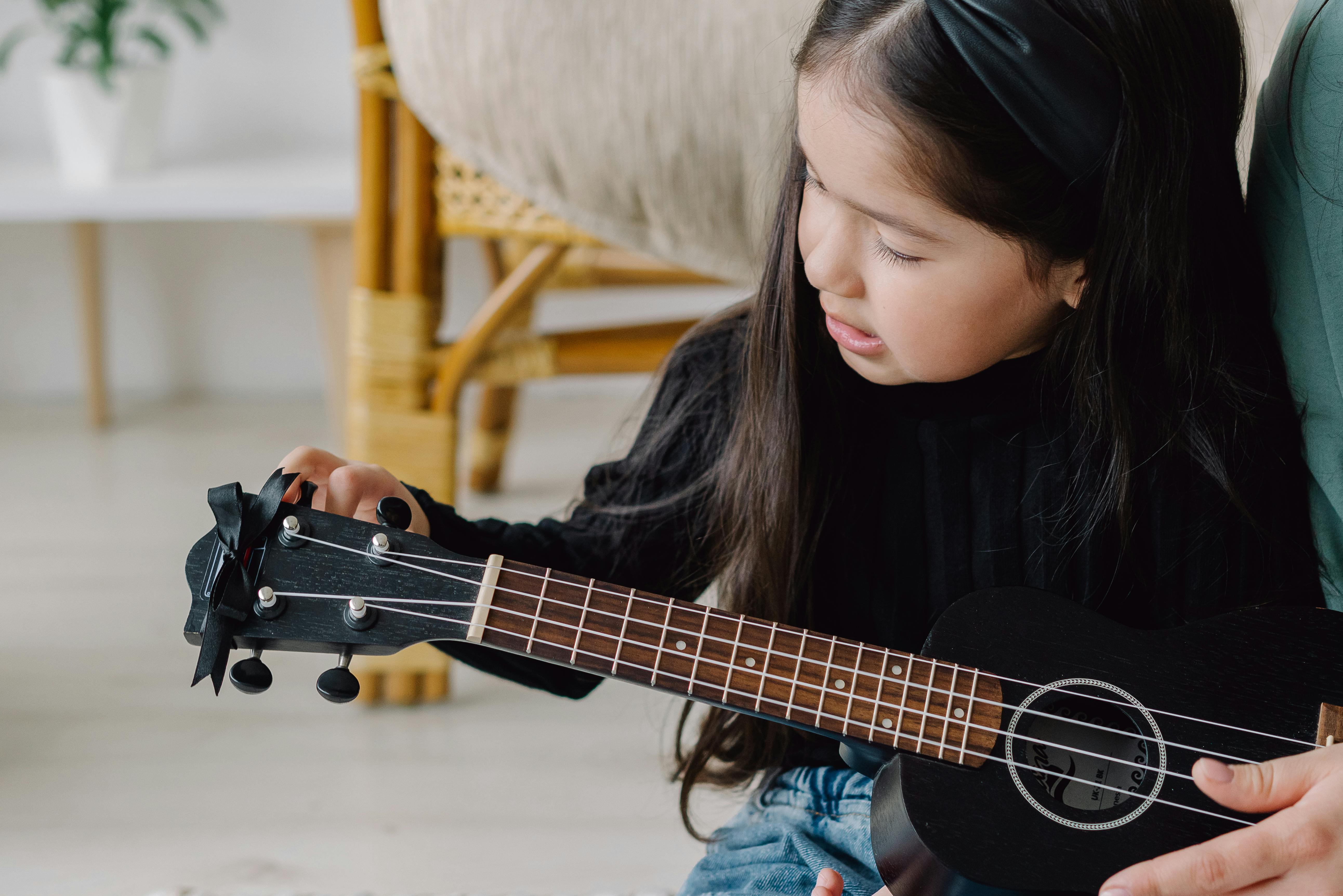
One important caveat: not all guitar apps for kids teach guitar. Some use simplified game controllers, on-screen tapping, or simulated strumming that has no relationship to how a real instrument works. A child can spend months on an app like that and still be unable to play a single chord. When evaluating the best guitar app for your child, the most important question is whether it requires - and teaches - a real acoustic or electric guitar. Learning on a real instrument builds transferable skills, genuine ear training, and physical technique that no digital simulation can replicate - and that distinction matters enormously when the goal is a child who can actually play. The goal is a child who can actually play, not a child who is good at a game that resembles playing.
This distinction is what separates a genuinely educational guitar app from an entertainment product dressed up as one. Both might keep a child engaged for an hour. Only one of them is teaching something that lasts.
How Notey's World Turns This Into a Game Your Child Actually Wants to Play
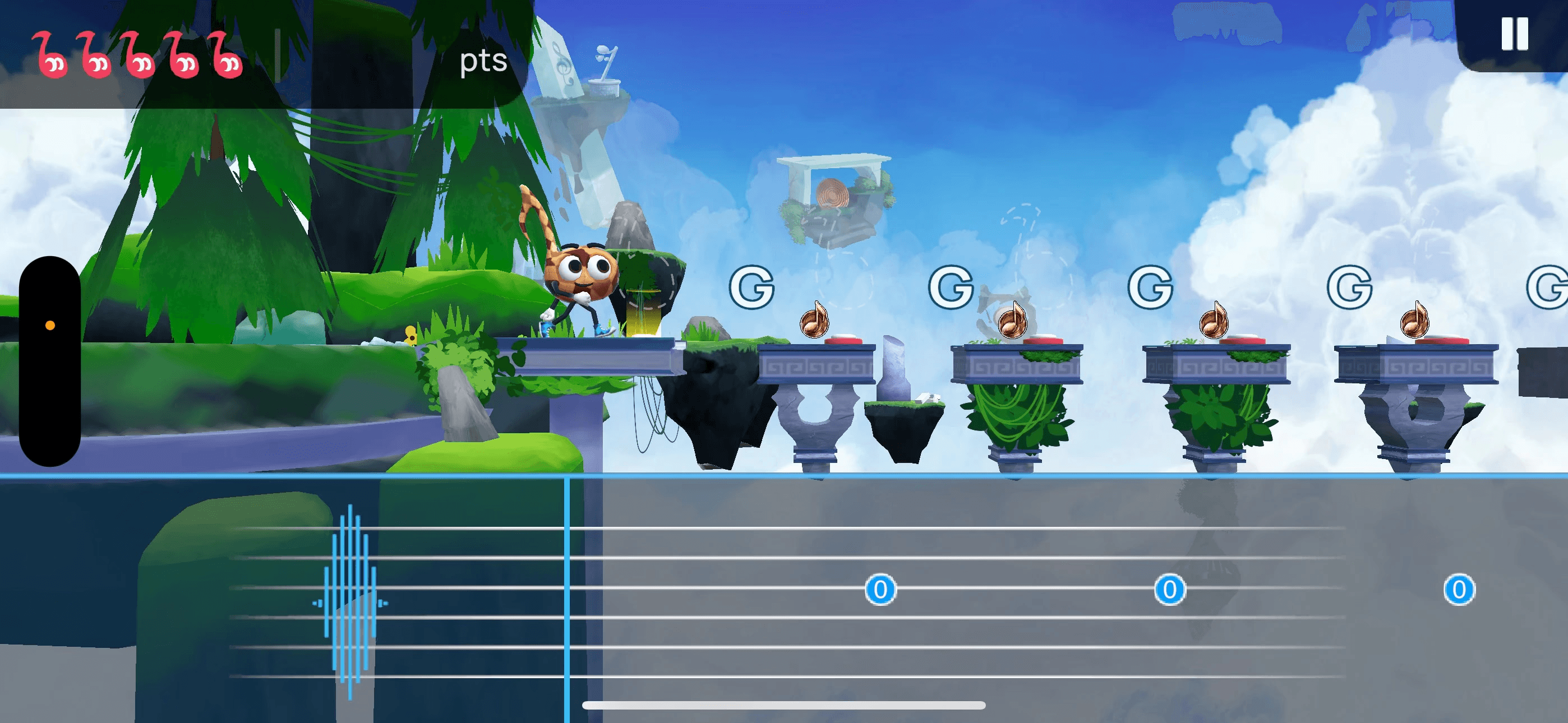
Notey's World is built on exactly this principle. It is a video game that teaches real guitar - emphasis on game - designed specifically for children aged 6 to 13. Sight-reading exercises become platformer levels. Kids earn Beatcoins by completing musical challenges, unlock character skins as they progress, and face boss-fights that test everything they have learned. The machine-learning audio engine listens to your child's real guitar in real time and responds to what they actually play - not what they tap on a screen. Every mechanic in the game exists to make a child want to come back to the guitar tomorrow, without a parent having to ask.
The song library matters too. Kids are far more motivated to practice songs they already love - Star Wars, Harry Potter, Disney hits, Sabrina Carpenter - than songs chosen because they are pedagogically convenient. Notey's content is music-educator approved and includes the songs children actually ask to play, which means the gap between "I want to learn guitar" and "I want to practice today" becomes much smaller. That gap is where most kids quit. Notey is designed to close it. The app holds a 4.7-star rating on the App Store and is trusted by NYC, Chicago, and Austin public schools - which is a meaningful signal that this is not just a clever concept, but something that works in the hands of real children with real attention spans.
If your child loves video games and you have been wondering whether that energy could be redirected toward something lasting, you can explore Notey's World at notey.co. It is available on iOS and Android.
What to Look For in Any Guitar App for Kids
Whether or not Notey is right for your child right now, the criteria for evaluating any guitar app for kids are the same. Look for an app that requires a real instrument - not a controller or a tap-based substitute. Look for immediate feedback so your child knows whether they played something correctly before they have moved on to the next note. Look for a visible progress system that shows your child how far they have come, not just how far they have to go. And look for content that your child actually wants to engage with - songs they know, characters they care about, rewards that feel meaningful at their age. An app that checks all four of those boxes is not just keeping your child entertained. It is building the practice habits that make a musician.
You might also find it useful to read about what to do when your child wants to quit guitar - because even with the right tools, there will be hard days. Knowing how to handle them makes all the difference.
The Parent's Real Job
Your job as a parent is not to be your child's guitar teacher. It is to remove the friction between your child and the instrument. The right app does not replace a parent's encouragement or the joy of playing music together - but it does handle the part that causes the most conflict: the daily grind of getting a reluctant child to sit down and practice. When that friction disappears because the child is choosing to play because it is fun, you stop being an enforcer and start being the person who got them started on something they love. That is a much better position to be in.
Guitar is one of those skills that, once built, stays with a person for life. The window for building it with the least resistance - and the most joy - is right now, when your child's brain is still wired to learn through play. The best guitar app for kids is the one that meets them exactly there.
Frequently Asked Questions
What is the best guitar app for kids?
Notey's World is widely considered the best guitar app for kids aged 6-13 because it is built as a video game from the ground up - not a lesson platform with badges added on top. Kids earn Beatcoins, unlock character skins, and defeat bosses while learning to play on a real guitar. It holds a 4.7-star rating on the App Store and is used in NYC, Chicago, and Austin public schools.
Are guitar learning apps effective for children?
Yes - when they are designed around how children actually learn. Research shows that children are intrinsically motivated by games, immediate rewards, and visible progress. Apps that use these mechanics help kids build consistent practice habits faster than traditional lesson formats. The key is whether the app was built specifically for children, not adapted from an adult product.
What age can a child start using a guitar learning app?
Most children are ready to begin learning guitar between ages 6 and 7, when fine motor skills and attention span are developed enough for short, focused practice sessions. Apps designed for this age group - like Notey's World, which targets ages 6-13 - use short game-style sessions that fit naturally into a young child's attention window without overwhelming them