Best Guitar Practice Routine for Kids in 2026: What Actually Works

If you have ever tried to enforce a guitar practice schedule with a child, you already know how it tends to go. There is a timer, there is resistance, there is a negotiation over whether five minutes counts, and by the end of it everyone is slightly annoyed and nobody is sure whether anything useful actually happened. The problem is not your child's attitude or your follow-through. The problem is that the routine itself was built on the wrong premise.
The best guitar practice routine for kids in 2026 is not the one that covers the most material. It is not the one that runs the longest. It is the one that a child will actually do - willingly, consistently, and without a parent having to stand over them. That shift in definition changes almost everything about what a good routine looks like.
The science of how children build skills is clear on this: consistency of practice matters far more than duration, and intrinsic motivation - wanting to practice rather than being made to - is the single strongest predictor of long-term progress. Building a routine around those two facts produces very different results than building one around a weekly lesson schedule.
Why Most Practice Routines Break Down After Two Weeks
The standard advice for children's guitar practice goes something like this: set aside thirty minutes three times a week, work through scales, review what was covered in the last lesson, and finish with a song. It is sensible advice for a motivated adult. For a child between the ages of 6 and 13, it is almost perfectly designed to fail.
Thirty minutes is too long. Three times a week is too infrequent to build a real habit. Scales are abstract and unrewarding without context. And "review what was covered in the last lesson" assumes that a child holds the lesson structure in mind and cares about the arc of progress over weeks - which requires a kind of forward-thinking that most children this age genuinely cannot sustain. Developmental neuroscience research is consistent on this point: the young brain is motivated by what happens in the next few minutes, not the next few months. A practice routine that ignores this is fighting biology instead of working with it.
The other failure mode is what happens when practice becomes a battleground. Once a child associates the guitar with conflict - with being told to stop what they are doing, with sitting still under supervision, with being corrected in front of a parent - the instrument itself starts to carry that emotional charge. Getting them to pick it up stops being a question of motivation and starts being a question of overcoming an aversion that was never necessary in the first place.
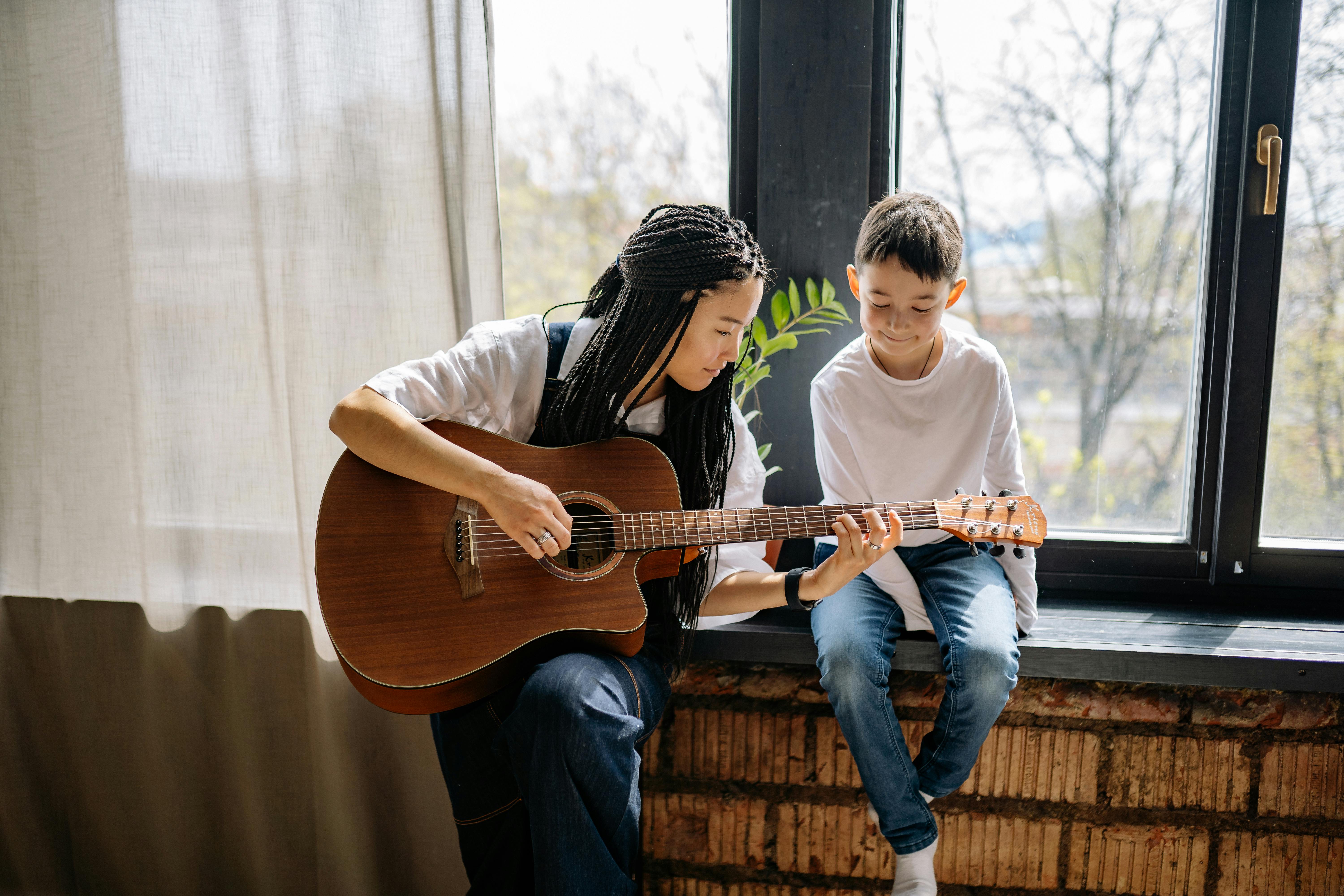
What the Research Actually Says About Practice and Kids
The most useful research on children's practice habits does not come from music education - it comes from the science of habit formation and intrinsic motivation. Psychologists studying how children sustain engagement in skill-based activities have identified three conditions that predict whether a child keeps going or quits: a sense of autonomy over the activity, a visible feeling of competence as they progress, and a connection to something they find genuinely meaningful. A practice routine that checks those three boxes is one a child will choose to do. A routine that checks none of them is one that requires enforcement.
The same research shows that short, daily sessions produce dramatically better retention than longer, infrequent ones - a finding that holds across music, language learning, sport, and academic subjects. Ten minutes every day is not just more convenient than an hour on Saturday. It is genuinely more effective, because it keeps the neural pathways active and gives the brain time to consolidate what was practiced overnight. The ideal children's guitar practice session is short enough to end before frustration sets in, frequent enough to feel like a normal part of daily life, and rewarding enough that the child looks forward to the next one.
What a Routine That Actually Works Looks Like
A good guitar practice routine for kids has a shape, not just a duration. It starts with something the child already does well - a riff they have mastered, a song they enjoy - so the session opens with competence rather than struggle. That warm-up is not wasted time. It is the confidence signal that tells the child's brain the guitar is a place where they succeed, which makes them more willing to attempt the harder thing that comes next.
The middle of the session - five to eight minutes for younger children, ten for older ones - is where one new or challenging thing gets worked on. One thing, not three. Spreading attention across multiple new concepts in a single session is one of the most common mistakes in home practice, and it reliably produces children who feel like they are not making progress because nothing is sticking. Depth on one thing beats breadth across five, every time.
The session should always finish with something fun - a song the child actually wants to play, something they chose. This is not a reward for tolerating the hard part. It is the closing of the feedback loop: the child's brain connects guitar practice with a feeling of enjoyment rather than relief that it is over. That association is what brings them back tomorrow without being asked. Keeping a guitar on a stand in a visible room rather than in a case helps too - habit researchers consistently find that environmental cues are among the most reliable triggers for daily practice, and a guitar that is visible is a guitar that gets played.
How Notey's World Turns This Into Something a Child Chooses
Notey's World is a video game that teaches real guitar - built specifically for children aged 6 to 13 - and it is, structurally, the most effective practice routine structure described above, delivered in a format a child will choose over almost anything else. Every session opens with mechanics the child has already mastered, moves into a new challenge, and closes with a boss-fight or reward sequence that makes the whole thing feel like it ended on a high.
The machine-learning audio engine listens to your child's real guitar in real time and responds to what they actually play. Sight-reading exercises become platformer levels. Kids earn Beatcoins by completing musical challenges, unlock character skins as they progress, and the song library includes music they already know and love - Star Wars, Disney hits, Sabrina Carpenter, Harry Potter. The child is not completing a practice routine. They are playing a game that happens to be building real guitar skills at the same time. That distinction is everything when it comes to whether a child picks up the instrument tomorrow without being reminded.
Notey holds a 4.7-star rating on the App Store and is used in NYC, Chicago, and Austin public schools - a signal that this is not just engaging for a week but genuinely effective over the long term in the hands of real children. You can try Notey's World at notey.co, available on iOS and Android. If you are also thinking about how to handle the harder days when motivation dips, it is worth reading about what to do when your child wants to quit guitar - because even the best routine will hit a wall occasionally, and knowing how to respond makes the difference between a pause and a permanent stop.

The One Thing That Makes or Breaks Any Routine
Every framework, every timing recommendation, every piece of advice about structure is secondary to one thing: the child has to want to do it. Not every day, not effortlessly - but broadly, across most sessions, the guitar has to feel like something they are choosing rather than something being done to them. That is not a soft, feel-good goal. It is the practical prerequisite for every other part of the routine to function.
Your job as a parent is to protect the conditions that make that possible: a guitar that is the right size and actually in reach, a consistent time that does not require a negotiation, and a tool that provides the feedback and rewards that you cannot provide yourself. When those three things are in place, the routine tends to take care of itself - and the version of your child who plays guitar for life is the one who started because it was fun, not because they were made to.
Frequently Asked Questions
How Long Should a Kids Guitar Practice Routine Be?
For children aged 6 to 9, ten to fifteen minutes of daily practice is the sweet spot. For children aged 10 to 13, twenty minutes is realistic and effective. Duration matters far less than consistency - a child who practices ten minutes every day will outpace one who does an hour on Saturday. The session should always end before the child is frustrated or tired, so they associate the guitar with a good feeling rather than relief that it is over.
What Should a Beginner Kids Guitar Practice Routine Include?
A good beginner routine for kids has three parts: a short warm-up on something the child already knows well, a brief focused stretch on something new or challenging, and a fun finish on a song they enjoy. The ratio matters - roughly one third new material to two thirds familiar material keeps the session feeling achievable rather than defeating, and makes it far more likely the child will return the next day without being asked.
How Do I Get My Child to Practice Guitar Every Day?
Consistency comes from removing friction, not from enforcement. Keep the guitar on a stand in a visible spot, link practice to an existing daily habit like after school or before dinner, and use a tool that makes practice feel like play rather than homework. Children who practice because they want to - not because they have been told to - build habits that last without daily conflict and tend to progress significantly faster than those who are pushed.