Guitar Lessons for a 7 Year Old: A Parent's Complete Guide
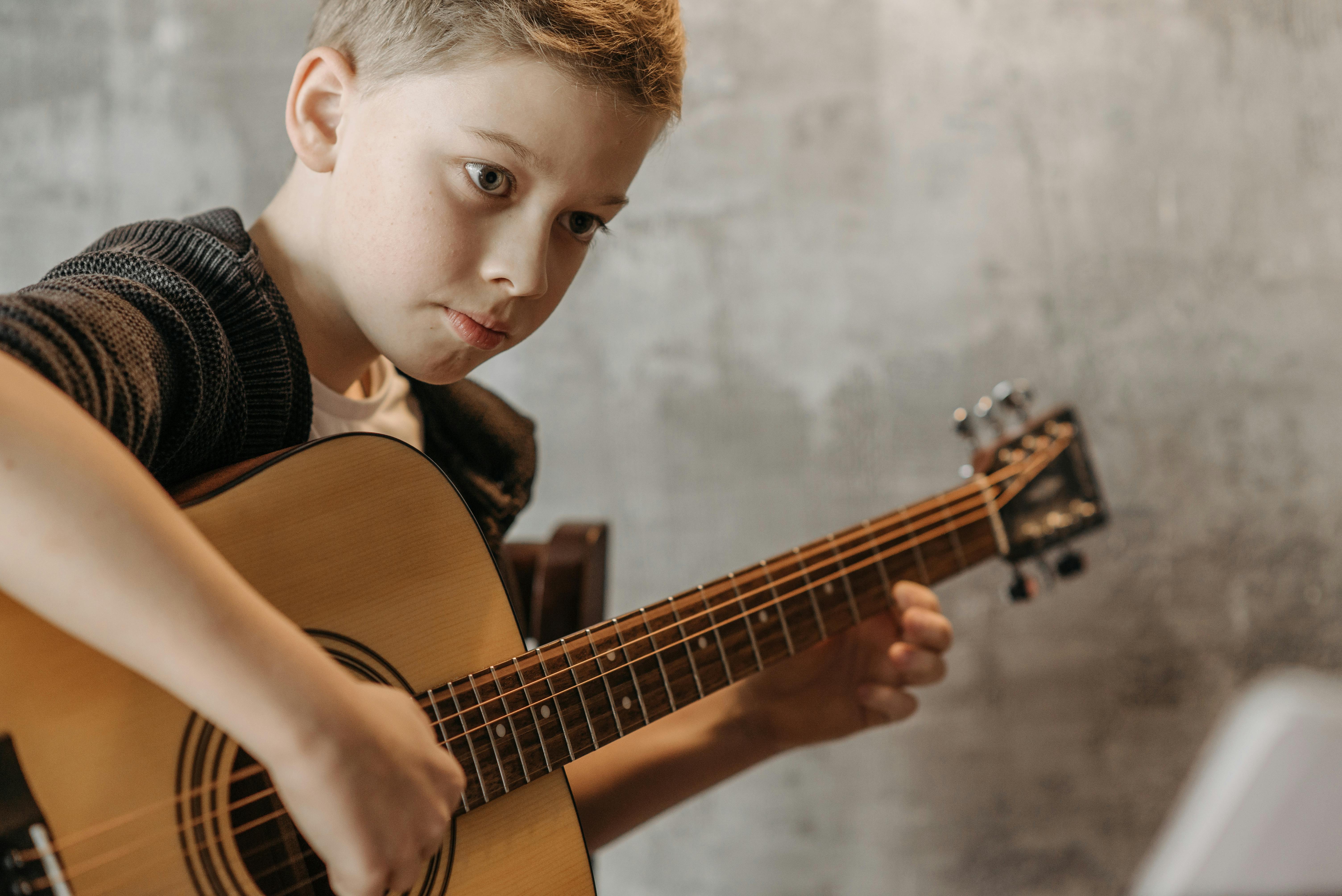
Seven is a magic age for guitar.
It's old enough that small hands can actually form chords, young enough that the brain is still in prime learning mode, and - perhaps most importantly - old enough that your child probably has strong opinions about the music they love. That last part matters more than most parents realise. A seven-year-old who wants to play the Harry Potter theme has motivation that no lesson plan can manufacture. Your job as a parent is to harness it, not override it.
This guide covers everything: what size guitar to get, what to expect from early lessons, which songs to start with, how long practice should be, and what to do when the novelty wears off. By the end, you'll have a clear picture of how to set your child up for something they'll thank you for one day.
Is 7 a Good Age to Start Guitar?
It's one of the best. At seven, children are developing stronger attention spans and hand-eye coordination, and they're starting to connect effort with results in a way that younger children simply can't. They can follow multi-step instructions, hold focus for short periods on something they enjoy, and feel genuine pride when they achieve something. All of those things make guitar not just possible at this age, but genuinely rewarding.
The window between six and nine is when motor skills and cognitive readiness converge in a particularly useful way. Fingers are nimble enough to press strings, the brain is wired for picking up new patterns quickly, and a child this age is still young enough to absorb music naturally - without the self-consciousness that creeps in during the teenage years. If your seven-year-old is asking to play guitar, the answer is a confident yes.
What Size Guitar Does a 7 Year Old Need?
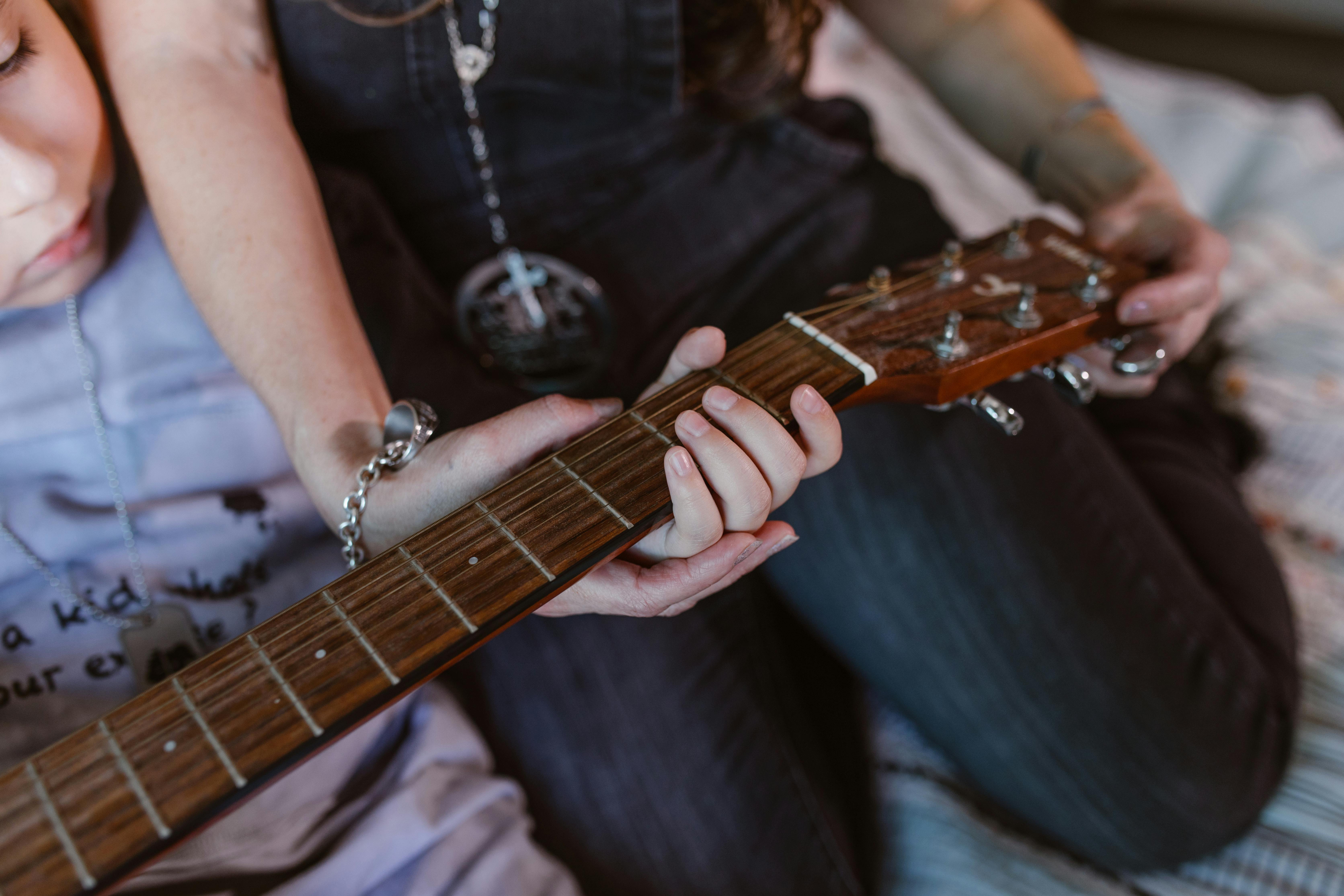
Getting the size right is the first thing to sort - and it matters more than most parents expect. A guitar that's too big is genuinely hard to play. It forces small hands into awkward positions, makes chord shapes painful, and turns what should be a fun experience into a frustrating one. That's how guitars end up in the corner collecting dust.
Most seven-year-olds do best on a 1/2 size guitar. If your child is on the taller side, a 3/4 size can work well and gives a bit more room to grow into it. A good sizing guide for children's guitars will use your child's height and arm length to pinpoint the right fit - it's worth checking before you buy. On strings, go with nylon over steel at this age. Nylon strings are softer on fingertips, easier to press down, and produce a warm sound that's forgiving for a beginner. Steel strings will come later, once calluses have formed and enthusiasm is established.
One more thing: buy the best guitar you can reasonably afford. A very cheap instrument is often harder to play than a decent one because the strings sit too high off the fretboard. That small difference in playability has a big effect on how much a child wants to keep going.
What to Expect in the First Few Months
The first few weeks of guitar are all about small wins. A child who can play even three notes of a song they recognise will feel something shift - suddenly the guitar is an instrument that makes real music, not just a thing they're supposed to practice. That feeling is worth chasing, and it's what every early lesson should be building toward.
Realistically, here's the progression most seven-year-olds follow. In the first month, they'll get comfortable holding the guitar properly, learn to pick individual strings cleanly, and start working on their first simple melody. By month two or three, basic chord shapes become possible - open chords like G, C, and D are the usual starting points - and simple songs begin to come together. By the end of the first six months, a child who has practised consistently will be able to play recognisable tunes and will have built enough finger strength to feel the difference in their own playing.
Finger soreness is normal and temporary. The tips of the fingers need a few weeks to build calluses, and sessions that end before they hurt are sessions that get repeated tomorrow. Keep early practices short and end on something the child can already do well - a small confidence boost on the way out the door goes a long way.

The Best Songs to Start With at Age 7
The single biggest driver of whether a seven-year-old sticks with guitar is whether the songs feel worth playing. "Mary Had a Little Lamb" is technically simple, but ask any child if they're excited to play it and you'll get a very clear answer. Songs that matter to kids are the ones that make practice feel like something other than homework.
Some of the best starting songs for this age group are the ones with memorable, simple melodic lines that a beginner can learn in a single session. Seven Nation Army by The White Stripes is a perennial favourite - the riff is just a few notes, it's immediately recognisable, and children feel genuinely cool playing it. The Harry Potter theme, the Star Wars main title, and Ode to Joy all offer the same thing: a handful of notes arranged into something a child has heard before and cares about. Disney melodies - the opening of Beauty and the Beast, the chorus of Let It Go played as a melody - work beautifully at this stage too.
The goal isn't technical precision yet. It's the moment a child hears themselves making music they love and thinks: I did that. That moment is what converts a child who does guitar into a child who plays guitar.
How Long Should Practice Be?
Short. Genuinely short. Ten to fifteen minutes a day is the right amount for a seven-year-old, and that's not a compromise - it's the optimal structure. Children this age build skills through repetition spread over time, not through single long sessions. A week of ten-minute daily practices will produce more visible progress than two hours on a Saturday, and it keeps the whole experience feeling light rather than like another obligation.
The best time to practice is whenever your child is naturally alert and in a good mood - usually after school once they've had a snack and a bit of decompression time, or in the morning for children who are early risers. Trying to squeeze practice into a tired, hungry, or distracted child is a battle that rarely ends well. Timing it right turns it from a negotiation into a routine.
End every session on something easy - a song they already know, a riff they've already mastered. The emotional note a child finishes on is the one they'll carry into tomorrow's practice. End on a win and they'll come back. End on frustration and you'll be coaxing them over again from scratch.
How Notey's World Makes This Easier for Both of You
Notey's World is a guitar learning game built specifically for children aged 6-13 who play on a real acoustic or electric guitar. Everything about how a typical child loses interest in guitar practice - the invisible progress, the unfamiliar songs, the repetitive drills with no payoff - has been replaced by game mechanics that keep children genuinely engaged. Sight-reading exercises become platformer levels. Kids earn Beatcoin for completing challenges. They unlock character skins, face boss-fights that test what they've actually learned, and work through a song library that includes things they already love - Star Wars, Disney, Harry Potter, Seven Nation Army.
Unlike Guitar Hero, which used a plastic controller and taught nothing about real playing, Notey uses a machine-learning audio engine that listens to your child's actual guitar in real time and responds to what they play. Every session produces something visible - coins earned, a level unlocked, a new song available - so the progress that's usually invisible to a seven-year-old is right there on screen, every single time they sit down. Notey holds a 4.7-star rating on the App Store and is used in NYC, Chicago, and Austin Public Schools, so the fun is built on top of a curriculum that music educators designed and trust. For parents, the biggest change is usually the simplest one: their child stops needing to be reminded to practice.
When Your Child Wants to Quit
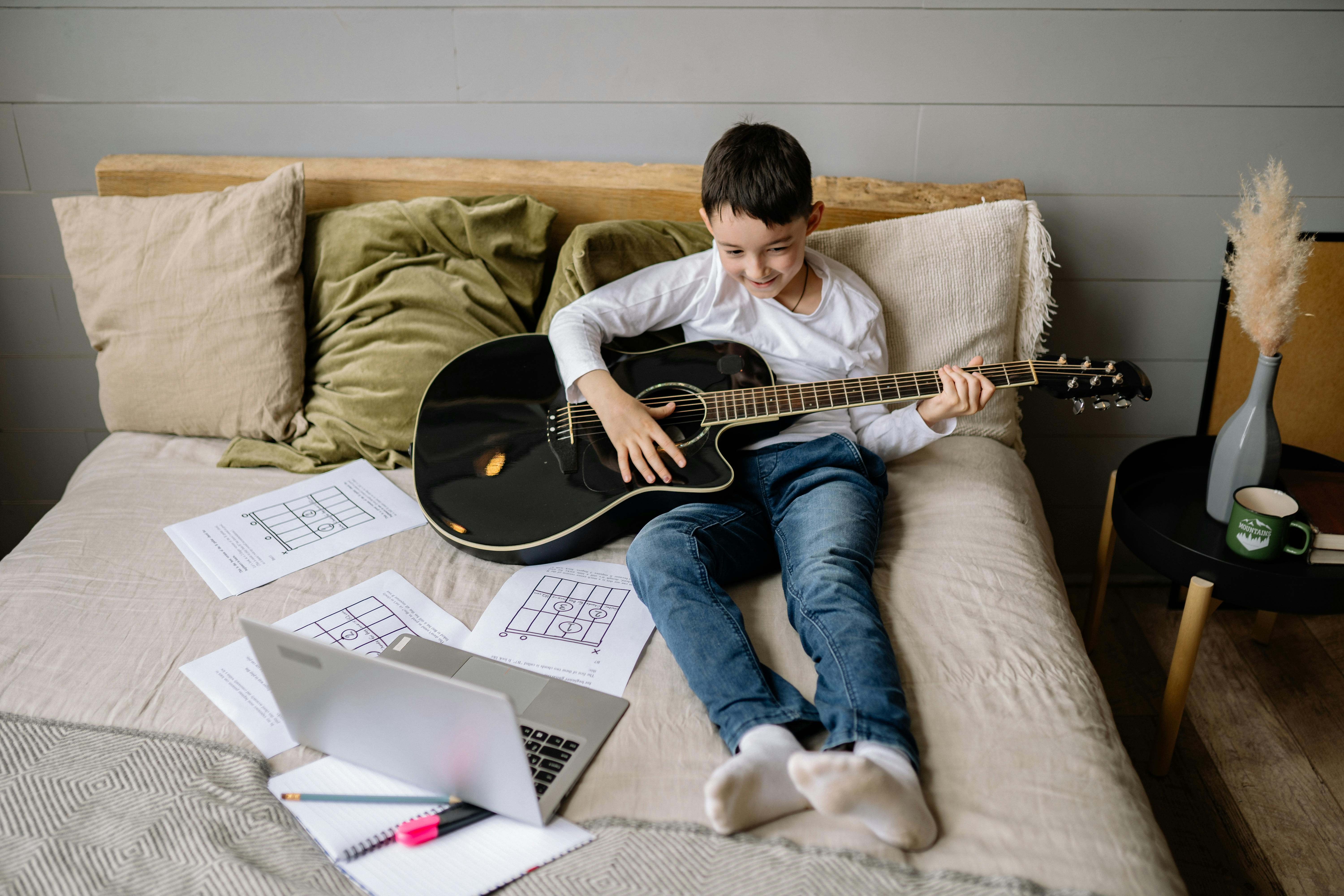
It happens with almost every child at some point, and it's rarely the signal parents think it is. A seven-year-old who says "I want to quit guitar" is usually saying one of a few things: the songs feel boring, progress has become invisible, the sessions are too long, or something else in life is taking up emotional bandwidth right now. Very rarely are they saying the guitar itself is the problem.
Before making any decisions, try one small change first. Swap out the songs for something they've been asking about. Cut the sessions to five minutes for a week. Let them choose what to work on for the next few practices. Small adjustments like these fix the underlying issue more often than not - and the guide on what to do before letting your child quit guitar walks through each of the common reasons in detail. It's worth a read before giving up on something your child was excited about not long ago.
Seven is a wonderful age to start guitar - old enough to make real progress, young enough to pick it up with ease. Give it the right conditions and most children this age will surprise you with how far they go, and how quickly.
Frequently Asked Questions
Can a 7 year old learn guitar?
Yes - 7 is actually one of the best ages to start. Children this age have enough hand coordination to form basic chords, a long enough attention span for short focused sessions, and the cognitive ability to connect practice with real progress. Many music educators consider 6 to 8 the ideal window to begin.
What size guitar does a 7 year old need?
Most 7-year-olds play best on a 1/2 size guitar. If your child is tall for their age, a 3/4 size may work well and give them room to grow into it. The key is that the guitar feels comfortable to hold and that they can press the strings down without strain. Nylon strings are easiest on fingers at this age.
How long should a 7 year old practice guitar each day?
10 to 15 minutes a day is plenty for a 7-year-old - and that's not a compromise, it's the right amount. Short, consistent sessions build muscle memory faster than occasional long ones, and ending before your child gets frustrated means they'll come back tomorrow without a fight.
What songs should a 7 year old learn on guitar first?
Start with songs they already love and recognise. Seven Nation Army by The White Stripes is a classic beginner-friendly riff. The Harry Potter theme, the Star Wars opening, and simple Disney melodies all work wonderfully. When kids hear themselves playing something they know, practice stops feeling like school and starts feeling like a skill.