Group Guitar Lessons vs Private Lessons for Kids - Which Works Better?
Ask five music teachers whether kids should take group or private guitar lessons and you will get five versions of the same answer: it depends.
It depends on your child's personality, their learning style, whether they have experience with the instrument already, how much you can afford to spend, and what your long-term goals are for their musical education. All of which is true, but none of which helps you make an actual decision when you are standing at the music school counter trying to figure out which box to check on the enrollment form. The real question is not which format is better in the abstract. It is which format will keep your child engaged long enough for any of the skill-building to matter. A private lesson that your child dreads attending every week is worse than a group class they look forward to, and a group class where your child spends thirty minutes waiting for their turn to play is worse than a private lesson they would have actually used.
The variables that actually determine whether group or private works better for a specific child are not the ones listed in the music school brochure. They are logistical, psychological, and economic in ways that most parents do not realize until they are three months into lessons and wondering why progress has stalled or motivation has collapsed. Understanding what each format actually delivers - and what it quietly assumes about your child, your schedule, and your willingness to enforce practice - is the only way to make a choice that will still feel right six months from now.
What Group Lessons Actually Optimize For - and What They Sacrifice
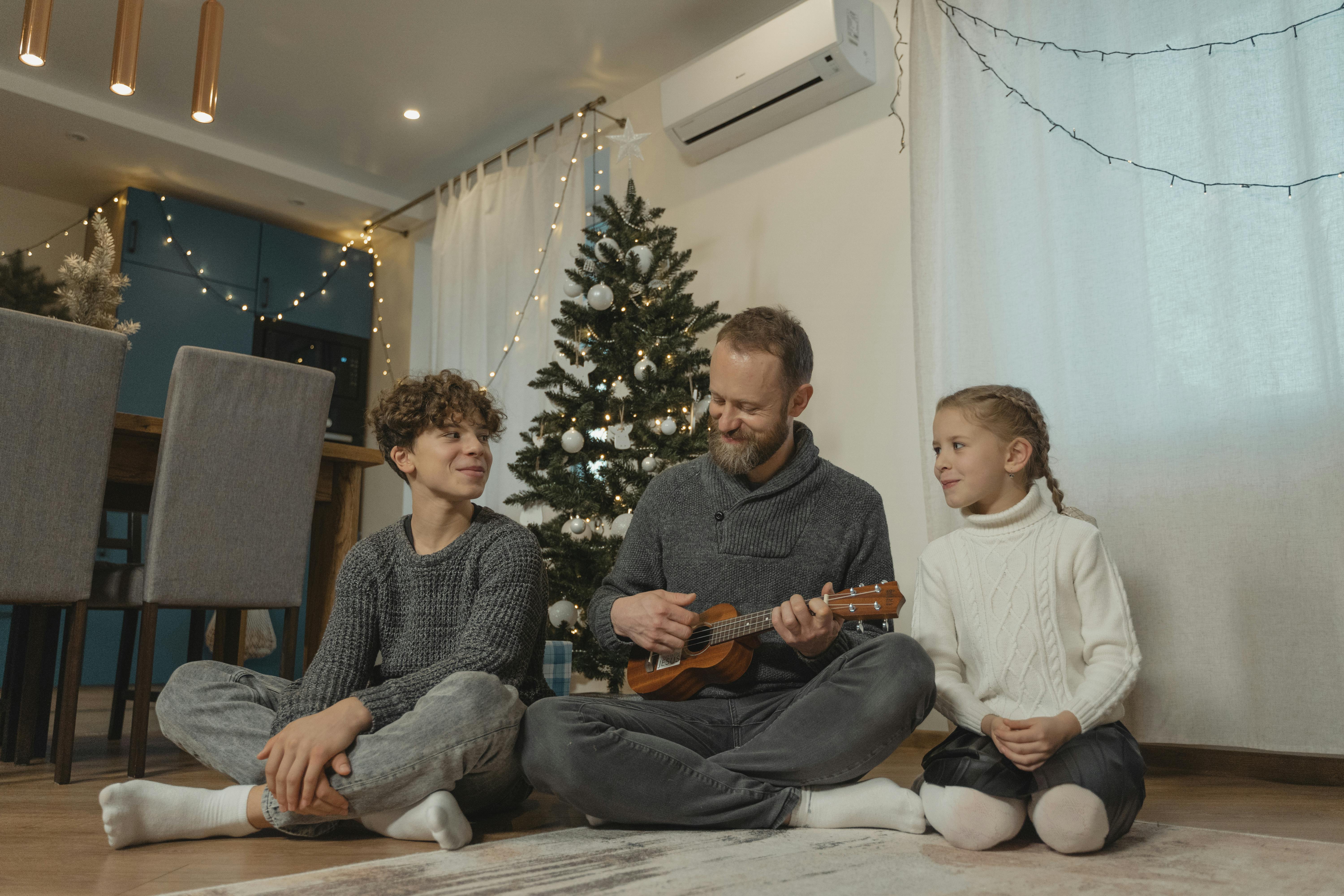
Group guitar lessons for kids usually involve three to six students learning together in the same room with one instructor. The appeal is obvious: the cost per student is lower, the social dynamic can be motivating, and kids get exposure to how their peers approach the same challenges. For some children, seeing another six-year-old successfully transition between chords is more persuasive than hearing a teacher explain the technique. Research on peer learning shows that children learn effectively through observation and imitation of peers, particularly when they see classmates solving problems in ways that make the concept click. The peer pressure to come to class prepared - or at least not embarrassingly unprepared - can drive practice in ways that a private instructor's encouragement sometimes cannot. And for parents managing multiple kids' schedules, a single group lesson slot is easier to coordinate than multiple private lesson times.
But group lessons are optimized for the average student in the room, which means they are not optimized for your specific child. The instructor must move at a pace that does not leave the slowest learner completely behind while also not boring the fastest learner into quitting. The lesson plan is predetermined, which means there is no flexibility to spend extra time on the thing your child is struggling with or to skip ahead on the thing they have already mastered. In a group setting, each child receives only a fraction of the instructor's attention. A thirty-minute group lesson might give your child five minutes of actual one-on-one correction, with the remaining time spent watching others or waiting for their turn.
The other cost of group lessons is less visible but equally real: they assume your child is comfortable learning in front of peers. For an extroverted eight-year-old who loves performing, that is fine. For a shy seven-year-old who is still building confidence, the pressure of playing in front of classmates can create anxiety that undermines the entire learning process. They practice less at home because they know they will have to play in front of others. They stop raising their hand when they do not understand something because they do not want to look slow. The group dynamic that was supposed to be motivating becomes the thing that makes them want to quit.
What Private Lessons Deliver - and What They Demand in Return
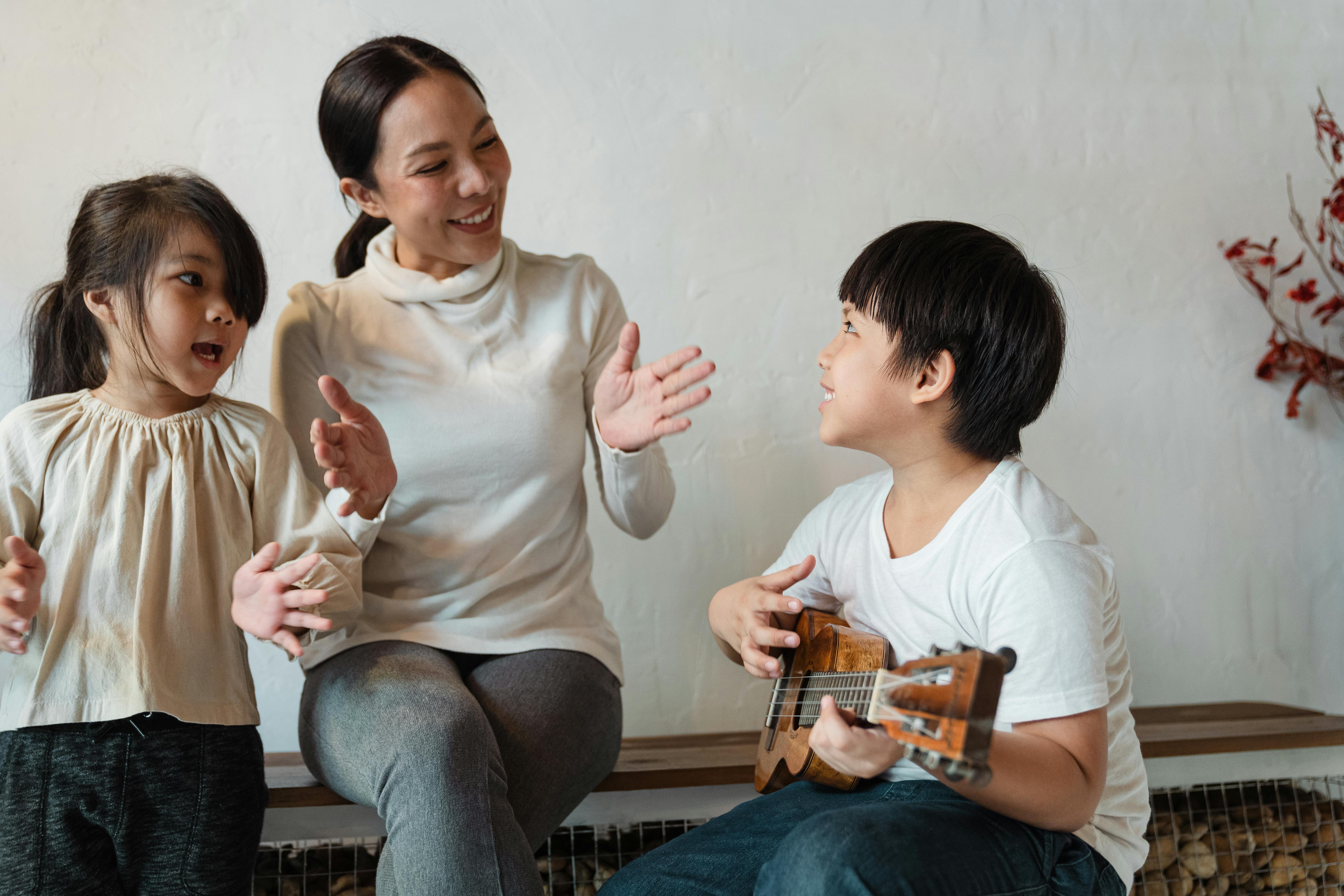
Private guitar lessons give your child the undivided attention of an instructor for the full session. The lesson can be tailored to exactly where your child is struggling, moving faster through easy material and slowing down for difficult concepts. Mistakes get corrected immediately instead of being reinforced for weeks. The instructor can adapt to your child's learning style - whether they need more visual demonstration, more verbal explanation, or more hands-on trial and error. Progress tends to be faster because there is no waiting, no pacing to the slowest student, and no time lost to managing group dynamics. For a child who has clear goals - wants to play specific songs, is preparing for an audition, or is working toward a performance - private lessons are the most efficient path.
But private lessons also demand more from both the child and the parent. Without the social motivation of peers, the child must be internally driven enough to practice between lessons, because a week of no practice means a week of no progress, and an instructor sitting across from an unprepared student with nothing new to work on. This makes private lessons feel like a waste of money in a way that group lessons do not, because in a group class an unprepared child can still participate passively by watching others. Private lessons also require more parental involvement in enforcing practice, because there is no built-in accountability from classmates. And because private lessons cost more - typically two to three times the price of group lessons - there is more financial pressure to see results, which can create tension if progress is slower than expected.
The other hidden cost of private lessons is scheduling flexibility. A missed private lesson often cannot be made up, or if it can, it requires coordination with the instructor's availability. Group lessons run on a fixed schedule regardless of whether any individual student is present. For families with unpredictable schedules or multiple commitments, this flexibility difference matters more than it seems at first.
The Age and Experience Variables That Actually Matter
The decision between group and private is not the same for a six-year-old beginner as it is for a ten-year-old who has been playing for a year. Younger beginners - particularly those under eight - often do better in group settings because the social structure keeps them engaged in ways that one-on-one instruction sometimes cannot. A six-year-old sitting alone with an adult instructor for thirty minutes may lose focus halfway through, but that same child in a room with three peers will stay engaged because the format feels more like play than work. The peer modeling also helps younger kids learn faster in the early stages, because they can watch and imitate rather than relying entirely on verbal instruction.
Older children and those with prior experience tend to benefit more from private lessons, because they have the focus and intrinsic motivation to work one-on-one with an instructor without needing the social structure to stay engaged. They also have more specific goals - learning particular songs, mastering techniques, preparing for performances - that group lessons cannot accommodate well. A twelve-year-old who wants to learn electric guitar solos is not well-served by a group class working on basic chords, no matter how well-run the class is.
The transition point is not a fixed age. It is when your child's goals become specific enough that a group curriculum feels like a constraint rather than a guide. For some kids that happens at seven. For others it never happens, and group lessons remain the better fit indefinitely. The mistake is assuming that private lessons are always the next step up from group lessons, when in fact they are a different tool optimized for different outcomes.
Where Notey's World Eliminates the Trade-Off Entirely
Notey's World takes a different approach by removing the need to choose between group or private entirely. It is a video game designed for kids aged six to thirteen that teaches real guitar using gamification mechanics - boss-fights, Beatcoins, character unlocks, and platformer levels - that make practice feel like play. Because Notey is self-paced, your child gets the individualized progression of private lessons without the scheduling constraints or cost. Because the game provides instant feedback through its machine-learning audio engine that listens to their real guitar in real time, they get correction on every note without waiting for a teacher's attention.
And because the game is built around songs kids actually know - Star Wars, Disney, Harry Potter, Sabrina Carpenter - and rewards them with Beatcoins and unlocks for completing challenges, they get the motivation and engagement of a group setting without needing peers in the room. The result is that a child can practice daily, at their own pace, with immediate feedback, on songs they care about, for a fraction of the cost of either group or private lessons. Notey holds a 4.7-star rating on the App Store and is used in public schools across New York City, Chicago, and Austin, which means this works not just in theory but in practice with real kids and real guitars.
If you are trying to decide between group and private lessons and the logistics, cost, or scheduling are making the decision feel impossible, Notey offers a third path worth exploring. You can learn more at notey.co, and it is available on both iOS and Android.
How to Actually Decide for Your Specific Child
If you are still deciding between group and private lessons, here are the questions that cut through the noise. First, is your child self-motivated to practice without external accountability? If yes, private lessons will give them the fastest progress. If no, group lessons provide built-in peer pressure that can substitute for internal drive, at least in the short term. Second, does your child get anxious performing in front of peers, or do they thrive on it? If they are shy or self-conscious, private lessons remove that pressure. If they are energized by social settings, group lessons will keep them engaged longer. Third, how flexible is your schedule, and how reliable is your ability to get your child to lessons every week at the same time? If your schedule is unpredictable, group lessons are more forgiving of missed sessions. If you can commit to a consistent weekly slot, private lessons are worth the coordination.
Fourth, what are your actual goals? If your child just wants to learn a few songs for fun and you want to keep costs low, group lessons are fine. If your child has specific performance goals, is preparing for an audition, or wants to advance quickly, private lessons are the better investment. Fifth, can you afford private lessons without financial stress? The cost difference is real - group lessons typically run forty to sixty dollars per month while private lessons can be sixty to ninety dollars per session - and paying for private lessons while worrying about the expense creates pressure that undermines the whole experience. If group lessons fit your budget comfortably and private lessons do not, the answer is group, full stop.
The right answer is not the one that looks better on paper. It is the one that matches your child's actual personality, your actual schedule, and your actual budget in ways that will still be sustainable six months from now when the novelty has worn off and the work has set in. The format that sounds more impressive does not matter if your child stops going. The format that costs less does not matter if your child is not learning. The format that works is the one where your child shows up, practices, and makes progress week after week, which is the only metric that actually counts.
For more on keeping kids engaged when motivation inevitably dips, you might find it useful to read about what to do when your child says guitar is too hard and what to do before you let your child quit guitar. The format matters, but keeping them in the game matters more.
Frequently Asked Questions
Are group guitar lessons good for kids or should they take private lessons?
It depends on the child. Group lessons work well for younger beginners under eight who benefit from peer modeling and social structure to stay engaged. They are also better for kids who are not self-motivated to practice alone and need peer accountability. Private lessons work better for older kids with specific goals, children who are self-directed enough to practice without external pressure, and those who get anxious performing in front of peers. The decision is not about which format is objectively better but which one matches your child's personality, your schedule, and your budget in ways that will still be sustainable six months from now.
How much cheaper are group guitar lessons than private lessons for kids?
Group guitar lessons typically cost forty to sixty dollars per month total, while private lessons run sixty to ninety dollars per individual session, which adds up to two hundred forty to three hundred sixty dollars per month if taken weekly. This means private lessons cost roughly four to six times more than group lessons. The cost difference is significant enough that for many families, private lessons are not financially sustainable long-term, which makes group lessons the only realistic option regardless of which format might theoretically be better for the child.
Do kids learn guitar faster in private lessons or group lessons?
Kids typically learn faster in private lessons because they receive undivided attention, immediate correction of mistakes, and a lesson plan tailored to exactly where they are struggling. In group lessons, each child gets only a fraction of the instructor's attention - often five to ten minutes of one-on-one feedback in a thirty-minute class - with the rest of the time spent waiting for their turn or watching others. However, faster learning only matters if the child stays engaged long enough to benefit from it. A group lesson that keeps a child motivated to practice beats a private lesson they dread attending, even if the private lesson would theoretically produce faster progress.