Guitar Lessons for a 6 Year Old: What Parents Need to Know
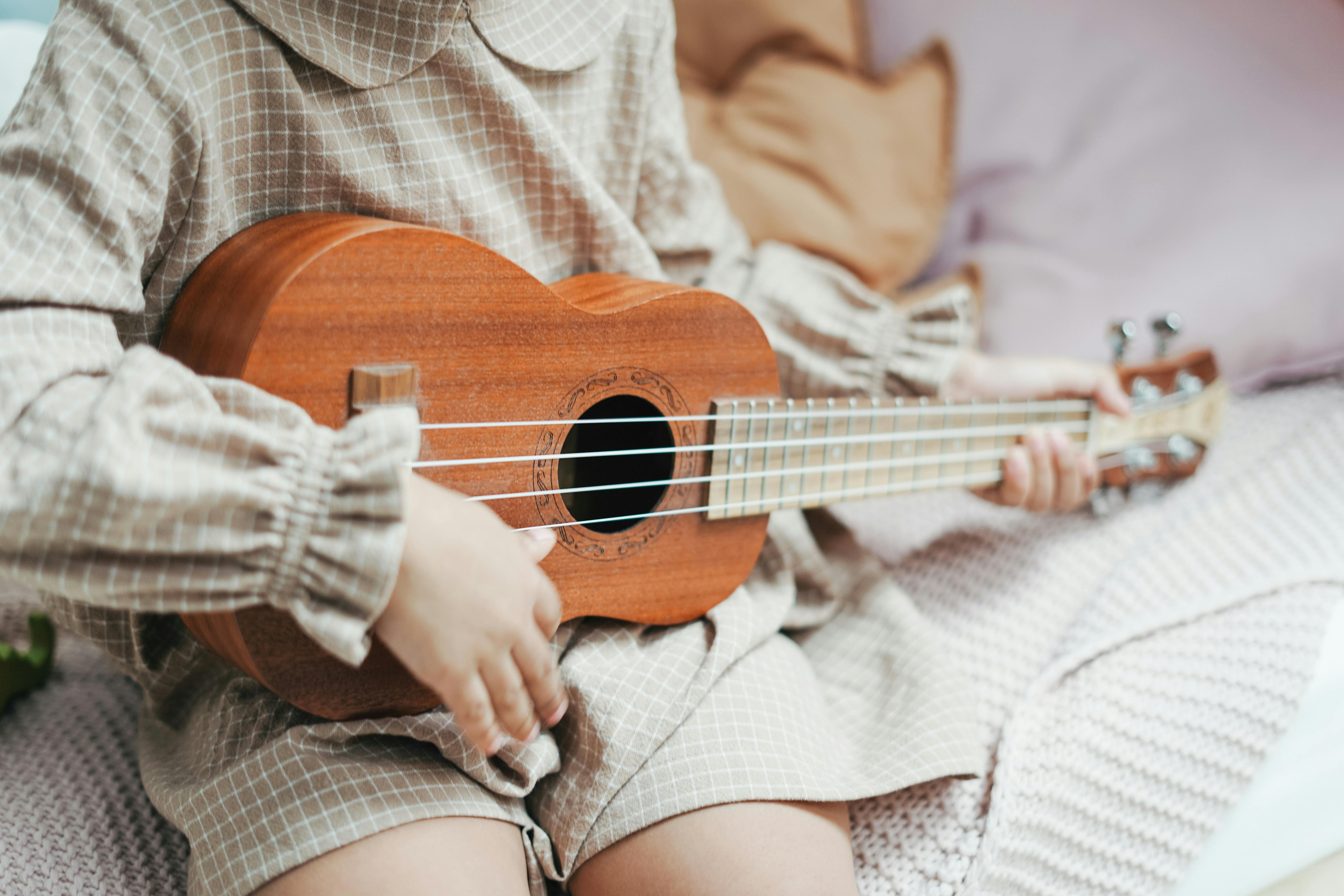
Six-year-olds are capable of far more than most people give them credit for. Their hands are small but coordinated. Their brains are in one of the most receptive developmental windows of their entire lives. And their enthusiasm for new things — when those things feel like play — is essentially unlimited.
The question most parents ask is not whether a 6-year-old can learn guitar. It is whether their specific child is ready, and whether the approach they choose will keep them engaged past the first few weeks. Those are the right questions. The answers depend almost entirely on how guitar lessons are structured at this age, not on any natural talent the child does or does not have.
This guide covers everything a parent needs to know before starting guitar lessons for a 6-year-old: the right equipment, realistic expectations, how long practice sessions should be, and what separates the approaches that work from the ones that end with a guitar gathering dust in the corner.
Is 6 Actually a Good Age to Start Guitar?
Yes — and in many ways it is an ideal age. Children at 6 are in what developmental researchers call a critical period for auditory and motor skill development. Research compiled by the NAMM Foundation shows that individuals who begin music lessons in early childhood show measurably stronger neural processing of sound throughout their lives, even decades after they stop playing. The brain changes that happen during early musical training are not replicated when learning begins later.
That does not mean a 6-year-old will sound like a prodigy in their first month. It means that the foundations being built right now — how to listen carefully, how to translate what they hear into what their fingers do, how to keep trying when something is hard — will serve them for life. The short-term goal is not performance. It is building a relationship with the instrument.
The children who struggle at this age are almost never struggling because they lack ability. They struggle because someone handed them a guitar that is too large, put them in front of lessons designed for adults, and then wondered why they lost interest. The problem is almost always the approach, not the child.
The Right Guitar for a 6 Year Old
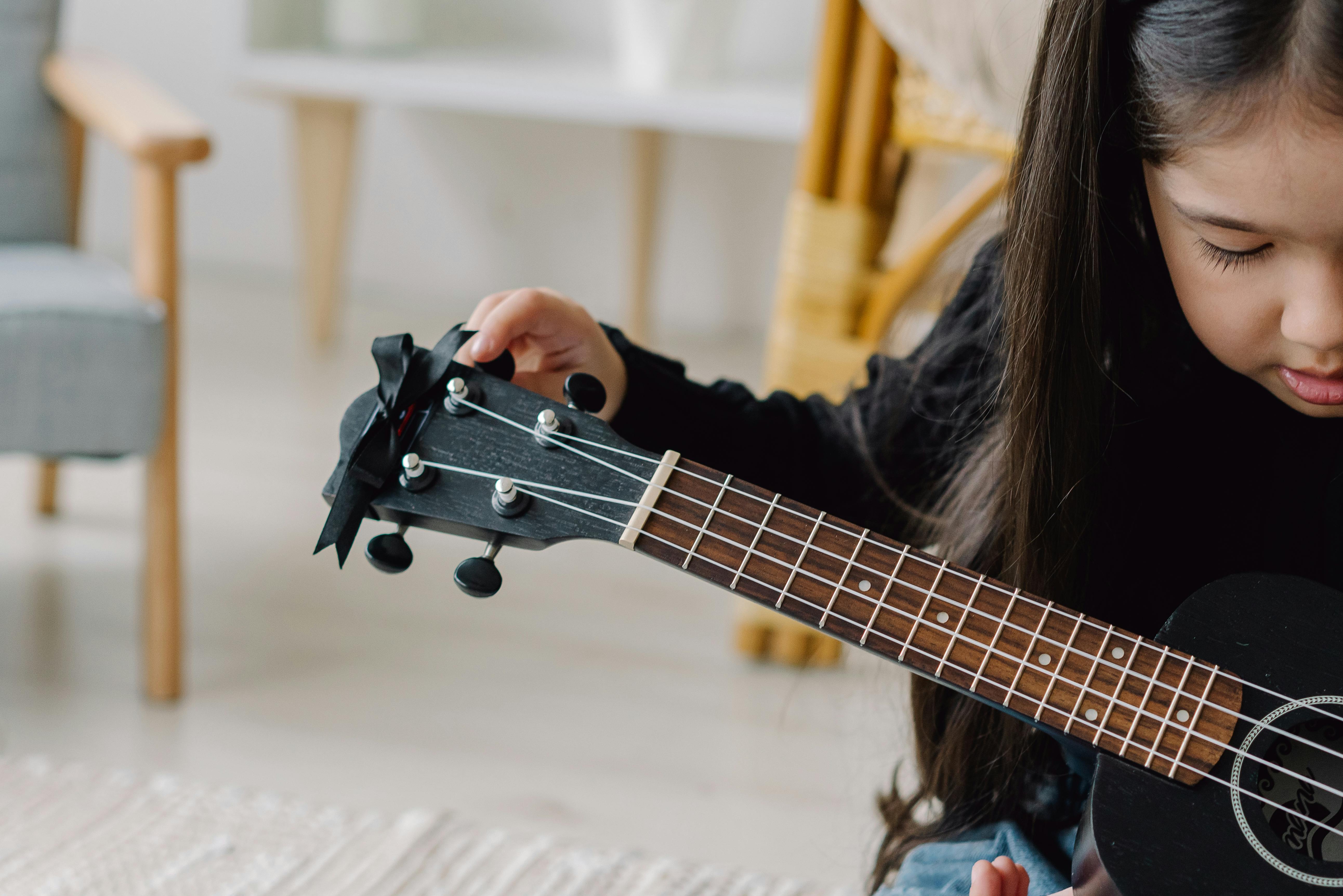
This matters more than most parents realise. A full-size guitar is designed for adult proportions and makes chord formation genuinely difficult for small hands. The physical frustration of trying to stretch fingers across strings that are too far apart is enough to kill enthusiasm before it starts.
Most 6-year-olds need a 1/2 size guitar. If your child is tall for their age, a 3/4 size may work, but when in doubt, go smaller. The guitar should sit comfortably across their lap and allow their fretting hand to reach the strings without stretching. A nylon-string classical guitar is gentler on young fingertips than a steel-string acoustic — fingertip soreness is one of the most common reasons young children want to stop, and softer strings reduce that barrier significantly in the early weeks.
The guitar does not need to be expensive. A well-setup beginner instrument in the right size will outperform an expensive full-size guitar every time at this age. If you are unsure, visit a music shop and let your child hold a few options — the one that feels right in their hands is almost always the right choice.
How Long Should Practice Sessions Be?
At age 6, ten to fifteen minutes of daily practice is not just sufficient — it is optimal. Music education research consistently shows that short, consistent daily practice builds both skill and habit far more effectively than longer sessions spaced further apart. The brain consolidates motor learning during sleep, which means ten minutes today and ten minutes tomorrow is worth more than an hour on the weekend.
The more important rule is this: every session should end while the child still wants to keep going. Not when they are bored, not when they are frustrated, and not when a timer goes off mid-song. The emotional note a session ends on is what determines whether they pick the guitar up again tomorrow. A 6-year-old who finishes practice feeling successful and slightly disappointed it is over will be back the next day without being asked. One who finishes feeling overwhelmed will find reasons to avoid it.
This means stopping early is sometimes the right move. If your child has a great 8-minute session and is on a high — stop there. Protect that feeling. It is worth more than the extra seven minutes of practice you could have squeezed out.
What to Actually Teach a 6 Year Old in Their First Lessons
The single most important thing in the first month is not chords or scales. It is helping your child feel successful with the guitar in their hands. That means starting with single-note melodies rather than chord shapes, choosing songs they already know and love rather than generic beginner exercises, and celebrating small wins loudly.
A 6-year-old who can pick out the first few notes of a Star Wars theme or a Disney melody they recognise is experiencing something genuinely exciting — the realisation that they can make the music they love with their own hands. That feeling is the engine. Everything technical comes after it, not before. For more on structuring early lessons by age, the complete guide to guitar lessons for a 7-year-old covers how this approach evolves as children get slightly older and more capable.
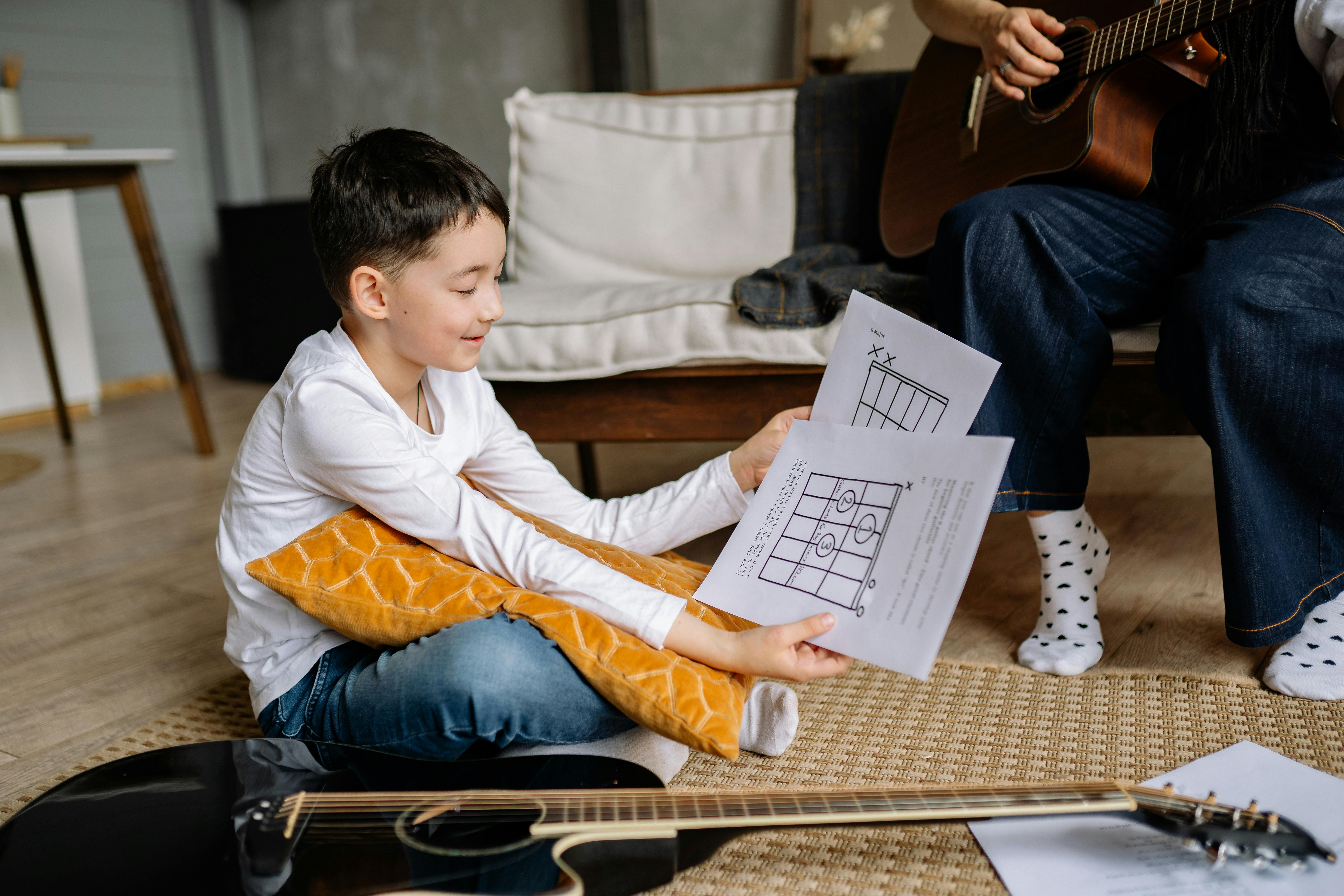
Chord shapes can begin to be introduced around weeks three to four, starting with the easiest open chords — Em and Am require only two fingers and sound full and satisfying immediately. The goal is always to give the child something that sounds good fast, because sounding good feels good, and feeling good makes them practice.
Where Notey's World Fits In for 6-Year-Olds
Notey's World is a guitar learning game built specifically for children aged 6-13, and it is worth understanding what makes it different from a standard lesson app or a YouTube tutorial series. It is not a lesson platform that added game badges. It is a video game — built from the ground up as one — where the entire learning experience is structured as gameplay on a real acoustic or electric guitar.
For a 6-year-old, the experience works like this: sight-reading exercises become platformer levels. Every note played correctly on the real guitar moves the game forward in real time, because Notey's machine-learning audio engine listens and responds instantly. Kids earn Beatcoins for completing challenges, unlock character skins, and face boss-fights that test what they have learned — all while playing actual songs they recognise. The sessions are structured in exactly the short, rewarding windows that work best at this age.
Notey holds a 4.7-star App Store rating and has been adopted by NYC Public Schools, Chicago Public Schools, Austin Public Schools, and dozens of school music programs. The content is music educator-approved, and the app has received the 2023 Technology in Education Award from INNOVISION. For parents wondering how an app compares to a teacher for beginners, the article on guitar lessons without a teacher addresses this directly. And for the broader question of what makes a guitar learning tool actually work for children this age, this guide to guitar learning apps for kids covers the key criteria in detail.
The Honest Expectations Talk
Your 6-year-old will not sound polished in their first three months. They will hit wrong notes, forget what they learned last session, and have days where they do not want to practice at all. This is completely normal and has nothing to do with whether they have musical ability.
According to the National Association for Music Education's early childhood research, the children who develop into strong musicians are not the ones who were naturally talented from the start. They are the ones who practiced consistently, were supported patiently, and were never made to feel like struggling was failure. Your job as a parent is not to produce a prodigy. It is to protect their relationship with the instrument through the difficult early weeks until the rewards become self-sustaining.
When that happens — when your child picks up the guitar on their own because they want to, not because you reminded them — everything changes. That moment usually arrives somewhere between weeks four and eight for children who start with the right approach. It is worth waiting for.
Frequently Asked Questions
Can a 6 year old learn guitar?
Yes — 6 is a great age to start guitar. Children at this age have enough hand coordination to form basic chord shapes and their brains are in a highly receptive period for learning music. The key is keeping sessions short (10-15 minutes), using the right size guitar (1/2 size for most 6-year-olds), and making practice feel like play rather than work.
What size guitar does a 6 year old need?
Most 6-year-olds need a 1/2 size guitar. A full-size instrument is too large for small hands and makes chord formation unnecessarily difficult. Classical (nylon string) guitars are gentler on fingertips than steel-string acoustics, which makes them a popular first choice for this age group.
How long should a 6 year old practice guitar each day?
10 to 15 minutes of daily practice is ideal for a 6-year-old. Short, consistent sessions build habit far more effectively than occasional long ones. The goal at this age is to end every session on a positive note — leaving the child wanting more, not feeling exhausted or frustrated.
Should a 6 year old have a guitar teacher or use an app?
Both can work well at age 6. A good teacher provides in-person feedback and adjusts technique in real time. A well-designed guitar learning app can be equally effective for beginners if it uses a real guitar, gives immediate audio feedback, and structures practice as short, rewarding sessions. Many parents use both — an app for daily practice and occasional lessons for technique checks.
What songs should a 6 year old learn on guitar first?
Start with songs the child already loves and recognises. Simple melodies from Disney films, Star Wars, or current popular songs they hear regularly work better than traditional beginner pieces, because emotional connection to the music dramatically increases motivation to practice.