How to Teach Your Child Guitar at Home (Without Being a Musician)
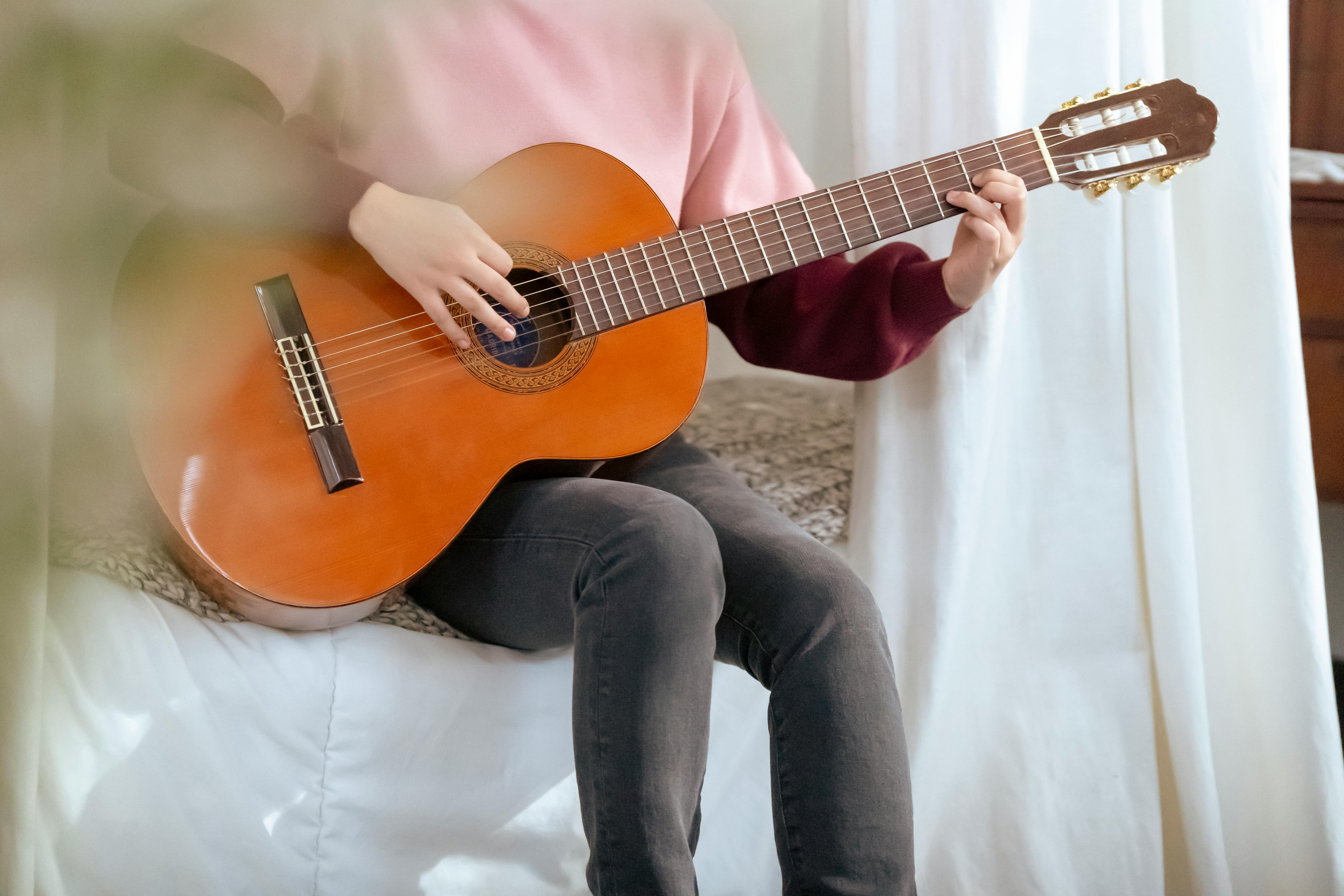
Most parents who want to teach their child guitar at home assume the conversation starts with what they don't know.
They can't play. They don't read music. They wouldn't know a capo from a chord chart. And so the idea that they could help their child learn guitar feels like something that requires a qualification they don't have. It doesn't. Teaching your child guitar at home - even as a complete non-musician - is genuinely achievable, and it's far more about the environment you create than the knowledge you bring to it. What a child needs to learn guitar isn't a parent who can demonstrate a G chord. It's a parent who can make practice feel safe, consistent, and worth showing up for.
This guide covers exactly how to do that: what to put in place, what to avoid, and how to support your child's progress even when you have no idea whether what they're playing sounds right.
What Your Role Actually Is (and Isn't)
The first thing to get straight is what a non-musician parent is actually trying to do. You are not the teacher. You are the environment. A classroom teacher doesn't need to know how to play guitar to run a music program effectively - they need to understand how children learn, how to structure a session, and how to keep motivation alive through the inevitable frustrating stretches. That is exactly the job description for a parent supporting guitar learning at home, and none of it requires musical knowledge.
Your job is to set a consistent practice time and protect it, keep sessions short enough that they end before your child loses interest, celebrate visible progress out loud, and resist the urge to correct technique you're not qualified to assess. That last point matters more than it sounds. A well-meaning parent wincing at a wrong note or pushing for "just five more minutes" can undo more motivation in thirty seconds than a week of good sessions builds. The most useful thing a non-musician parent can do is create conditions and then get out of the way.
Getting the Right Guitar First
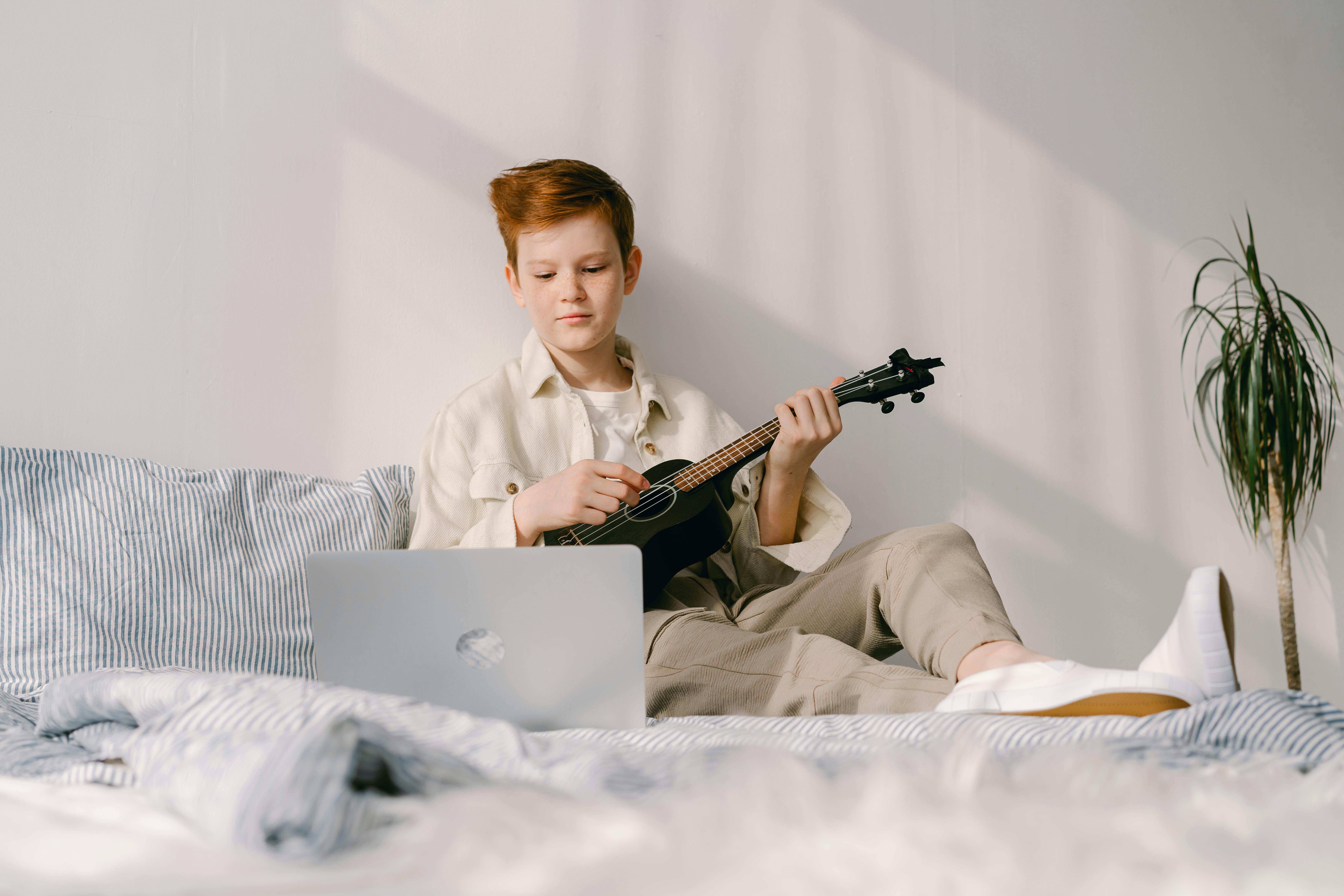
Before any lesson or practice routine begins, the instrument has to be right for the child's body. A guitar that is too large creates unnecessary physical difficulty - strings are harder to press, the body is awkward to hold, and the whole experience becomes a fight against the instrument rather than a conversation with it. For children aged 6 to 8, a 3/4 size acoustic is the standard recommendation. Children aged 9 and up can usually manage a full-size instrument, though it's worth checking arm reach before buying.
Music educators consistently note that the single most common early mistake is starting a child on an adult-sized instrument because it seems like better value. The short-term saving tends to cost more in lost motivation. A guitar that fits a child's body makes the first chord easier to form, reduces finger pain, and lets early wins come faster - which is exactly what a beginner needs to decide that guitar is something they want to keep doing. For a fuller breakdown of what to expect across the first year, our guide on how long it takes kids to learn guitar is worth reading before you start.
How to Structure Practice at Home
Structure is the thing that separates children who progress from children who plateau. Without it, practice becomes a vague, open-ended activity that's easy to avoid and hard to measure. With it, a child knows exactly what they're sitting down to do, how long it will take, and what done looks like.
A good home practice session for a beginner aged 6 to 10 runs no longer than fifteen minutes and follows a simple pattern: a brief warm-up on something already learned - something easy enough to feel good - followed by focused work on one new thing, followed by running through a song they enjoy. That three-part shape keeps sessions balanced between challenge and reward, and it prevents the common mistake of spending all available practice time on the hardest thing until frustration takes over. As skills develop and sessions naturally extend, the structure scales with them - but the principle stays the same. If resistance has already become a pattern in your house, our article on what to do when your child wants to quit guitar addresses exactly that.
What to Teach First - Even If You Don't Know Guitar
If you're using a structured learning tool - an app, a method book, or a video course designed for children - the curriculum is already decided for you, and your job is simply to support it. But understanding the general sequence helps you know what your child should be working on and whether the tool you've chosen is moving in the right direction.
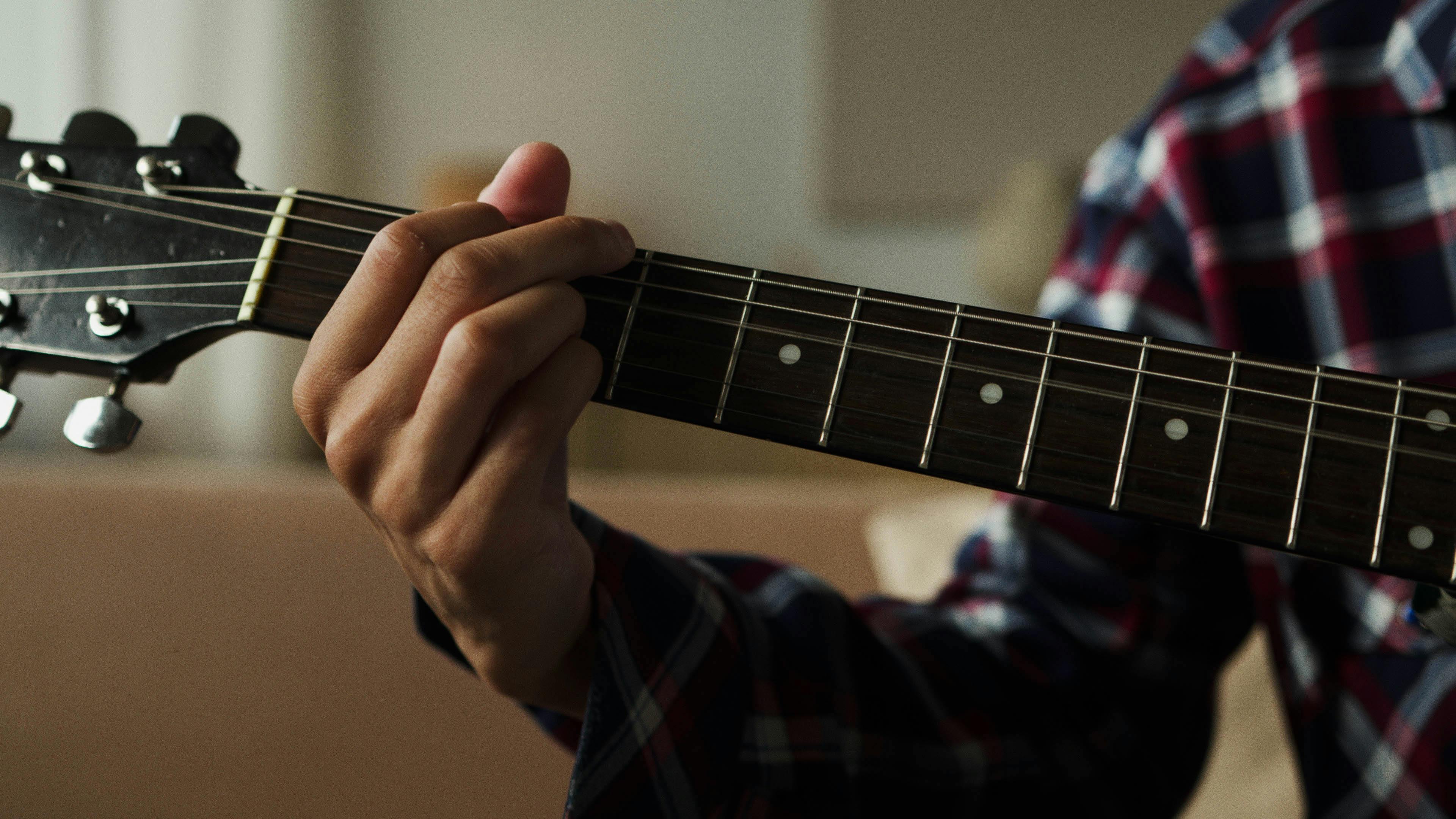
The logical starting order for a child learning guitar at home is: first, learning to identify and name the open strings; second, playing individual notes cleanly on the first two or three strings; third, forming simple two-finger chords like Em and Am; fourth, basic strumming in time; and fifth, putting those elements together in a song they recognize. Music educators recommend connecting each technical step to real music as quickly as possible, because a child who can see the point of what they're practicing is far more likely to keep practicing it. Abstract drills with no musical context are where home learning most commonly breaks down.
Where Notey's World Comes In
The structural challenge of teaching guitar at home - keeping lessons sequenced, keeping motivation alive, keeping progress visible - is exactly the problem Notey's World was built to solve. Notey is a guitar learning game for children aged 6 to 13 that runs on a real acoustic or electric guitar. It is not a passive video course or a chord library. It is a game, in the full sense: one where sight-reading exercises become platformer levels, daily lessons earn Beatcoins that unlock character skins and rewards, and boss-fights test what the child has actually learned. A machine-learning audio engine listens to the real guitar through the device microphone and responds in real time - which means the curriculum adapts to where your child actually is, not where the lesson plan assumes they should be.
For a non-musician parent, this matters enormously. You don't need to know whether your child's technique is correct - Notey hears it and responds accordingly. You don't need to plan the next lesson - the game's progression does that. The song library includes music children aged 6 to 13 actually want to play: Star Wars, Harry Potter, Disney classics, Sabrina Carpenter, Ariana Grande - which gives your child a concrete, personally meaningful goal to work toward every day. Notey holds a 4.7-star rating on the App Store, is used by NYC, Chicago, and Austin public schools, and was built with music educators from the start. Ravi Rajan, President of CalArts, has described it as a genuinely effective way to accelerate learning by meeting children inside the world they already understand.
The One Thing That Matters More Than Any Method
Every parent who successfully supports their child's guitar learning at home - regardless of their own musical background - has one thing in common: they made practice a normal, unremarkable part of the daily routine rather than a special event that required negotiation. Guitar at 4pm, same as teeth at 8pm. Not a reward, not a punishment, not optional - just part of the day.
That normalcy is harder to establish than it sounds, and easier to maintain than most parents expect once it's in place. The first two weeks are the hardest. After a month, the routine exists on its own momentum. After three months, your child will likely remind you if something disrupts it - because by then, it isn't practice anymore. It's just guitar. And a child who thinks of themselves as someone who plays guitar is a child who will keep playing long after the initial novelty has worn off and the real learning has begun. For more on what that journey looks like from a child's perspective, our article on what to do when your child says guitar is too hard covers the hard middle stretch that every beginner goes through.
Frequently Asked Questions
Can I Teach My Child Guitar If I Don't Play Myself?
Yes. A non-musician parent can absolutely support a child's guitar learning at home by providing structure, consistency, and the right learning tools. You don't need to know chords or read music to create the conditions that make practice stick. Your role is less about instruction and more about habit-building - setting a regular practice time, celebrating visible progress, and keeping sessions short enough to stay enjoyable.
What Age Can a Child Start Learning Guitar at Home?
Most children are ready to begin guitar at home between ages 6 and 8, when fine motor skills are developed enough to form basic notes and chords. Some children start as young as 5 with a 1/2 size guitar and very short sessions of 5 to 10 minutes. The right age depends less on a fixed number and more on whether your child can focus for at least 10 minutes at a time and has expressed genuine interest in playing.
How Do I Keep My Child Motivated to Practice Guitar at Home?
The most reliable motivation at home comes from three things: songs the child actually wants to play, visible progress they can measure themselves, and sessions short enough to end before frustration sets in. Reward systems - whether sticker charts for younger children or more sophisticated in-app rewards for older ones - work because they make micro-progress feel significant. The goal is for practice to feel like something the child chooses, not something imposed on them.