Leveling Up: How Boss Battles Replaced Boring Scales in Our House

Tuesday, February 10, 2026

Tuesday, February 10, 2026

Let's be honest: nobody wants to practice scales. Not adults, not kids, and definitely not your 9-year-old who would rather do literally anything else than run through C major for the fifteenth time this week.

I used to dread guitar practice time in our house. The negotiations, the eye rolls, the dramatic sighs: you know the drill. My kid would pick up the guitar, strum a few chords, complain about how "boring" it was, and then somehow remember urgent homework that absolutely needed to be done right that second.

Then we discovered something that completely changed the game. Literally.

A video game for learning guitar that turned those dreaded scale exercises into epic boss battles. Suddenly, practice time went from a daily negotiation to "Can I play one more level before dinner?"

The Scale Problem Every Guitar Parent Knows

Here's the thing about traditional guitar practice: scales are essential, but they're also mind-numbingly repetitive. Especially for kids aged 6-13 who are still developing their attention spans and impulse control.

Sure, scales build finger strength, improve dexterity, and teach muscle memory. They're the foundation of guitar playing. But telling that to a kid who just wants to play their favorite song? Good luck.

Traditional guitar lessons follow a pretty standard format:

  • Learn a scale pattern

  • Practice it slowly

  • Practice it faster

  • Repeat until your fingers hurt

  • Do it all again next week

It works, eventually. But it's about as exciting as watching paint dry. And when you're competing with YouTube, TikTok, and Fortnite for your kid's attention, "eventually" isn't good enough.

Child struggling with boring guitar scale practice surrounded by sheet music

Enter the Boss Battle: When Scales Become Epic Quests

This is where guitar learning apps for kids like Notey's World completely flip the script. Instead of just running through scales, kids face off against dragon bosses, unlock new magical worlds, and level up their characters: all while practicing the exact same finger patterns they'd learn in traditional lessons.

Here's how it actually works:

Boss battles are disguised scale practice. That Fire Dragon boss your kid needs to defeat? It requires mastering a specific scale pattern. The game tracks every note, gives instant feedback, and makes corrections feel like power-ups instead of criticism.

Progress is visual and immediate. Instead of abstract concepts like "you're getting better at transitions," kids see their character gain experience points, unlock new gear, and advance through levels. The dopamine hit is real, and it keeps them coming back.

Repetition becomes addictive, not tedious. Remember how you'd play the same Mario level fifty times until you finally beat it? That's the exact same repetition that builds guitar mastery. The only difference is the framing. Kids aren't "practicing scales": they're "training for the next boss battle."

Why Gamification Actually Works (According to Science)

I know what you're thinking: "This sounds too good to be true. Is my kid actually learning, or just playing a game?"

Fair question. Here's the thing: gamification in music education isn't just a gimmick. It taps into some pretty solid psychology and neuroscience.

Research shows that kids learn best when they're engaged, motivated, and receiving immediate feedback. Traditional practice lacks all three. You play a scale, your teacher says "good job" (or points out mistakes), and you move on. There's no sense of progress, no clear goal, and no immediate reward.

A guitar learning app for kids solves all three problems:

  • Engagement: Game mechanics (points, levels, challenges) activate the brain's reward system

  • Motivation: Clear goals and visible progress create a sense of achievement

  • Feedback: Instant correction helps kids adjust technique in real-time

Plus, kids naturally love challenges when they're framed as games. The same kid who whines about practicing scales for five minutes will happily spend an hour trying to beat a difficult level. The effort is the same: the framing is everything.
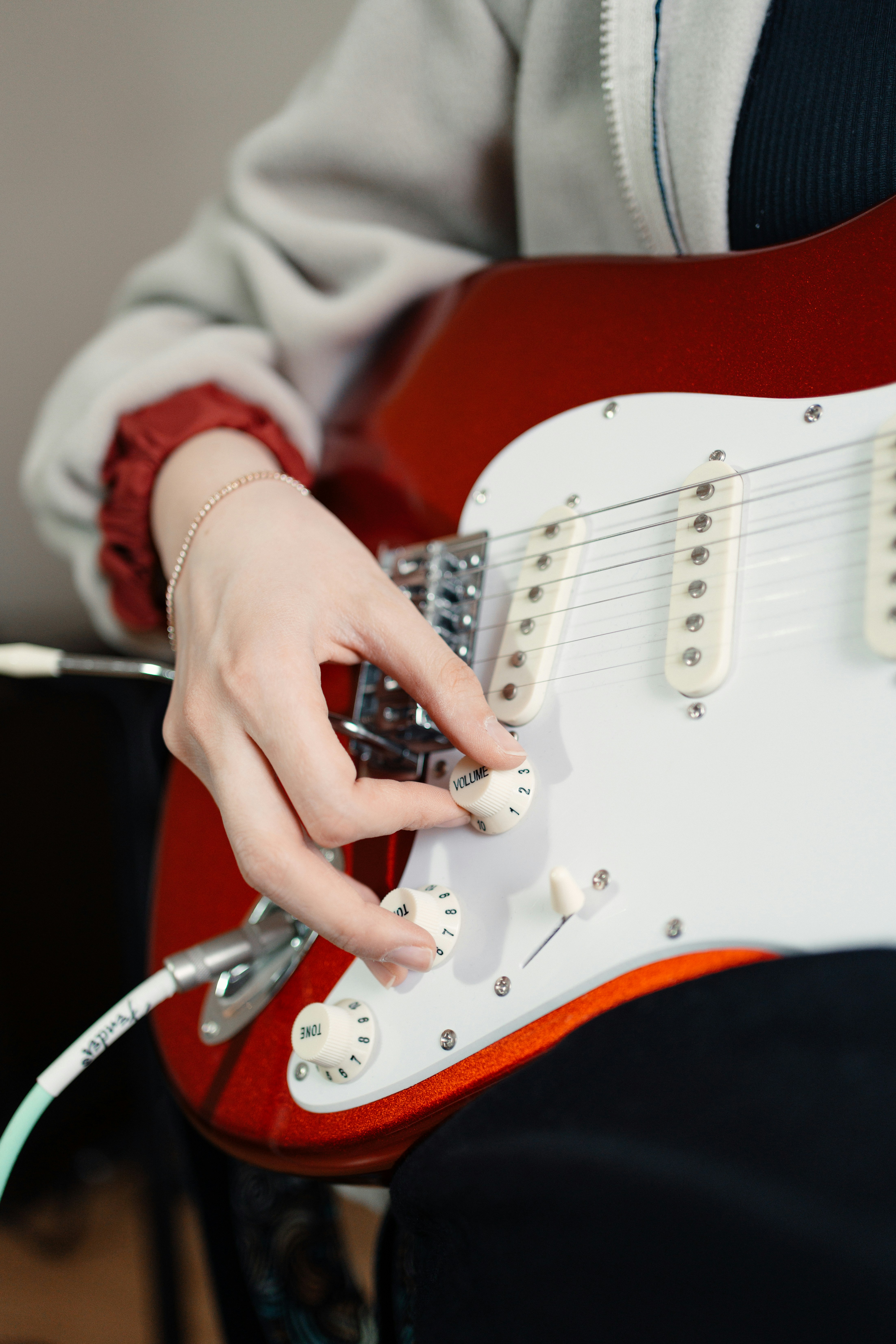
Kid excited playing guitar with video game boss battle interface overlay

Real Guitar, Real Skills (No Plastic Controllers Here)

Here's what makes apps like Notey's World different from those music video games you might remember: kids use an actual guitar.

No plastic controllers. No fake fretboards. Just a real acoustic or electric guitar connected to the app. Every note they play is the real deal, building actual muscle memory and developing genuine guitar skills.

This is crucial. While games like Guitar Hero are fun, they don't teach you to play an actual instrument. With a proper video game for learning guitar, kids are:

  • Developing calluses and finger strength

  • Learning proper hand positioning and technique

  • Building coordination between their left and right hands

  • Practicing sight reading guitar by matching notes on the screen to their actual fretboard

It's the best of both worlds: the engagement of a video game combined with the skill-building of traditional lessons.

From Scales to Sight Reading: The Hidden Benefits

Once the scales become second nature (thanks to all those boss battles), something cool happens: kids start developing other skills without even realizing it.

Sight reading guitar is one of the biggest game-changers. In Notey's World, notes scroll across the screen like a rhythm game, but they're actual musical notation. Kids learn to read tabs and standard notation without the intimidation factor of a traditional method book.

Check out our guide on sight reading on guitar for more on why this skill is so valuable.

Other unexpected benefits we've noticed:

  • Better practice consistency: Kids practice daily without being asked

  • Improved focus: The game structure helps kids with shorter attention spans stay engaged longer

  • Goal-oriented thinking: Kids learn to break big challenges into smaller, achievable steps

  • Problem-solving skills: Figuring out how to beat a difficult level requires experimentation and critical thinking

If you're curious about whether a video game approach actually works compared to traditional lessons, we've got a detailed comparison here.
Comparison of traditional guitar learning versus gamified guitar learning app

Supplementing with Other Great Resources

While a guitar learning app for kids like Notey's World can be a complete practice solution, we're big believers in combining multiple resources based on what works for your child.

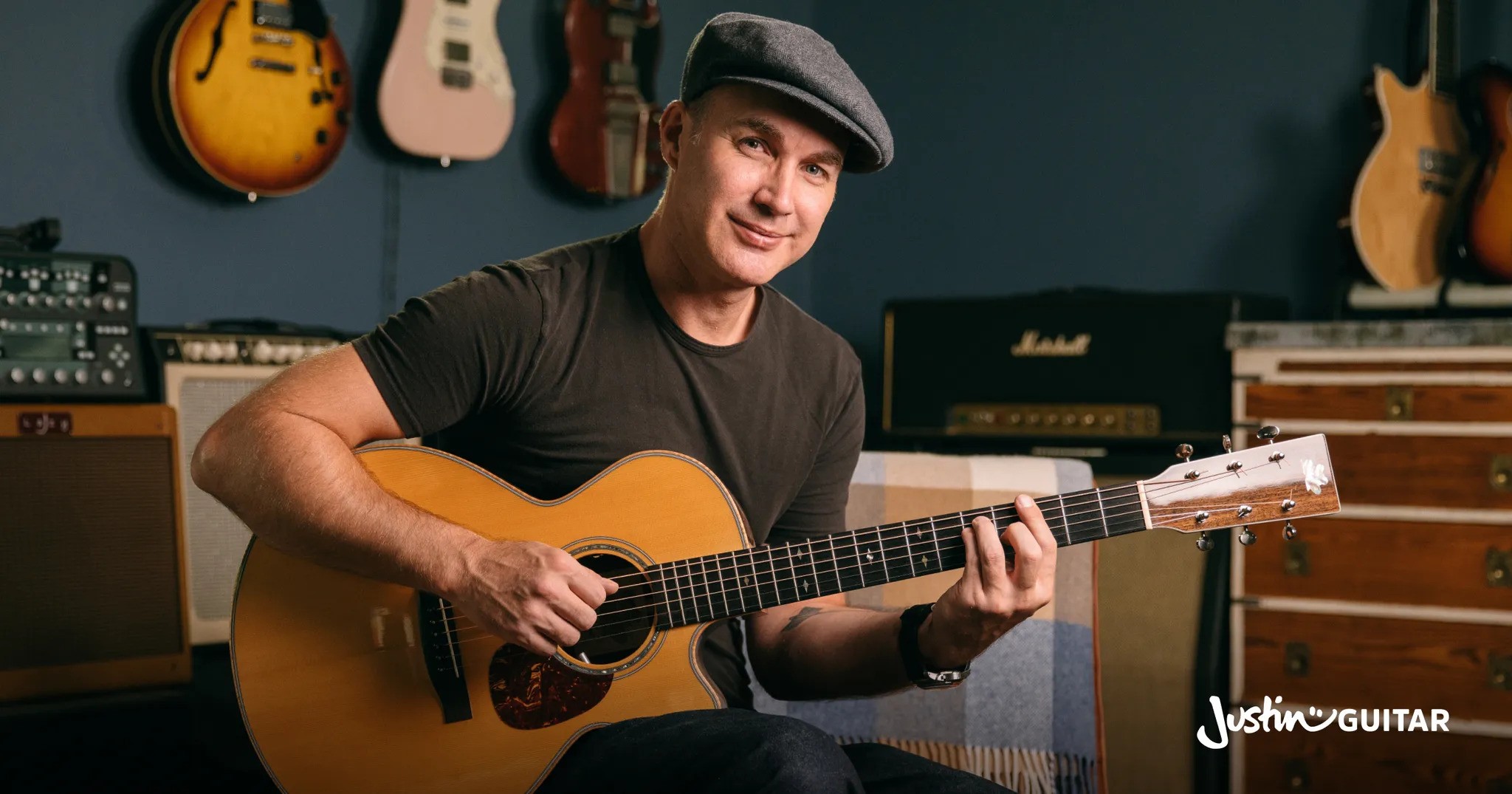
JustinGuitar is one of the most respected free guitar education platforms out there. Justin Sandercoe has been teaching guitar online since 2003, and his structured lessons are perfect for kids who want to dive deeper into music theory or learn specific songs. Pairing JustinGuitar's song tutorials with Notey's World's practice gamification creates a well-rounded learning experience.

Pickup Music is another fantastic resource, especially for visual learners. Their video lessons cover everything from basic chords to advanced techniques, and their teaching style is clear and encouraging: perfect for supplementing what kids learn through game-based practice.

You might also want to check out local options at Guitar Center for in-person workshops or group lessons. There's real value in community learning experiences where kids can jam with peers.

The Practice Battle Is Over (Finally)

Here's what's changed in our house since switching to a gamified approach:

Before: "Time to practice guitar!" followed by groans, negotiations, and maybe 10 minutes of half-hearted strumming.

After: "Can I practice guitar before homework?" followed by 30-45 minutes of focused practice without a single reminder.

The scales haven't gone anywhere. My kid is still learning the same fundamental skills, building the same muscle memory, and developing the same technique. The only difference is the framing. Those boring C major scales? They're now the secret weapon for defeating the Ice Boss in the Frozen Kingdom.

Same practice. Different experience. Completely different results.

If you're tired of the daily practice battle and want to see what a video game for learning guitar can actually do, check out Notey's World. Your kid might just surprise you by asking for "five more minutes" of practice time.

And if you want to dive deeper into why gamified learning works so well for young musicians, our article on how music learning boosts math and reading scores explores the cognitive benefits that go way beyond just playing guitar.

The boss battles are waiting. Time to level up.

Let's be honest: nobody wants to practice scales. Not adults, not kids, and definitely not your 9-year-old who would rather do literally anything else than run through C major for the fifteenth time this week.

I used to dread guitar practice time in our house. The negotiations, the eye rolls, the dramatic sighs: you know the drill. My kid would pick up the guitar, strum a few chords, complain about how "boring" it was, and then somehow remember urgent homework that absolutely needed to be done right that second.

Then we discovered something that completely changed the game. Literally.

A video game for learning guitar that turned those dreaded scale exercises into epic boss battles. Suddenly, practice time went from a daily negotiation to "Can I play one more level before dinner?"

The Scale Problem Every Guitar Parent Knows

Here's the thing about traditional guitar practice: scales are essential, but they're also mind-numbingly repetitive. Especially for kids aged 6-13 who are still developing their attention spans and impulse control.

Sure, scales build finger strength, improve dexterity, and teach muscle memory. They're the foundation of guitar playing. But telling that to a kid who just wants to play their favorite song? Good luck.

Traditional guitar lessons follow a pretty standard format:

  • Learn a scale pattern

  • Practice it slowly

  • Practice it faster

  • Repeat until your fingers hurt

  • Do it all again next week

It works, eventually. But it's about as exciting as watching paint dry. And when you're competing with YouTube, TikTok, and Fortnite for your kid's attention, "eventually" isn't good enough.

Child struggling with boring guitar scale practice surrounded by sheet music

Enter the Boss Battle: When Scales Become Epic Quests

This is where guitar learning apps for kids like Notey's World completely flip the script. Instead of just running through scales, kids face off against dragon bosses, unlock new magical worlds, and level up their characters: all while practicing the exact same finger patterns they'd learn in traditional lessons.

Here's how it actually works:

Boss battles are disguised scale practice. That Fire Dragon boss your kid needs to defeat? It requires mastering a specific scale pattern. The game tracks every note, gives instant feedback, and makes corrections feel like power-ups instead of criticism.

Progress is visual and immediate. Instead of abstract concepts like "you're getting better at transitions," kids see their character gain experience points, unlock new gear, and advance through levels. The dopamine hit is real, and it keeps them coming back.

Repetition becomes addictive, not tedious. Remember how you'd play the same Mario level fifty times until you finally beat it? That's the exact same repetition that builds guitar mastery. The only difference is the framing. Kids aren't "practicing scales": they're "training for the next boss battle."

Why Gamification Actually Works (According to Science)

I know what you're thinking: "This sounds too good to be true. Is my kid actually learning, or just playing a game?"

Fair question. Here's the thing: gamification in music education isn't just a gimmick. It taps into some pretty solid psychology and neuroscience.

Research shows that kids learn best when they're engaged, motivated, and receiving immediate feedback. Traditional practice lacks all three. You play a scale, your teacher says "good job" (or points out mistakes), and you move on. There's no sense of progress, no clear goal, and no immediate reward.

A guitar learning app for kids solves all three problems:

  • Engagement: Game mechanics (points, levels, challenges) activate the brain's reward system

  • Motivation: Clear goals and visible progress create a sense of achievement

  • Feedback: Instant correction helps kids adjust technique in real-time

Plus, kids naturally love challenges when they're framed as games. The same kid who whines about practicing scales for five minutes will happily spend an hour trying to beat a difficult level. The effort is the same: the framing is everything.

Kid excited playing guitar with video game boss battle interface overlay

Real Guitar, Real Skills (No Plastic Controllers Here)

Here's what makes apps like Notey's World different from those music video games you might remember: kids use an actual guitar.

No plastic controllers. No fake fretboards. Just a real acoustic or electric guitar connected to the app. Every note they play is the real deal, building actual muscle memory and developing genuine guitar skills.

This is crucial. While games like Guitar Hero are fun, they don't teach you to play an actual instrument. With a proper video game for learning guitar, kids are:

  • Developing calluses and finger strength

  • Learning proper hand positioning and technique

  • Building coordination between their left and right hands

  • Practicing sight reading guitar by matching notes on the screen to their actual fretboard

It's the best of both worlds: the engagement of a video game combined with the skill-building of traditional lessons.

From Scales to Sight Reading: The Hidden Benefits

Once the scales become second nature (thanks to all those boss battles), something cool happens: kids start developing other skills without even realizing it.

Sight reading guitar is one of the biggest game-changers. In Notey's World, notes scroll across the screen like a rhythm game, but they're actual musical notation. Kids learn to read tabs and standard notation without the intimidation factor of a traditional method book.

Check out our guide on sight reading on guitar for more on why this skill is so valuable.

Other unexpected benefits we've noticed:

  • Better practice consistency: Kids practice daily without being asked

  • Improved focus: The game structure helps kids with shorter attention spans stay engaged longer

  • Goal-oriented thinking: Kids learn to break big challenges into smaller, achievable steps

  • Problem-solving skills: Figuring out how to beat a difficult level requires experimentation and critical thinking

If you're curious about whether a video game approach actually works compared to traditional lessons, we've got a detailed comparison here.

Comparison of traditional guitar learning versus gamified guitar learning app

Supplementing with Other Great Resources

While a guitar learning app for kids like Notey's World can be a complete practice solution, we're big believers in combining multiple resources based on what works for your child.

JustinGuitar is one of the most respected free guitar education platforms out there. Justin Sandercoe has been teaching guitar online since 2003, and his structured lessons are perfect for kids who want to dive deeper into music theory or learn specific songs. Pairing JustinGuitar's song tutorials with Notey's World's practice gamification creates a well-rounded learning experience.

Pickup Music is another fantastic resource, especially for visual learners. Their video lessons cover everything from basic chords to advanced techniques, and their teaching style is clear and encouraging: perfect for supplementing what kids learn through game-based practice.

You might also want to check out local options at Guitar Center for in-person workshops or group lessons. There's real value in community learning experiences where kids can jam with peers.

The Practice Battle Is Over (Finally)

Here's what's changed in our house since switching to a gamified approach:

Before: "Time to practice guitar!" followed by groans, negotiations, and maybe 10 minutes of half-hearted strumming.

After: "Can I practice guitar before homework?" followed by 30-45 minutes of focused practice without a single reminder.

The scales haven't gone anywhere. My kid is still learning the same fundamental skills, building the same muscle memory, and developing the same technique. The only difference is the framing. Those boring C major scales? They're now the secret weapon for defeating the Ice Boss in the Frozen Kingdom.

Same practice. Different experience. Completely different results.

If you're tired of the daily practice battle and want to see what a video game for learning guitar can actually do, check out Notey's World. Your kid might just surprise you by asking for "five more minutes" of practice time.

And if you want to dive deeper into why gamified learning works so well for young musicians, our article on how music learning boosts math and reading scores explores the cognitive benefits that go way beyond just playing guitar.

The boss battles are waiting. Time to level up.

Let's be honest: nobody wants to practice scales. Not adults, not kids, and definitely not your 9-year-old who would rather do literally anything else than run through C major for the fifteenth time this week.

I used to dread guitar practice time in our house. The negotiations, the eye rolls, the dramatic sighs: you know the drill. My kid would pick up the guitar, strum a few chords, complain about how "boring" it was, and then somehow remember urgent homework that absolutely needed to be done right that second.

Then we discovered something that completely changed the game. Literally.

A video game for learning guitar that turned those dreaded scale exercises into epic boss battles. Suddenly, practice time went from a daily negotiation to "Can I play one more level before dinner?"

The Scale Problem Every Guitar Parent Knows

Here's the thing about traditional guitar practice: scales are essential, but they're also mind-numbingly repetitive. Especially for kids aged 6-13 who are still developing their attention spans and impulse control.

Sure, scales build finger strength, improve dexterity, and teach muscle memory. They're the foundation of guitar playing. But telling that to a kid who just wants to play their favorite song? Good luck.

Traditional guitar lessons follow a pretty standard format:

  • Learn a scale pattern

  • Practice it slowly

  • Practice it faster

  • Repeat until your fingers hurt

  • Do it all again next week

It works, eventually. But it's about as exciting as watching paint dry. And when you're competing with YouTube, TikTok, and Fortnite for your kid's attention, "eventually" isn't good enough.

Child struggling with boring guitar scale practice surrounded by sheet music

Enter the Boss Battle: When Scales Become Epic Quests

This is where guitar learning apps for kids like Notey's World completely flip the script. Instead of just running through scales, kids face off against dragon bosses, unlock new magical worlds, and level up their characters: all while practicing the exact same finger patterns they'd learn in traditional lessons.

Here's how it actually works:

Boss battles are disguised scale practice. That Fire Dragon boss your kid needs to defeat? It requires mastering a specific scale pattern. The game tracks every note, gives instant feedback, and makes corrections feel like power-ups instead of criticism.

Progress is visual and immediate. Instead of abstract concepts like "you're getting better at transitions," kids see their character gain experience points, unlock new gear, and advance through levels. The dopamine hit is real, and it keeps them coming back.

Repetition becomes addictive, not tedious. Remember how you'd play the same Mario level fifty times until you finally beat it? That's the exact same repetition that builds guitar mastery. The only difference is the framing. Kids aren't "practicing scales": they're "training for the next boss battle."

Why Gamification Actually Works (According to Science)

I know what you're thinking: "This sounds too good to be true. Is my kid actually learning, or just playing a game?"

Fair question. Here's the thing: gamification in music education isn't just a gimmick. It taps into some pretty solid psychology and neuroscience.

Research shows that kids learn best when they're engaged, motivated, and receiving immediate feedback. Traditional practice lacks all three. You play a scale, your teacher says "good job" (or points out mistakes), and you move on. There's no sense of progress, no clear goal, and no immediate reward.

A guitar learning app for kids solves all three problems:

  • Engagement: Game mechanics (points, levels, challenges) activate the brain's reward system

  • Motivation: Clear goals and visible progress create a sense of achievement

  • Feedback: Instant correction helps kids adjust technique in real-time

Plus, kids naturally love challenges when they're framed as games. The same kid who whines about practicing scales for five minutes will happily spend an hour trying to beat a difficult level. The effort is the same: the framing is everything.

Kid excited playing guitar with video game boss battle interface overlay

Real Guitar, Real Skills (No Plastic Controllers Here)

Here's what makes apps like Notey's World different from those music video games you might remember: kids use an actual guitar.

No plastic controllers. No fake fretboards. Just a real acoustic or electric guitar connected to the app. Every note they play is the real deal, building actual muscle memory and developing genuine guitar skills.

This is crucial. While games like Guitar Hero are fun, they don't teach you to play an actual instrument. With a proper video game for learning guitar, kids are:

  • Developing calluses and finger strength

  • Learning proper hand positioning and technique

  • Building coordination between their left and right hands

  • Practicing sight reading guitar by matching notes on the screen to their actual fretboard

It's the best of both worlds: the engagement of a video game combined with the skill-building of traditional lessons.

From Scales to Sight Reading: The Hidden Benefits

Once the scales become second nature (thanks to all those boss battles), something cool happens: kids start developing other skills without even realizing it.

Sight reading guitar is one of the biggest game-changers. In Notey's World, notes scroll across the screen like a rhythm game, but they're actual musical notation. Kids learn to read tabs and standard notation without the intimidation factor of a traditional method book.

Check out our guide on sight reading on guitar for more on why this skill is so valuable.

Other unexpected benefits we've noticed:

  • Better practice consistency: Kids practice daily without being asked

  • Improved focus: The game structure helps kids with shorter attention spans stay engaged longer

  • Goal-oriented thinking: Kids learn to break big challenges into smaller, achievable steps

  • Problem-solving skills: Figuring out how to beat a difficult level requires experimentation and critical thinking

If you're curious about whether a video game approach actually works compared to traditional lessons, we've got a detailed comparison here.

Comparison of traditional guitar learning versus gamified guitar learning app

Supplementing with Other Great Resources

While a guitar learning app for kids like Notey's World can be a complete practice solution, we're big believers in combining multiple resources based on what works for your child.

JustinGuitar is one of the most respected free guitar education platforms out there. Justin Sandercoe has been teaching guitar online since 2003, and his structured lessons are perfect for kids who want to dive deeper into music theory or learn specific songs. Pairing JustinGuitar's song tutorials with Notey's World's practice gamification creates a well-rounded learning experience.

Pickup Music is another fantastic resource, especially for visual learners. Their video lessons cover everything from basic chords to advanced techniques, and their teaching style is clear and encouraging: perfect for supplementing what kids learn through game-based practice.

You might also want to check out local options at Guitar Center for in-person workshops or group lessons. There's real value in community learning experiences where kids can jam with peers.

The Practice Battle Is Over (Finally)

Here's what's changed in our house since switching to a gamified approach:

Before: "Time to practice guitar!" followed by groans, negotiations, and maybe 10 minutes of half-hearted strumming.

After: "Can I practice guitar before homework?" followed by 30-45 minutes of focused practice without a single reminder.

The scales haven't gone anywhere. My kid is still learning the same fundamental skills, building the same muscle memory, and developing the same technique. The only difference is the framing. Those boring C major scales? They're now the secret weapon for defeating the Ice Boss in the Frozen Kingdom.

Same practice. Different experience. Completely different results.

If you're tired of the daily practice battle and want to see what a video game for learning guitar can actually do, check out Notey's World. Your kid might just surprise you by asking for "five more minutes" of practice time.

And if you want to dive deeper into why gamified learning works so well for young musicians, our article on how music learning boosts math and reading scores explores the cognitive benefits that go way beyond just playing guitar.

The boss battles are waiting. Time to level up.

Join our mailing list