Why Guitar Learning Games Work So Well for Beginners
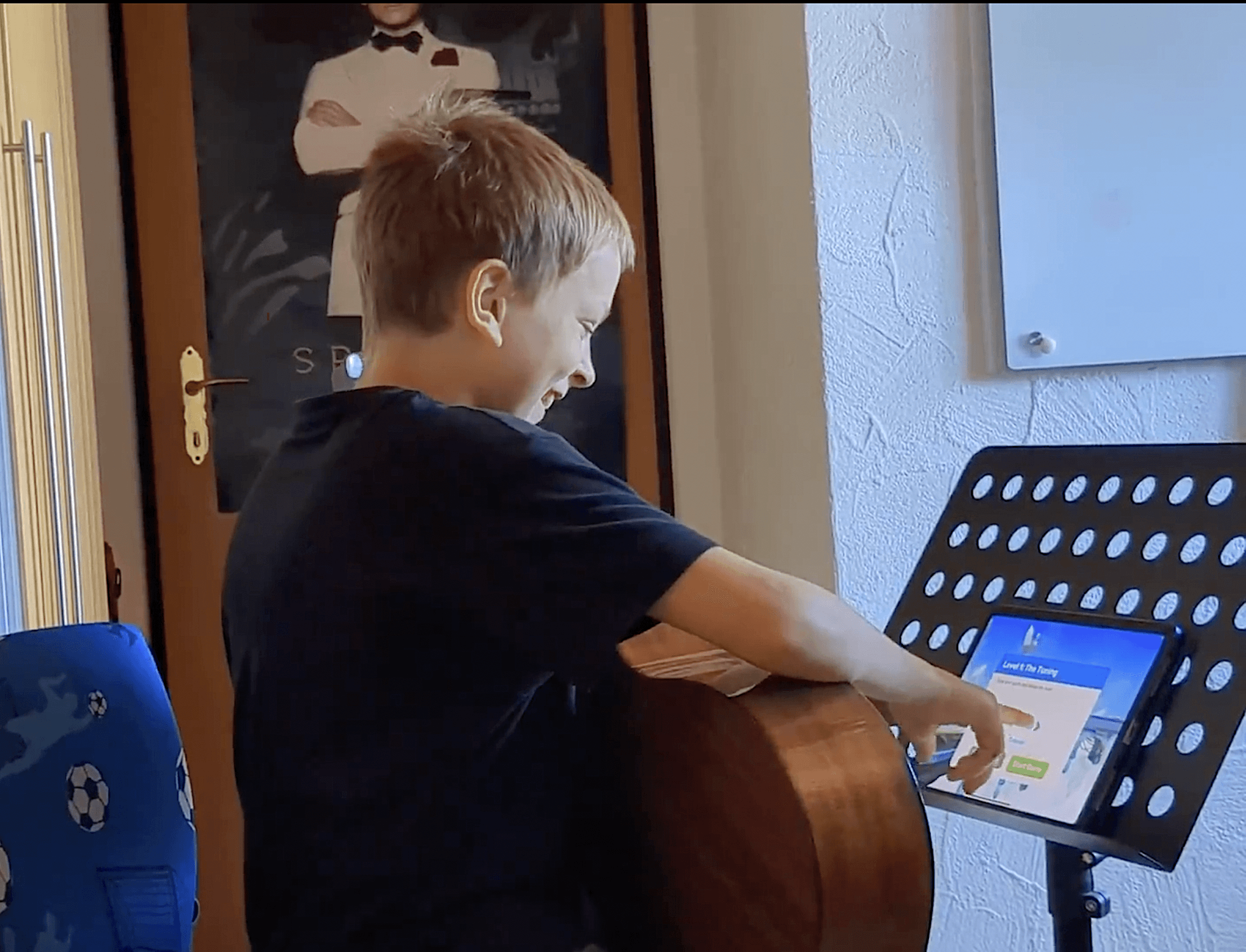
When beginners quit learning guitar, it’s rarely because they lack ability. They stop because practice starts feeling frustrating before confidence has time to develop.
For kids especially, traditional beginner lessons can sometimes feel repetitive, slow, or overwhelming. Long drills and delayed feedback make it difficult for beginners to feel progress early on, which is often when motivation matters most.
That is why game-based learning has become such a powerful tool for beginner musicians. When practice feels interactive and rewarding, kids are much more likely to stick with it long enough to build real skills.
Why So Many Beginners Lose Motivation Early
The first few weeks of learning guitar are often the hardest.
Beginners are trying to build finger coordination, remember notes and chords, improve timing, and stay patient through mistakes. Progress can feel slow even when improvement is happening.
For children, that frustration can quickly turn learning into something they avoid instead of enjoying.
Many beginners start believing they are “bad at guitar” long before they have practiced enough to feel comfortable.
That is why the early learning experience matters so much.
Gameplay Changes the Learning Experience
Game-based learning works because it changes how beginners experience practice.
Instead of feeling like a long series of corrections and repetition, learning becomes interactive and rewarding.
Beginners can:
complete short challenges
receive immediate feedback
track visible progress
build confidence through small wins
stay engaged longer
This is why many beginner-focused platforms, including Notey, use gameplay and interactive exercises to make practice feel more approachable for kids.
Those small moments of success have a huge impact on consistency.
When beginners feel successful, they are much more likely to keep practicing.
Interactive Feedback Helps Beginners Improve Faster
One of the most frustrating parts of learning guitar is not knowing whether you are doing something correctly.
Interactive learning helps solve that problem immediately.
Real-time feedback allows beginners to adjust quickly instead of repeating mistakes over and over. Kids can hear the difference, recognize improvement earlier, and feel more connected to the learning process.
That immediate response makes practice feel active instead of passive.
For beginners, that can make learning feel dramatically more approachable.
Confidence Is One of the Biggest Drivers of Progress
Confidence and consistency are deeply connected. Kids who feel discouraged tend to avoid practice. Kids who feel successful tend to keep going.
That is one reason gameplay can be so effective for beginners. Interactive learning creates more opportunities for visible progress and rewarding moments throughout the process.
Over time, those small wins build momentum.
And momentum is often what helps beginners stay engaged long enough to develop real musical ability.
Learning Through Play Still Builds Real Skills
Some parents worry that game-based learning may not teach “real” guitar skills. In reality, interactive learning can often help beginners practice more consistently because it lowers frustration and keeps motivation higher.
The best guitar learning games still teach:
rhythm
timing
chords
coordination
real instrument skills
The difference is that the experience feels more approachable and rewarding for beginners.
How Notey Uses Gameplay to Support Real Learning
Notey was designed to make beginner guitar practice feel rewarding instead of overwhelming.
By combining real instrument practice with interactive challenges, real-time feedback, and beginner-friendly pacing, Notey helps kids build confidence while learning actual guitar skills step by step.
The goal is not just to keep kids entertained.
It is to help them stay motivated long enough to experience real progress.
Because when beginners enjoy the learning process, they are far more likely to stick with it.